
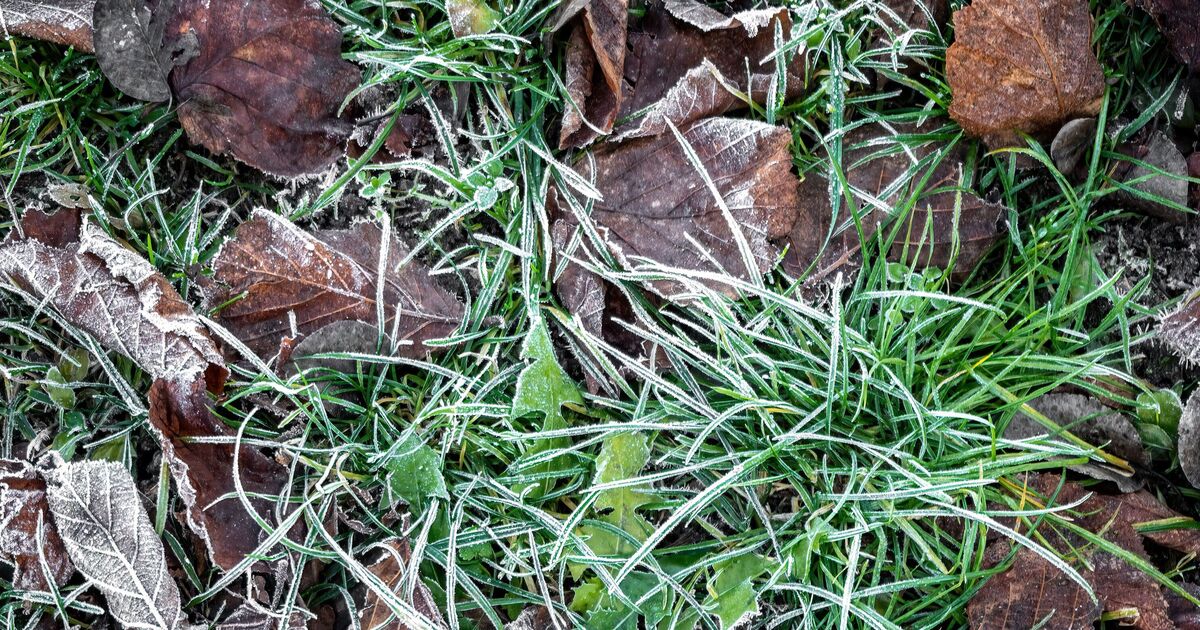
You may think of winter as being a time of dormancy in the garden, but despite appearances, things are very much still active in the lawn, both above and beneath the soil. Although at a slower rate, grass continues to grow, and garden waste breaks down.
This means it’s essential to be vigilant for the signs and symptoms of various lawn problems during the colder months. Not least because any damage they cause now may not be fixable until spring if left untreated for too long. Taking to their blog, the lawn pros at Greensleeves have shared a few winter lawn problems to watch out for – the primary one being snow mould when gardeners fail to remove one thing from the grass.
Snow mould is a particularly harmful fungal disease that can quickly take hold of large portions of the lawn. While the name suggests it occurs only after snowfall, that is not the case for all species.
Many varieties thrive in mild weather, meaning your lawn can be particularly exposed to it in the autumn and early spring periods too.
The experts noted that “the best thing you can do” to try and prevent it is to be vigilant with the rake to keep leaves off your lawn.
Mike Barney, a Greensleeves lawn care expert for Norwich, said: “Without a doubt, the most common cause of a seriously damaged lawn in the winter is due to uncleared leaves.
“Any leaves left lying on the lawn not only cause the sward to thin but also limit light and air movement, which creates a perfect breeding ground for diseases such as fusarium patch (snow mould).
“Given the right conditions, this turf disease can quickly spread across the lawn, causing significant scarring, which will be slow to recover in the spring.”
A tell-tale sign of snow mould is small yellowish patches of dying grass that turn brown and spread rapidly.
Comments are closed.