
Scenario for you seasoned composters out there that I’d love some input on.
I’m wondering if I should chip up some decaying hardwood into compost for my garden?
Background: in May of 2023 I had (2) sweetgum and (1) red oak tree fall over during a storm. Had a tree company clean up most of the limbs, I sawed up and split some of the choice cuts for firewood, then I left the rest to sit without a real plan to deal with it.
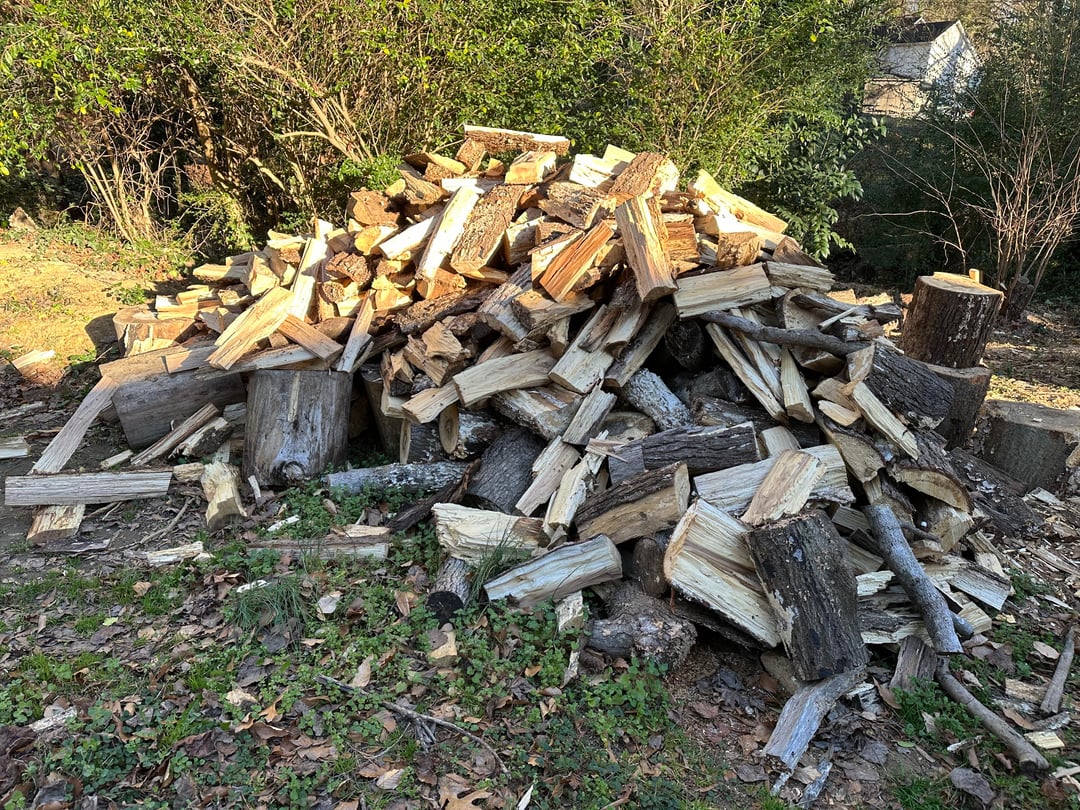
Fast forward to today, I’ve spent the last 2 weeks sawing and splitting most of the decaying logs (~12-18 inches in diameter) just to clean everything up. What you see in the pictures is MOSTLY soft decayed sapwood and bark. The heartwood was removed as I split it and either saved as firewood or discarded (sweetgum heartwood dense with resin might not compost well?). I’m faced with a dilemma: take 3-4 truck loads of decaying wood to the composting center and pay to drop them off, or rent a wood chipper and chip it all up to add to my compost pile. It will cost me more to rent a chipper than to take it to the composting center, but chipping will be faster/less effort and I reckon it’ll add at least 2 yards (before composting) to my compost volume.
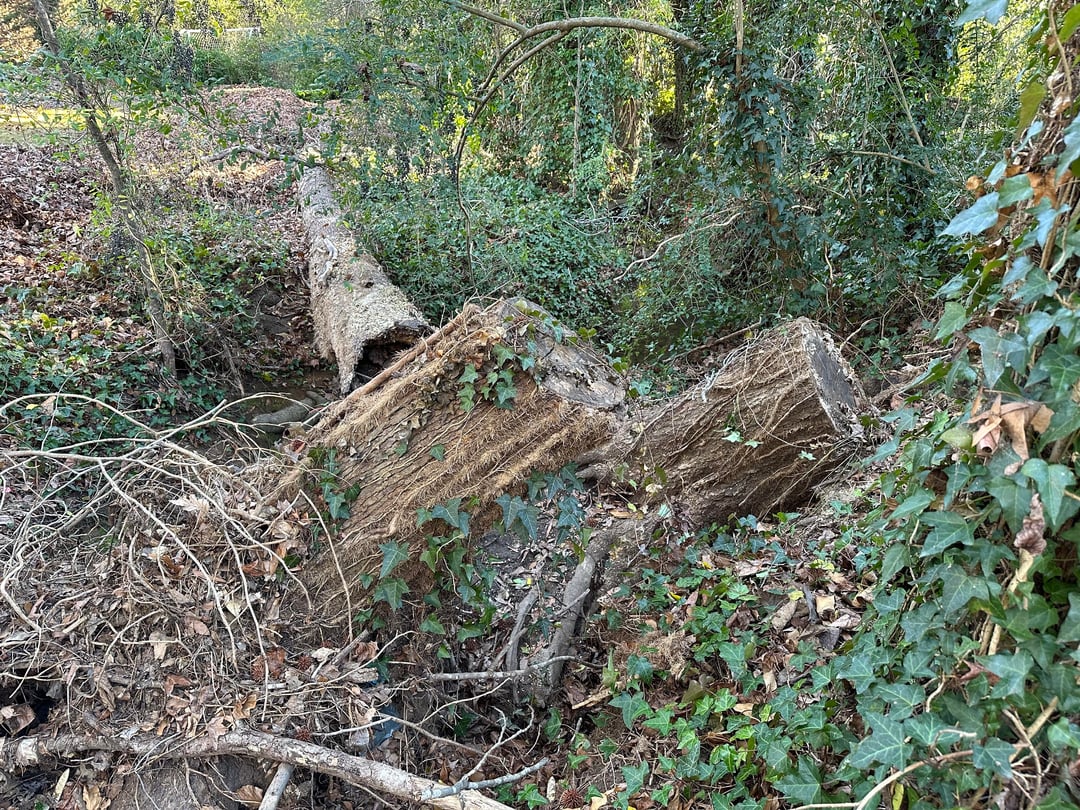
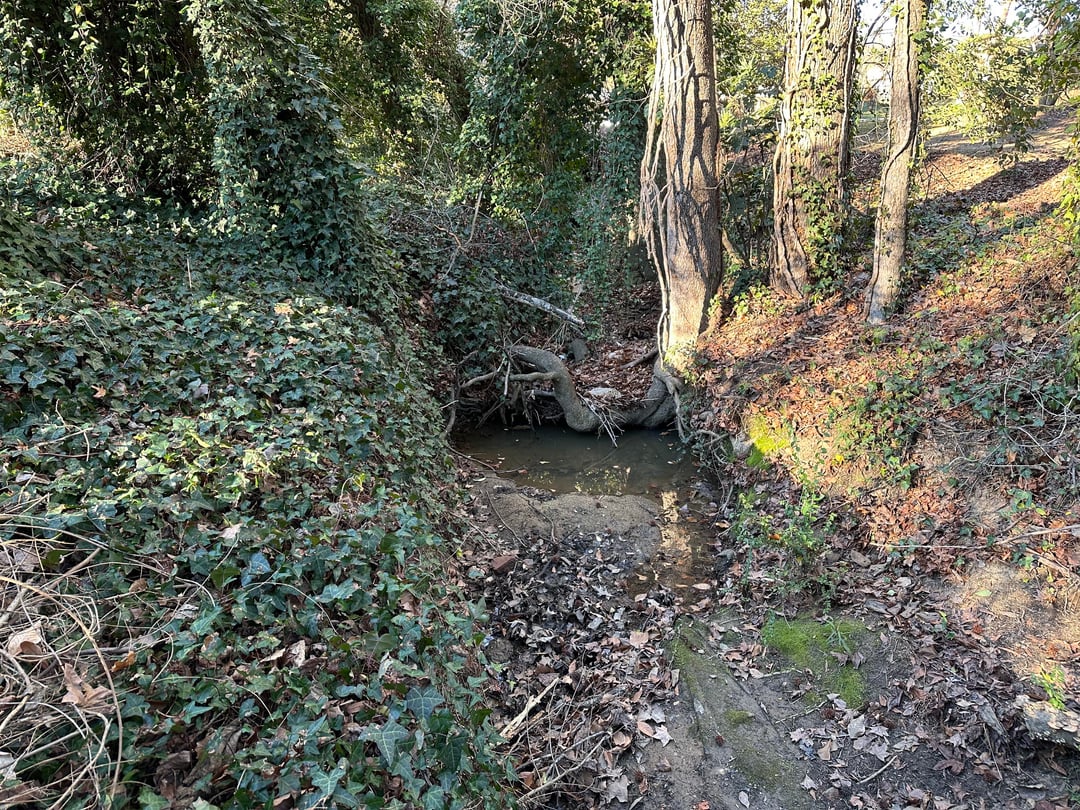
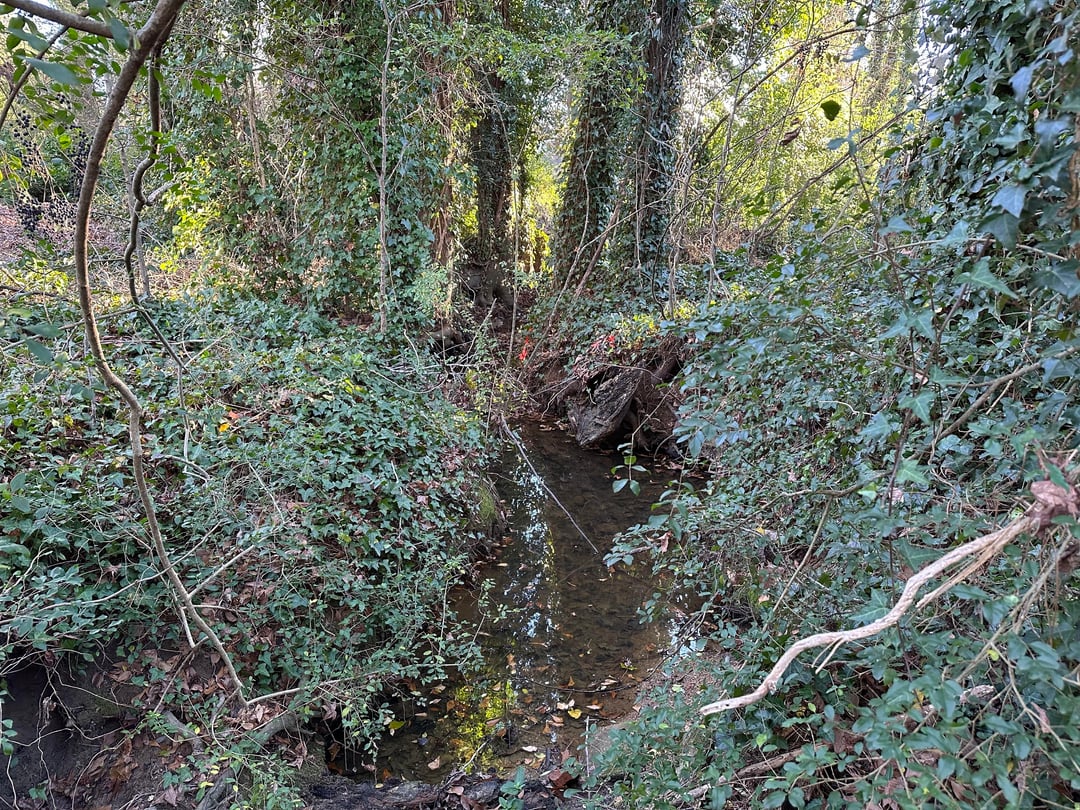
Something to consider: these trees fell because they were growing on the bank of a storm water runoff along my property line. They only had half of their roots in stable soil. I’ve added a few pics of the stumps and the runoff ditch. I am about 0.25 mile from the local elevation maximum for this runoff area, and in addition to the (5) residential properties between me and the that maximum there is a public middle school with (2) small parking lots and an athletic field. The gums appear to be around 30 yo and the red oak is easily 45 yo. I’m unsure if composting them will expose my garden soil to a life time of accumulated runoff nastiness, or if that’s any better or worse than the pre-bagged compost I buy from Lowe’s each year when I need to supplement.
Should I compost it? Or will I make problems for myself if I do?
Pictures:
1) pile of split wood
2) tree stumps that have slid off into a drainage ditch
3) drainage ditch
3) drainage ditch
by original-qdude
12 Comments
Look up hugleculture. You can put the logs as is with a bunch of twigs and compost or nitrogen sources in the bottom of your garden beds, save the money of renting a wood chipper
Ease over effort. Cost to do it yourself gets you more than taking elsewhere. Plus you can control your output if you do it yourself.
My fav way is to put some lumber together however you want to make a raised bed. Put it wherever you want it to go and then dig a hole in the ground. Place the excavated soil outside the bed. Put the logs in the hole and pack in dirt or other material around the logs. Then do layer after layer until you’re back up to ground level (or a bit more if you wanna). Then start mixing in compost/dirt mixture like a normal.
This has several benefits:
– the logs have nutrients that will break down over time (but won’t be super bioavailable for a while).
– water will likely puddle up in the hole where the logs are for longer than normal so it’ll give time for the (see next point)
-logs will absorb more water like a sponge. Even if the roots of the plants don’t extend to the rotting logs, it’ll keep that area more moist like a wicking bed.
– worst case scenario, you’ve gotten rid of the logs and didn’t have to buy (as much) soil for a raised bed
Caveat: if the outside of the logs are more rotten than the inside, you can scrape it off and use it for the higher up layers since it’s closer to compost.
So this runoff ditch, is it just basically for storm overflow? I wouldn’t be too overly concerned about that if so. Unless it floods quite regularly, and dries back fast and the flood waters come through contaminated areas. Then I might be concerned about elevated levels of stuff in the soil. A good way to check if you’re gonna be dealing with issues would be to take soil samples from around that ditch area and get them tested. This will tell you what’s currently in it and give you some idea of what the trees could have consumed.
If the trees were relatively healthy though, and fell during a storm and their roots were as you said, I wouldn’t be too concerned on that either. It sounds like they died ultimately due to not having enough of their roots in the ground, reducing their stability.
I’d say go for it.
I was going to suggest making mushroom logs (where you inoculate logs with mushroom spawn to grow mushrooms) with them because oaks are ideal for that and sweetgum also work. but im not sure if the runoff thing is an issue with that
I don’t know if I’d put it in a compost pile or chip it. Seems better to find either some use for the wood or just let it sit in the environment acting as a carbon sink and food for bugs and fungi
When I was building my raised beds I practiced a form of Hugelkultur. I had several birch trees that had died and I needed to dispose of. I cut them into sections and placed them into the bottom of the raised beds. The beds produced well the first year. The next three years they went crazy. Tomatoes, potatoes, sweet potatoes, green beans, broccoli, cauliflower, cucumbers, squash, peppers, well you get the idea. The 5th year production fell off so I bug deep into the beds and found great soil no birch logs, plenty of worms. Worked in some additional compost and composed chicken manure. More great production.
I will do this form of Hugelkultur again when I build new raised beds.
Have you tried selling the remainder? I am always looking for inexpensive but good wood for my fire pit.
I’d personally just let the stumps rot naturally, use the cut wood in an outdoor fire pit
Kinda self composting as is
That’s just too much work. I would stack it on the side somewhere for a native habitat or use it for camp fire wood in the back yard, then use the ash in the garden as needed.
I wouldn’t do it because that looks like kudzu growing all over it.
Edit: upon closer look, it looks like ivy? Equally tenacious, just not as fast-growing.