
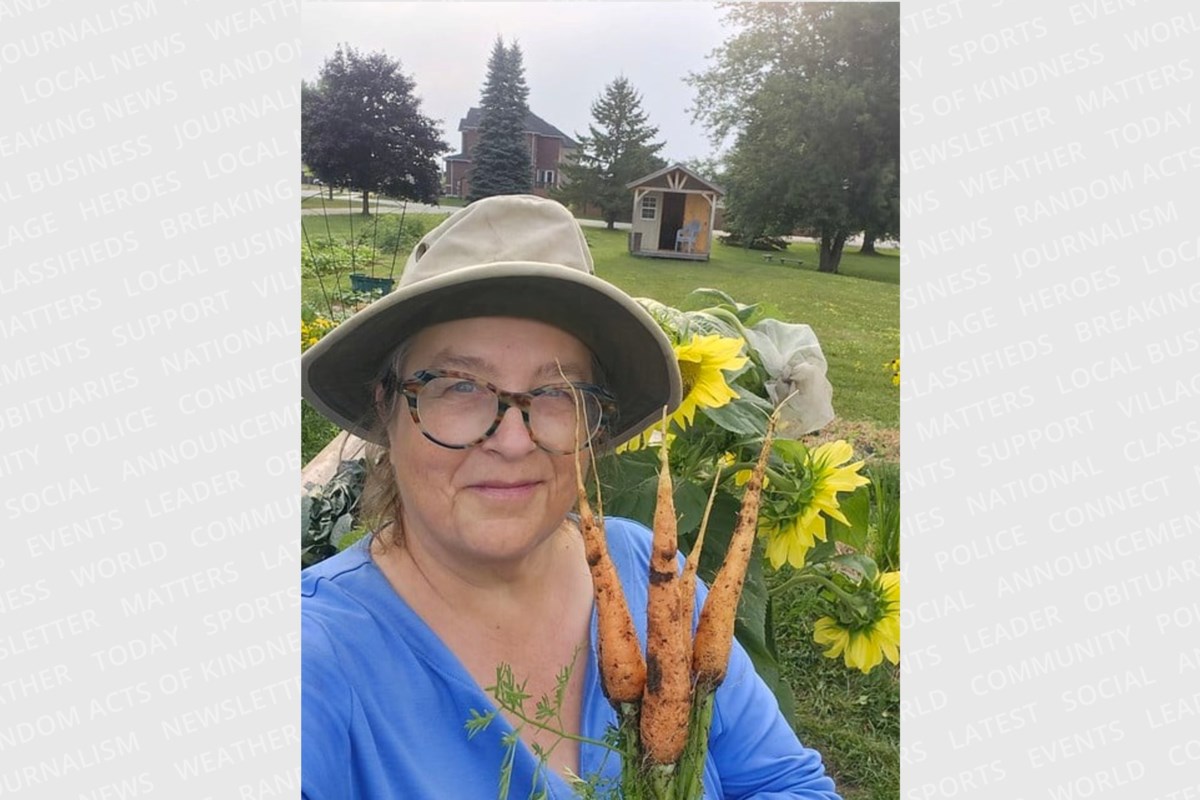
‘What would your garden look like if it were designed to meet the needs of pollinators, beneficial insects, and birds as well as you?’ asks master gardener
Happy New Year! I wish us all good growing, plentiful rains (but not too much), moderate temperatures and plenty of sunshine.
Recently, I read an article on urban planning in The Walrus. The article states that modern urban centres were planned by healthy white men and they were designed for healthy white men.
New thought in urban planning wants to design public spaces that consider the needs of a broader range of people who also play important roles in the community. What would towns and cities look like if they were designed to include young families, teenagers, seniors, the disabled and others?
Then I started to think about my garden space and how I tend to design it to suit my needs, even though I share that space with other creatures who play an important role in a healthy and productive garden.
I need my ornamental gardens to be attractive and the vegetable garden needs ease of passage and room for equipment. Meanwhile, the creatures need: shelter, food, water, and a place to raise their young.
So here’s a thought experiment for you: What would your garden look like if it were designed to meet the needs of pollinators, beneficial insects, and birds as well as you? Does it prompt you to make any changes to your plans for the coming season?
Here are a few articles that explain how to create the kind of habitat required by the living things that share our space to get you thinking.
Don’t start seeds yet
Seeds catalogues have been arriving for the last couple of weeks. I am still waiting for one or two more to come in, but I can always visit their website if I’m impatient to see what’s new for this year.
Some of us get the itch to start seeds once the holiday decorations have been packed away. All this snow makes you want to see something sprout and grow. Unfortunately, it’s too early to start all but the most difficult seeds, such as delphiniums and eryngiums.
This is a great time to organize your seed-starting supplies, making sure everything is clean and ready to go.
What you can be doing now is sowing those seeds that require a period of cold in order to germinate. The process of chilling seeds to get them to germinate is called “cold stratification”.
Nearly all trees, shrubs, and flowers that are native to this part of Ontario need cold stratification to germinate. In their natural habitat, native plants bear seed in fall. The seed falls to the ground, where they lie all winter in the wet and cold soil. Hormones in the ripened seed cause the seed to remain dormant until certain conditions are met.
For Ontario wildflowers and some ornamentals that we grow, cold temperatures followed by warm temperatures are the trigger to release the seed from dormancy and start growing.
Wet soil softens the seed coat and when those dormancy hormones fade, the seed begins to germinate. Without that period of cold, these seeds may not germinate at all, or if they do, the seedlings will be weak. Check your seed packet to see if your seeds need this chilling time.
Gardeners can mimic the natural conditions at home by mixing seed with a bit of damp potting soil in a glass container or plastic bag, then refrigerating it for the period recommended on your seed pack. At the end of the cold spell, spread the cold soil across the top of a seed tray that has been partially filled with potting soil, and place the tray in a warm spot with bright light and wait for them to germinate.
Winter sowing
Another way to cold stratify seeds is using a technique called “winter sowing”.
Winter sowing is done outside, meaning you don’t need to provide the indoor space, heat or lights to get things going.
Using clear or translucent plastic containers, seeds will experience winter conditions outside but in a protected environment that will let them germinate earlier than if they were sown directly outside. They will germinate easier and seedlings will be healthier, with less work, than if they were started indoors.
Winter sowing is useful for any seed requiring cold stratification, but it can also be used to start cool-season vegetables, cold-tolerant annual flowering plants, most perennials, and cold-hardy herbs. It is not suitable for heat-loving plants that need an early start, such as tomatoes and basil, or petunias and begonias.
Winter sowing involves planting seeds into containers that allow sunlight to penetrate. The containers need to be able to drain and be open at the top to allow moisture in. The containers are placed outdoors in January, in a spot protected from wind, and nature takes its course.
The hardest part of winter sowing is collecting the containers you need. Milk jugs (if you can get them), plastic vinegar jugs, two litre pop bottles, food take-out containers with a high clear lid – the kind roast chicken is sold in – will all work. Anything that can hold soil and can be drilled for drainage and air holes.
No matter what container you use, drill or poke drainage holes in the bottom. If you are using a food take-out container, also make ventilation holes in the top.
With a sharp knife or a pair of scissors, cut jugs and large plastic bottles nearly in half, about 10cm from the bottom. Leave a “hinge” holding the bottle together. You will want to open and close the container later on.
Fill the bottom with about 8cm of pre-moistened, good-quality potting mix. Plant the seeds at the depth recommended by the seed package, spacing them an inch or so apart. Write the plant variety on a garden label with a #2 pencil and insert into the soil in front of the hinge.
Close the container and seal the cut edge with duct tape. Use a UV-resistant marker to label the outside of the container. (The inside label is in case the outside one fades or washes off.) You don’t need the cap; it can be recycled.
Place your containers outside in a protected area where they will get some sun. East exposure is best, but any site will do as long as they are protected from wind or curious animals that will knock them over. Then just leave them be.
Over the winter, they will get covered in snow and ice and they’ll get rained on. All perfectly normal conditions for your seeds.
As spring approaches, the plastic container creates a greenhouse that warms up earlier and protects the seeds. Start checking for germination.
When you see seedling leaves, monitor moisture levels to ensure the soil doesn’t dry out. When the seedlings show true leaves, remove the duct tape and open the container by day to expose the seedlings to light and air. If the nights are still cold, you can close the container loosely to provide protection.
For complete instructions on winter sowing, visit University of Maryland Extension for a pdf file you can download.
Marianne Lepa is a Master Gardener based in Collingwood, Ont. and member of the board for the Collingwood Garden Club.
Comments are closed.