
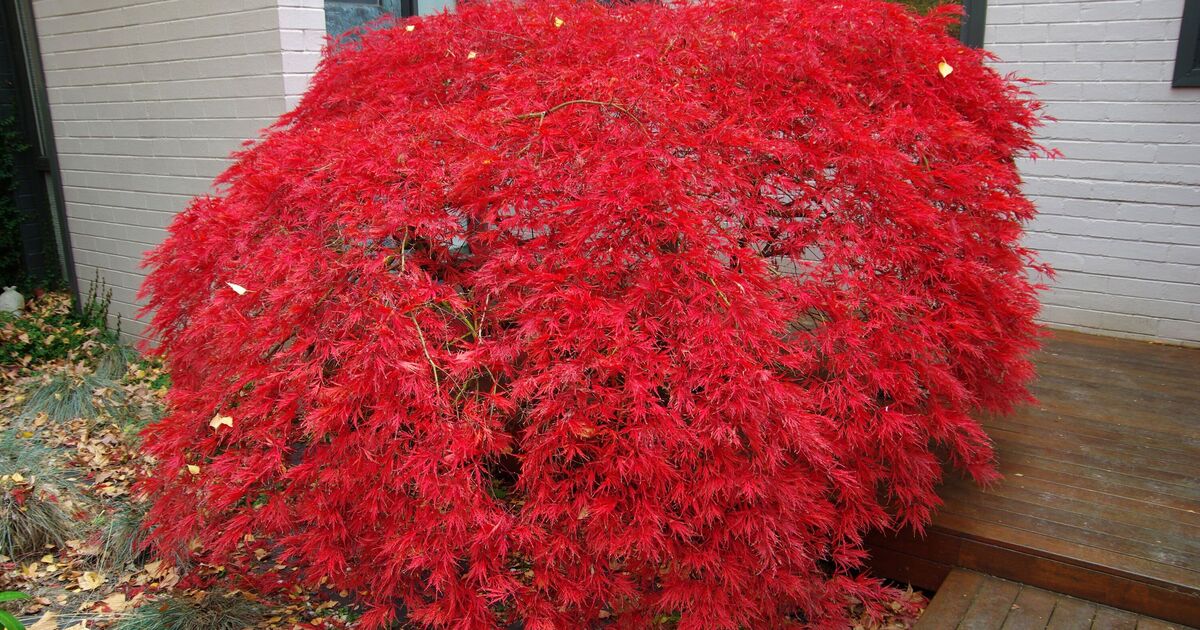
Japanese maples are relatively easy to care for, but they do need some maintenance to make the most of them. One thing gardeners recommend doing this time of year is pruning them. Some simple pruning can restore or enhance their natural beauty, bringing out the best of these garden favourites for summer and winter viewing.
Gardening expert Melissa Strauss from Epic Gardening has shared how to go about pruning maple trees to give them a “more vigorous start in the spring”. She also shared a few other plants that need pruning at this time of year.
She said, “Prune your Japanese maples in winter while they are dormant. These will bloom on new growth, and trimming them now helps them grow faster and get a more vigorous start in the spring.”
Melissa pointed out that you won’t need to prune in the first few years unless you are going for a specific shape.
For young trees, a light trimming can stimulate dormant buds, which is good for branching.
Remove all dead and damaged wood first and survey the interior. If cutting entire branches, cut parallel to the trunk, leaving the collar intact.
Remove water spouts and crossing branches to thin out the interior. Never remove more than one-quarter of the tree’s total branches in a single session.
Other plants to prune in winter
Panicle hydrangeas
Hydrangeas are not all the same when it comes to pruning. Only prune oakleaf hydrangeas and bigleaf types right after they bloom, as they set buds on old wood and will not bloom if you cut off the buds in winter.
Panicle hydrangeas bloom on new wood, however, so pruning them in winter “promotes vigorous growth and thus, increased flowering”.
When pruning your panicle hydrangea, remove crossing branches to keep the interior open and achieve an overall pleasing shape.
Always make cuts just above an outward-facing bud to encourage a rounded form. Cut these back by about one-third to keep them branching and maintain a nice shape.
Spiraea
Spireas are beautiful blooming shrubs, and they are best pruned in the winter while dormant. Melissa explained: “This will help to rejuvenate the plant and encourage bushier growth in the spring.
“These can tolerate hard pruning, and it will actually stimulate bushier, more floriferous growth.”
If you want to perform a light trim, remove any dead and damaged branches. Cut the branches back to the desired height, making sure to make your cuts just above a bud.
Don’t cut your spiraea to the same height every year, or it will congest that area of the plant and lead to leggy growth.
Cutting it to the base of the plant will rejuvenate a leggy plant or one with an undesirable shape.
Crape myrtle
Winter is the right time to prune these, as well, and for much the same reason as others. It “promotes healthy growth, branching, and thus, more flowering”.
Trim your crape myrtle into an open vase or chalice shape. The branches should gracefully grow upward and arch out at the tops.
Trim away crossing branches in the interior, and if you want to increase the bloom, you can lightly tip the branch ends.
Comments are closed.