
If, like most of us, you don’t live directly on the water, you can be forgiven for not thinking your garden affects the waters that surround us.
But while gardens thrive on summer showers, every massive rainfall worries ecologists, who are reminded of how quickly the waters can collect toxic chemicals from gardens, lawns and roadways, and deposit them in the bays and creeks surrounding us.
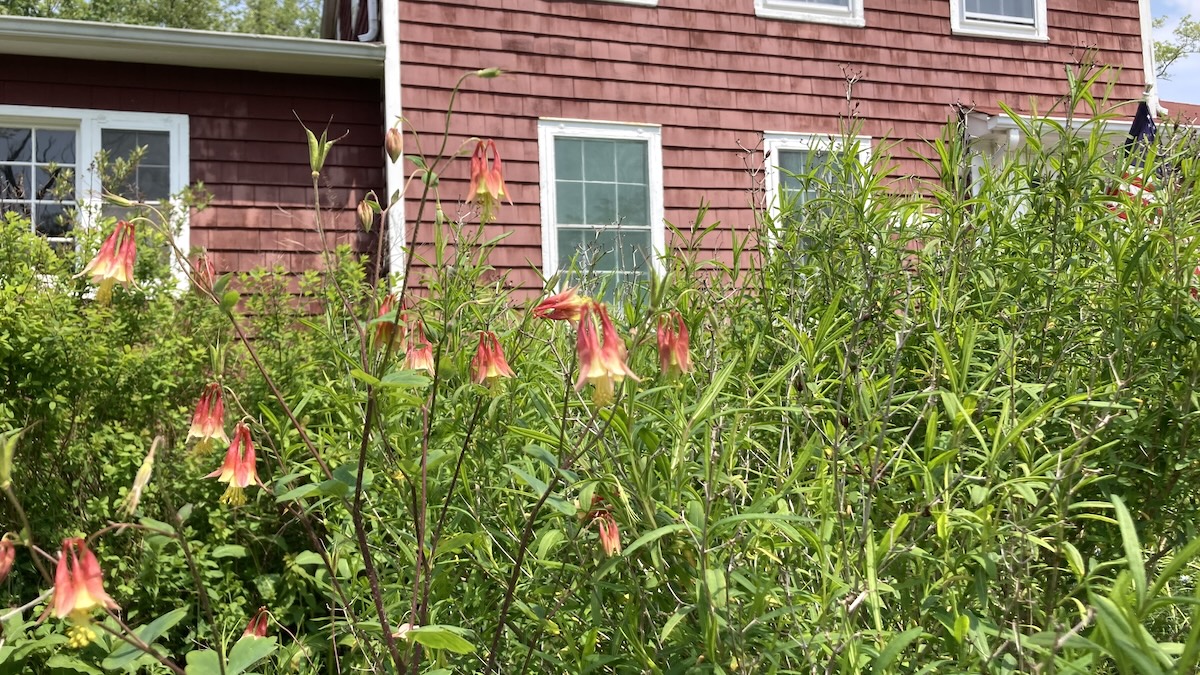
Pictured Above: A portion of the rain garden at the Roy Latham Nature Center at Inlet Pond County Park in Greenport.
“We gardeners think of rain as a blessed event, but it is an immediate trigger of stormwater pollution,” says Cornell Cooperative Extension Community Horticulture Specialist Roxanne Zimmer. “Between the bays, creeks, rivers and ocean, we have water just about everywhere on Long Island.”
For the second year running, Ms. Zimmer is teaching a course on Coastal Gardening, in a partnership between the New York State Department of Environmental Conservation, the Long Island Sound Partnership and CCE.
The hybrid course, open to all residents of Suffolk County, includes online learning segments, field trips and three in-person sessions on Saturdays, Jan. 31, Feb. 28 and March 21 from 9 a.m. to Noon at the Southold Town Recreation Center, 970 Peconic Lane in Peconic.
“Gardeners really are problem solvers,” said Ms. Zimmer. “We want to encourage people to capture some of that wonderful water on your property in a rain garden, and inform people about what rain gardens are and how easy they are to install.”
A field trip is planned on March 21 to visit the gardens at Inlet Pond County Park, where North Fork Audubon has nurtured several native, berry-producing and rain gardens around the Roy Latham Nature Center.
“That building is essentially a residential home, and we will look at how the rainwater has nourished the garden and prevented water from going elsewhere, using the filtering provided by the plants and the roots to make the water cleaner as it goes down into the aquifer,” she said.
Ms. Zimmer said the class will cover what types of plants are most well-adapted to a rain garden, which includes a berm, a slope and a low area where water-loving plants thrive.
Attendees will hear from representatives from New York Sea Grant, CCE’s Storm Water Management office, New York State’s Soil Health lab at Cornell University and University of Delaware entomologist and best-selling author Doug Tallamy throughout the class. Two teaching assistants, Master Gardeners Linda Carlson and Deb Kimmelman, will also be available to answer questions.
The course is capped at 50 participants, and those who want to register can contact Ms. Zimmer at rz379@cornell.edu or at 631.727.7850 X11215.
The course includes a 10-hour stewardship role, in which participants share what they’ve learned in the class in a narrative, with photos, shared with Ms. Zimmer. Those actions can include talking with neighbors, posting on social media and installing or maintaining a rain garden.
“It’s ten hours of spreading the word, sharing the information with others in some way,” said Ms. Zimmer, who suggested talking with neighbors about shared gardening efforts alongside driveways adjacent to property lines as one potential stewardship activit.
While the hybrid nature of the course makes it possible to gather all the information without attending the course in person, Ms. Zimmer said she hopes attendees come to at least two of the three in-person sessions.
“It’s easier to ask questions when we are together,” she said. “I hope people will come for conversation and engagement, and to capture the sense of ‘this is how we can do this.’”
For more information, visit Cornell Cooperative Extension of Suffolk County’s website.
Keep Independent News on the East End
The Beacon is able to provide all of our content online free of charge thanks to support from our readers. Be a vital part of keeping our community informed!
Advertisement

Related
Comments are closed.