
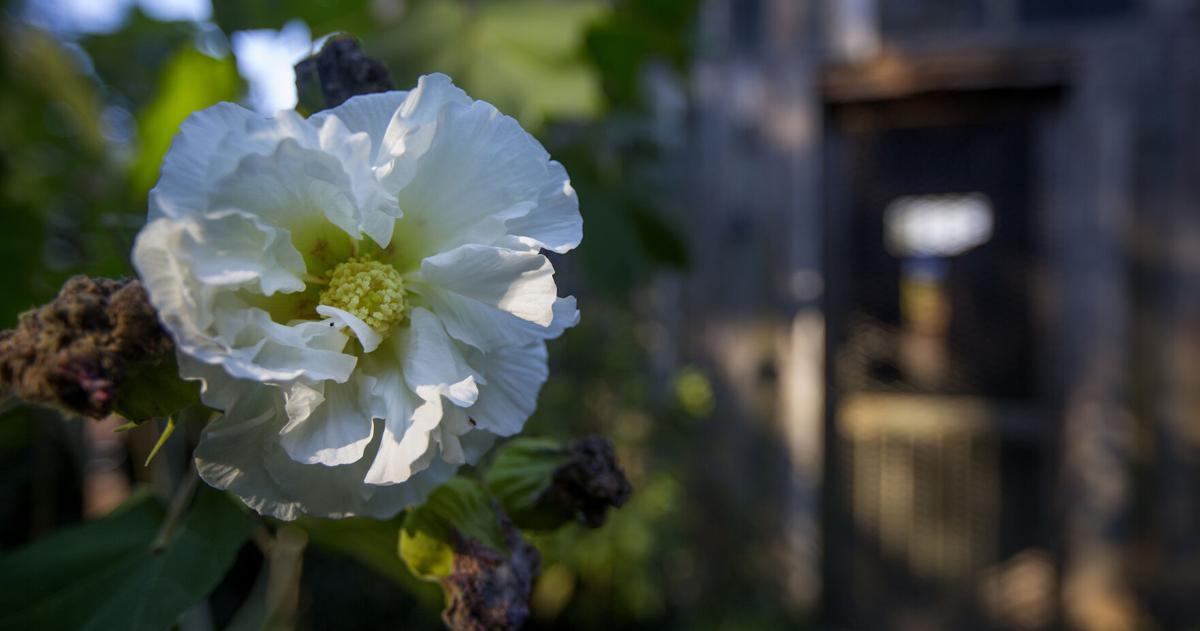
When is the best time to trim confederate rose bushes? I would like to root some of the branches I cut off. — Jessica
Confederate roses (Hibiscus mutabilis) are often killed back by winter freezes, so the major pruning is generally done in March or early April. At that time any cold damage that may have occurred is removed. Then, if the gardener desires, the plant may be cut back even farther to control the size and shape (how far back you cut beyond the cold damage is up to you).
Pruning can continue through August as needed based on the gardener’s desires to control the height and bushiness of the plant. Cuttings about 6 inches long taken during summer generally root reliably.
Confederate roses are a Southern heirloom plant with a long tradition of cultivation, and are one of our most spectacular fall-blooming plants. These large, robust-growing plants reach heights of 8-10 feet and produce big, showy flowers in the fall.
We have recently moved to the northshore, and a question keeps coming up. Is it better to rake up the leaves during the winter or leave them alone to protect the grass from the cold? — Jean
The leaves should be removed from the grass either by mowing with a bag attached, mowing with a mulching mower (if leaf drop is not too excessive) or raking (use raked leaves for mulching or add them to compost piles).
It is unhealthy for the grass to remain covered by a thick layer of leaves through the winter. The turf grass does not need the leaf cover for cold protection. So, it is best to remove the leaves and use them for mulch or put them in the compost pile.

It doesn’t matter where a seed catalog comes from, as long as you select seeds appropriate for our area.
Provided Photo
I have received many seed catalogs, but all have addresses far north, from Indiana and all the way up to Maine. Should you purchase from these companies, and, if so, how do you select seeds proper for our area? Do you suggest any other seed source for our area? — Ben
Where a company that sells seeds is located has nothing to do with the suitability of plants grown from those seeds for our area. The seeds the company sells could have been produced anywhere in the world. The company is simply packaging and marketing them. So, select seeds of plants and varieties that you know are suitable for our area (based on local information and recommendations, appropriate references, etc.), and feel free to order them from any seed company anywhere.
For example, seeds for “Contender” bush snap beans will be the same ordered from a company in California, or Michigan or Pennsylvania. And those bean seeds all three companies are selling might have been produced in Costa Rica.
The leaves of my azaleas have black spots on them, and I’m concerned about the health of the bushes. What do you recommend? — Ellen
Fungal leaf spots are an occasional problem on most azaleas. They detract from the appearance of the plant but are not life threatening. They may cause some leaf drop that makes the plant look thinner. But when the new growth comes out in the spring the plants will look more like themselves.
Spraying a fungicide now will not be all that beneficial. The fungicide will not take away the spots that have already occurred. The plants will not look any better until spring growth occurs.
In April, fertilize the shrubs with an acid-loving plant fertilizer to encourage vigorous new growth. The azaleas should be fine.
Cut potatoes and allow them to heal for 24 to 48 hours. Be sure each potato seed planted contains at least one eye or bud from which the plant with grow.
PHOTO BY HEATHER KIRK-BALLARD
Garden tips
CAMELLIA SHOW: If you love camellias, plan to attend the Northshore Camellia Club’s Camellia Show on Sunday at The Greenwood, 75082 La. 25 in Covington. Public viewing of show flowers is 1 p.m. to 4 p.m. You will be amazed by the beauty and diversity of the camellia flowers on display. Camellia plant sale begins at 9 a.m. and last until plants are all sold.
TATER TIME: Plant Irish potatoes into the garden now through mid-February. Cut seed potatoes (available at nurseries or feed stores) into pieces about the size of an egg. Make sure each piece includes at least one eye. Allow the cut seed pieces to heal a few days, and then plant them into well-prepared beds about 12 inches apart and 4 inches deep. Harvest generally takes place in May. Red LaSoda (red) and Kennebec (white) are generally the most readily available, and both produce well here.
TIME TO TOSS: If you purchase pots of spring-flowering bulbs in bloom, it is generally best to discard them after they finish flowering. Some exceptions would be amaryllis, paperwhites, daffodils and other narcissi. These can be planted into the garden when the flowers fade. Wait until April to plant amaryllis in the garden.
DIG AND DIVIDE WHILE DORMANT: Now is a good time to dig, divide and transplant dormant hardy perennials in your flower gardens. Plant divisions in other areas of your landscape or share with friends. Do not dig and divide any perennials that are in active growth now, such as Louisiana irises, calla lilies, Easter lilies, red spider lilies, acanthus and spring flowering bulbs.
Comments are closed.