
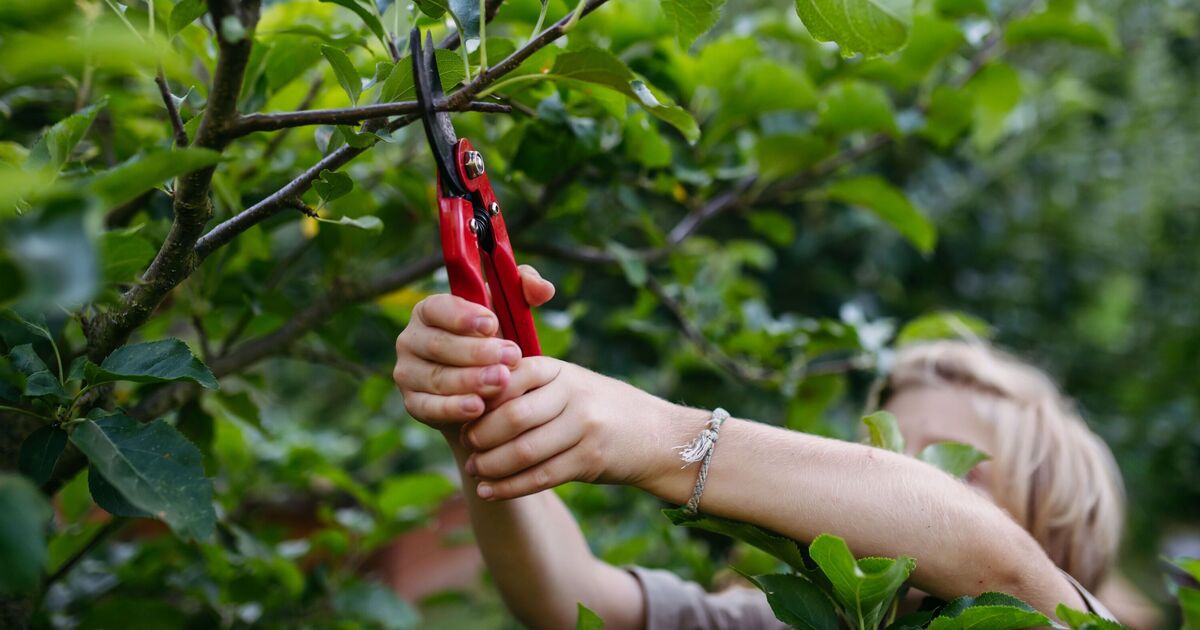
Pruning at this time of year means trimming back and reshaping particular plants to promote robust, healthy growth and an abundance of fruit and blooms. Undertaking this gardening task now can also help stop the spread of disease. That said, not every plant should be pruned between autumn and winter – some are better left until later in the year.
To guide gardeners on which plants to prune at present, Julia Omelchenko, a gardening expert at Plantum, the app that identifies plants and enhances plant care, has shared her top three recommendations. She stated: “Autumn pruning is important to promote healthier growth in plants, improve their flowering and appearance, and prevent fungal and bacterial diseases.” Before you begin pruning, it’s crucial to understand a few key principles to avoid damaging your plants. Firstly, always use sharp and clean equipment such as scissors, pruning shears and saws to ensure neat cuts.
Secondly, sterilise your secateurs before and after pruning each plant to prevent disease transmission.
Thirdly, always wear gloves and safety glasses for protection. Finally, once finished, disinfect the cuts with a fungicide or potassium permanganate, and seal thick branches with pruning sealer to ward off infections.
Plants that need pruning now
1. Fruit trees
Julia pointed out that December is the optimal time to prune fruit trees, particularly apples and pears, when they enter their dormant period, which continues until early spring. It’s necessary to remove damaged and diseased shoots, as well as bare branches, and thin out the crown.
This will “increase yields, prevent diseases, and improve the appearance” of your plant. However, it’s crucial not to remove more than a third of a branch at once.
2. Roses
During this period, ensure to prune your roses, although this “only applies to” climbing varieties. Other types should be pruned after frosts in late winter or early spring to eliminate branches that have been damaged during this time.
To prune them now, trim back dead, damaged, and dense stems of your climbing roses. Remove any shoots growing inward from the crown to ensure good air circulation.
This will safeguard the roses from powdery mildew, which is caused by excessive moisture and poor airflow.
3. Evergreen plants
Evergreen plants, such as juniper, thuja, and yew, should be pruned in December, though it can also be done in spring. Their branches should also not be cut more than a third of their length.
This will “prevent stress” and “promote healthy growth”. As conifers are susceptible to fungal diseases, sanitary pruning is an “excellent” preventative measure against infections.
Comments are closed.