
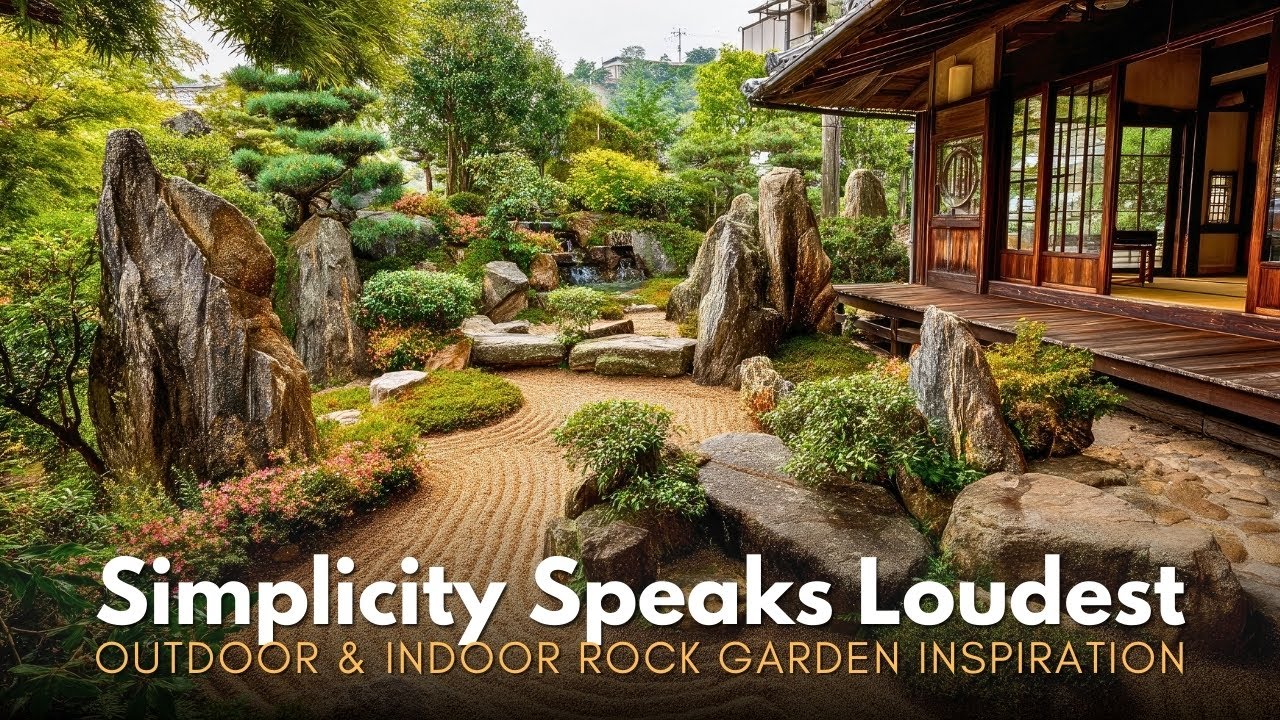
This video explores the philosophy and design of Japanese rock gardens, also known as karesansui, as a path to finding inner harmony in a chaotic world. From the outdoor courtyards, gates, and stone pathways to the careful placement of rocks, sand, moss, and lanterns, every element is crafted to symbolize balance and mindfulness. Outdoor features such as water elements, minimalist planting, and meditation pavilions create spaces where visitors can slow down, reflect, and experience calm, emphasizing the power of simplicity and intention in design.
The journey continues indoors, where rock gardens transition into courtyards, tatami rooms, and Zen corners that integrate tranquility into daily life. Indoor adaptations—such as bonsai, tray gardens, subtle lighting, and soundscapes—extend the philosophy of calm into living spaces, making serenity a part of everyday routines. By blending outdoor and indoor harmony, Japanese rock gardens remind us that peace is not found by escaping chaos, but by creating balance and clarity within it.
00:24 Introduction: A Journey to Serenity
01:24 The Essence of the Rock Garden
03:00 First Impressions: The Garden Entrance
04:36 Outdoor Pathways of Intention
06:12 Framing Nature with Gates and Fences
07:36 Stones as the Garden’s Soul
09:12 Sand and Gravel: The Flow of Still Waters
10:36 The Role of Moss in Outdoor Gardens
12:12 Water Features: The Sound of Stillness
13:48 Sculptural Lanterns as Symbols of Light
15:24 Minimalist Outdoor Planting
17:00 The Meditation Pavilion
18:36 Transition from Outdoor to Indoor
20:12 Indoor Courtyards: A Hidden Refuge
21:48 Tatami Rooms Overlooking Gardens
23:24 Indoor Water Elements
25:00 Rock Arrangements in Living Spaces
26:36 Light and Shadow Play Indoors
28:12 Bonsai and Indoor Greenery
29:48 Indoor Zen Corners for Reflection
31:24 Furniture Integration with Garden Views
33:00 Seasonal Adaptations Indoors
34:36 Silence and Sound Indoors
36:12 Daily Rituals Around the Garden
37:36 Conclusion: Harmony in Every Step
#JapaneseGarden #RockGarden #ZenGarden #GardenDesign #JapaneseRockGarden #ZenLifestyle #OutdoorDesign #IndoorGarden #MinimalistGarden #LandscapeDesign #GardenInspiration #ZenDecor #PeacefulLiving #MindfulDesign #TranquilSpaces
[Music] [Music] In a fast-paced world filled with noise and distraction, finding a place of calm has become a necessity rather than a luxury. Japanese rock gardens or kerosansui offer a timeless refuge where simplicity becomes profound. This video takes you on a thoughtful exploration of how these gardens designed with rocks, gravel, sand, and natural elements embody harmony amidst chaos. From the outdoor courtyards to indoor adaptations, we’ll explore how each design inspires reflection, nurtures mindfulness, and creates spaces where inner harmony naturally unfolds. [Music] Japanese rock gardens are more than landscapes. They are living art forms with philosophy woven into every detail. Unlike lush floral gardens, rock gardens emphasize the beauty of stillness, often using stones as mountains and rake sand to represent flowing water. This minimalism invites the mind to quiet itself, focusing on form and meaning. Each stone placement is intentional, representing balance, impermanence, and the interconnectedness of all things. The essence lies not in excess, but in restraint, which helps foster peace within a chaotic world. [Music] I love you. [Music] [Music] [Music] The journey into tranquil. Quity begins at the garden’s threshold. A carefully designed entrance sets the tone for what lies within. Often marked by a simple wooden gate or bamboo fence. This transition from the outside world into the garden space symbolizes leaving behind clutter, stress, and noise. Pathways of stone guide your steps with deliberation, encouraging mindfulness in every movement. The entrance itself, though humble, acts as a bridge, reminding visitors that stepping into a Japanese rock garden is an act of crossing into calm. [Music] Pathways are more than functional. They represent life’s journey. Stones are arranged not symmetrically but organically, so each step requires attention. Mosscovered rocks soften the paths while gravel edges keep the layout clean. Walking these paths slows down the mind, making the visitor present in the moment. In traditional gardens, stepping stones lead to hidden spaces, inviting curiosity and discovery. The placement of these paths embodies Japanese philosophy. Life is not always straight or predictable, yet every step has its purpose and beauty. [Music] Boundaries are essential in Japanese gardens, not as barriers, but as framing devices for nature. Bamboo fences, wooden gates, or low stone walls create enclosure, offering a sense of safety without shutting out the world. These structures guide the eyes and define the flow of the garden, ensuring the visitors attention is drawn inward by framing small sections of the garden. Fences encourage us to appreciate details we might otherwise overlook. In this way, outdoor boundaries contribute to harmony, emphasizing both space and focus. [Music] At the heart of any Japanese rock garden are the stones. They are considered the soul of the design representing strength, permanence, and the natural world. In miniature stones may be arranged in groups of three to symbolize mountains or islands, evoking landscapes far larger than the garden itself. Each stone’s size, shape, and texture are chosen carefully to balance the composition. Outdoor spaces benefit from these grounding elements as they anchor the design while reminding viewers of stability amidst life’s constant change. [Music] Gravel and sand play a crucial role symbolizing rivers, oceans, or the void of emptiness where peace is found. When raked into flowing patterns, they mimic rippling water or waves washing against stone islands. Outdoors, these wide gravel beds invite contemplation with their simplicity contrasting the complexity of life. The act of raking itself is a meditative practice, erasing old patterns and creating new ones, symbolizing impermanence. This delicate balance of permanence in stone and transients in sand embodies harmony within chaos. [Music] Moss brings softness, texture. text ure and life to the otherwise stark arrangement of stone and gravel. It thrives in shaded corners covering rocks, fences, and pathways with the gentle green carpet. In Japanese culture, moss symbolizes endurance and resilience, growing quietly even in difficult conditions. Outdoors, moss blends the artificial design with natural processes, making the garden feel timeless. It connects the rock garden with the passage of seasons, reminding us that beauty lies not in perfection, but in the graceful acceptance of change. [Music] [Music] [Music] Although many rock gardens symbolize water without using it, some incorporate small ponds, trickling fountains, or bamboo water spouts known as shiroodoshi. The gentle sound of water enriches the sensory experience outdoors, calming the mind and covering unwanted noise from beyond the garden. Water also represents purification in Japanese tradition, inviting visitors to symbolically wash away mental burdens. A carefully placed water feature turns the rock garden into a multi-ensory retreat, deepening its power to create peace amidst the external world’s chaos. [Music] [Music] Stone lanterns, often seen in Japanese gardens, serve both practical and symbolic roles. While they may provide gentle illumination at night, their deeper meaning lies in guiding the spirit toward enlightenment. Outdoors, they are placed near water, pathways, or rocks, offering balance to the surrounding elements. Lanterns act as focal points, reminding us of clarity amidst confusion. Their carved forms blend human craftsmanship with natural stone, symbolizing the union of human intention and nature’s timeless presence within a harmonious garden setting. [Music] Unlike western gardens overflowing with color, Japanese rock gardens embrace restraint in plant selection. Outdoor plantings often include evergreens, dwarf pines, or simple bamboo clusters. These plants symbolize endurance and continuity, offering greenery throughout the seasons without overwhelming the calm design. A single tree or carefully pruned shrub becomes a statement piece. Its presence magnified by the emptiness surrounding it. This minimalism allows the viewer’s mind to rest, focusing on balance and proportion. rather than distraction. Reinforcing the sense of inner harmony. [Music] Many rock gardens feature a small pavilion. or viewing deck where visitors can sit and contemplate the scene. This simple structure, often made of wood, is not meant for elaborate use, but for stillness and reflection. Outdoors, it provides shelter from sun or rain, encouraging longer stays within the garden. The pavilion acts as an anchor for human presence, a place where one can observe without disturbing the arrangement. It symbolizes the need for stillness in our busy lives, offering clarity amidst chaos. [Music] Jesus return. [Music] A Japanese rock garden does not end at the outdoor boundary. It often transitions seamlessly toward indoor spaces. Sliding shoe screens, verandas, or wooden decks connect the two realms. This continuity reinforces harmony, reminding us that tranquility should flow into all aspects of life, not remain confined to the garden. The transition is gradual, often designed to slow the visitors movement and invite reflection. By blending outdoor serenity with indoor living, the garden becomes a philosophy embodied in daily life. [Music] Inside traditional homes, small rock gardens are often created in courtyards or atriums. These indoor gardens maintain the same principles as their outdoor counterparts, but on a smaller scale. Stones, gravel, and moss may be arranged in carefully contained beds visible from multiple rooms. These hidden sanctuaries allow residents to experience nature’s calm without leaving the home. Indoor courtyards are especially valuable in urban environments where external chaos is unavoidable, creating a private retreat that nurtures harmony within one’s personal space. [Music] [Applause] [Music] [Music] [Music] [Music] Indoor spaces designed for contemplation often feature tatami matte flooring, minimal furnishings, and sliding doors that open to rock gardens. The view becomes a living artwork changing with light and season. Tatami rooms encourage mindful activities such as tea ceremonies, calligraphy, or meditation, each enhanced by the presence of the garden. The simplicity of the room mirrors the simplicity of the outdoor scene, aligning human activity with natural rhythms. Together they create a seamless dialogue between outer and inner peace. [Music] [Music] when Incorporated indoors, water features bring dynamic movement and soothing sound to enclosed spaces. Small stone basins with circulating water or miniature bamboo spouts replicate the outdoor experience on a smaller scale. The presence of water indoors symbolizes purification and refreshment for the spirit. Combined with rock and sand arrangements, indoor water elements create balance within confined living areas. They serve as subtle reminders of nature’s calming presence, softening the stresses of daily routines and reinforcing the garden’s role as sanctuary. [Music] Heat. Heat. [Music] [Laughter] [Music] Indoor rock arrangements bring the philosophy of the garden directly into living areas. A small tray garden with stones and rake sand can sit on a low table, serving as a personal meditation tool. Larger arrangements may occupy a corner of the room, blending naturally with wooden floors and neutral walls. These indoor adaptations allow for ongoing interaction where the act of rearranging or raking becomes part of daily mindfulness. Rocks indoors remind us that stability and stillness are possible within chaos. [Music] Lighting plays a crucial role in how indoor rock gardens are experienced. Natural light streaming through shoji screens creates shifting patterns across gravel and stones, reminding viewers of impermanence. At night, soft lanterns or recessed lighting can highlight specific elements, making the garden appear alive, even in stillness. This dynamic interplay between light and shadow deepens the sense of tranquility. Indoors where chaos often comes in the form of artificial distractions, light itself becomes a design tool to guide calmness. [Music] Just [Music] trust me. [Music] [Music] Indoor rock gardens often incorporate bonsai or carefully chosen greenery. These miniature trees embody nature’s vastness in small form, reinforcing the concept of balance and scale. When paired with rocks and sand, bonsai serve as living sculptures shaped with patience and care. Other greenery such as bamboo or ferns may soften the edges of stone arrangements. Their quiet growth reminds us of time’s passage while their presence ensures a connection to nature even indoors. Together they cultivate harmony in confined spaces. [Music] Not every home can accommodate a full rock garden, but even A small zen corner can capture the essence of inner harmony. A tray of sand, a few stones, and a bonsai placed in a quiet corner can transform an entire room’s energy. Indoors, these minimalist spaces act as anchors, reminding us to pause and breathe amidst daily routines. Their simplicity encourages mindfulness without requiring grand effort. Proving that tranquility can be created in any environment, no matter how chaotic. Heat. Heat. Indoor furniture placement is often designed with the garden in mind. Low seating allows unobstructed views of rock and sand arrangements, ensuring that the garden becomes a central part of everyday living. Wooden tables and benches echo the natural materials outdoors, reinforcing continuity rather than competing with the garden. Furniture frames the experience, supporting human comfort while emphasizing nature’s presence. This integration transforms indoor living into an extension of the garden itself where harmony is not separate but woven into life. [Music] You’re a tree. [Music] Just as outdoor gardens change with the seasons, indoor rock gardens can also reflect times passage. Rake sand patterns may shift, bonsai may be pruned differently, or seasonal flowers may be added sparingly. These subtle adjustments bring freshness to the space without overwhelming its calm. Seasonal adaptation encourages awareness of time and nature cycles, even indoors. This practice aligns the rhythms of daily life with the wider world, fostering inner harmony that flows naturally from one season into the next. Heat. Heat. [Music] Silence is central to the indoor rock garden experience, but sound can also enhance it. The subtle trickle of water, the rustle of bamboo leaves, or even wind chimes near an open window create layers of calm. Indoors, soundscapes play an important role in masking urban noise. helping residents reconnect with natural rhythms. The careful blending of silence and sound ensures that the garden’s tranquility is not only visual but also auditory, enriching the sense of peace within chaotic environments. [Music] Wow. She’s cute. [Music] Indoor Japanese rock gardens invite daily rituals that anchor mindfulness. This might include morning meditation while gazing at stones, or an evening tea ceremony with the garden as backdrop, raking sand patterns can become a therapeutic act, a way of releasing tension and expressing creativity. These small consistent practices transform the garden from a decorative feature into a lived philosophy. By engaging with the garden daily, residents integrate calm into their routines, cultivating inner harmony that endures amidst life’s demands. [Music] [Music] From outdoor courtyards to indoor sanctuaries, Japanese rock gardens offer a timeless path to inner harmony. Their power lies not in complexity but in simplicity. A careful arrangement of stone, sand, moss, and light that speaks to the soul. They teach us to find calm within chaos, reminding us that peace is not about escaping the world, but embracing it with clarity and balance. Whether large or small, outdoor or indoor, these gardens encourage us to pause, reflect, and rediscover serenity in every step. [Music] Wonderful. [Music] [Laughter] [Music] [Laughter] [Music] [Laughter]
1 Comment
Well done ❤🎉🎉🎉