
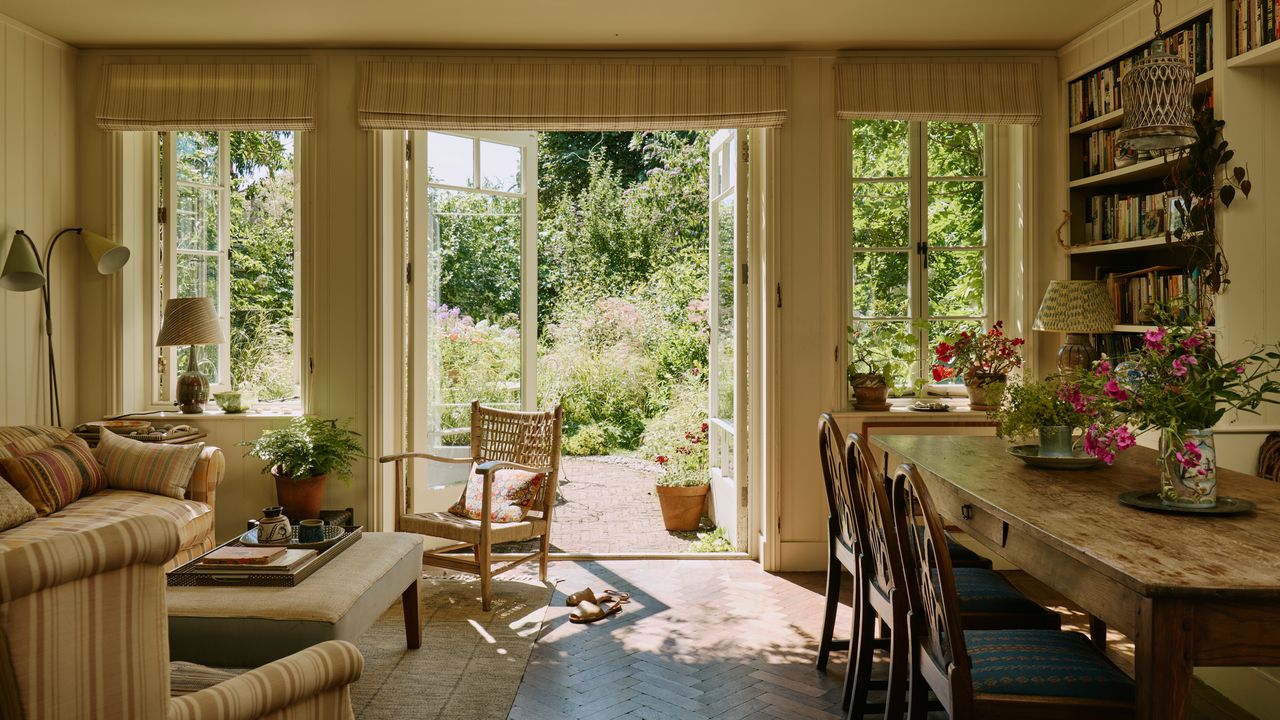
For what a room looks out onto, what you see, feel, hear and touch shapes and moulds your experience, determines your emotional response to a place. Japanese aristocrats in the Heian period commissioned the design and construction of the garden first and then the house. The building and its rooms were designed to ensure the best views of the garden, maximise the movement of air in summer, ensuring that the house had space to breathe and that it felt open and alive.
When working on a home I plan the structure of both the garden and a building’s interior in careful consideration of the other. I always advise people to plant, or better still keep, trees near to the house and you’ll not only be grateful for their shade in summer but in winter the shadow of leaves playing against the walls or on the floor inside will give you precious moments to pause. The first rays of the day falling one by one on the leaves of the fig tree at the foot of the garden, the excited nervous chatter of starlings feasting on grapes and figs in autumn; the quiet ephemeral beauty of grasses and evergreens frozen in the first frost; seed heads captured in the low rays of winter sunshine, the first snowdrops emerging in spring – all these sustain and nourish me and fill me with hope.
Long before you start decorating, consider first the layout and footprint of your house. There’s no rush to gut and strip – first work out how best to use the space. If you are planning on extending do you really need that much internal space? Would your house not feel more generous, more open, looking onto a larger garden? If windows are the art on the walls, then the garden is the painting seen through their frame, so consider what will you see, hear and smell and how that will make you feel when you walk through the front door or look out of the window. Weaving a home into the fabric of the landscape isn’t just confined to those privileged enough to live in a large house in the countryside. In an urban environment you can plan the view from one room to the next, considering the positioning not just of furniture but the planting of trees, climbers and plants outside.
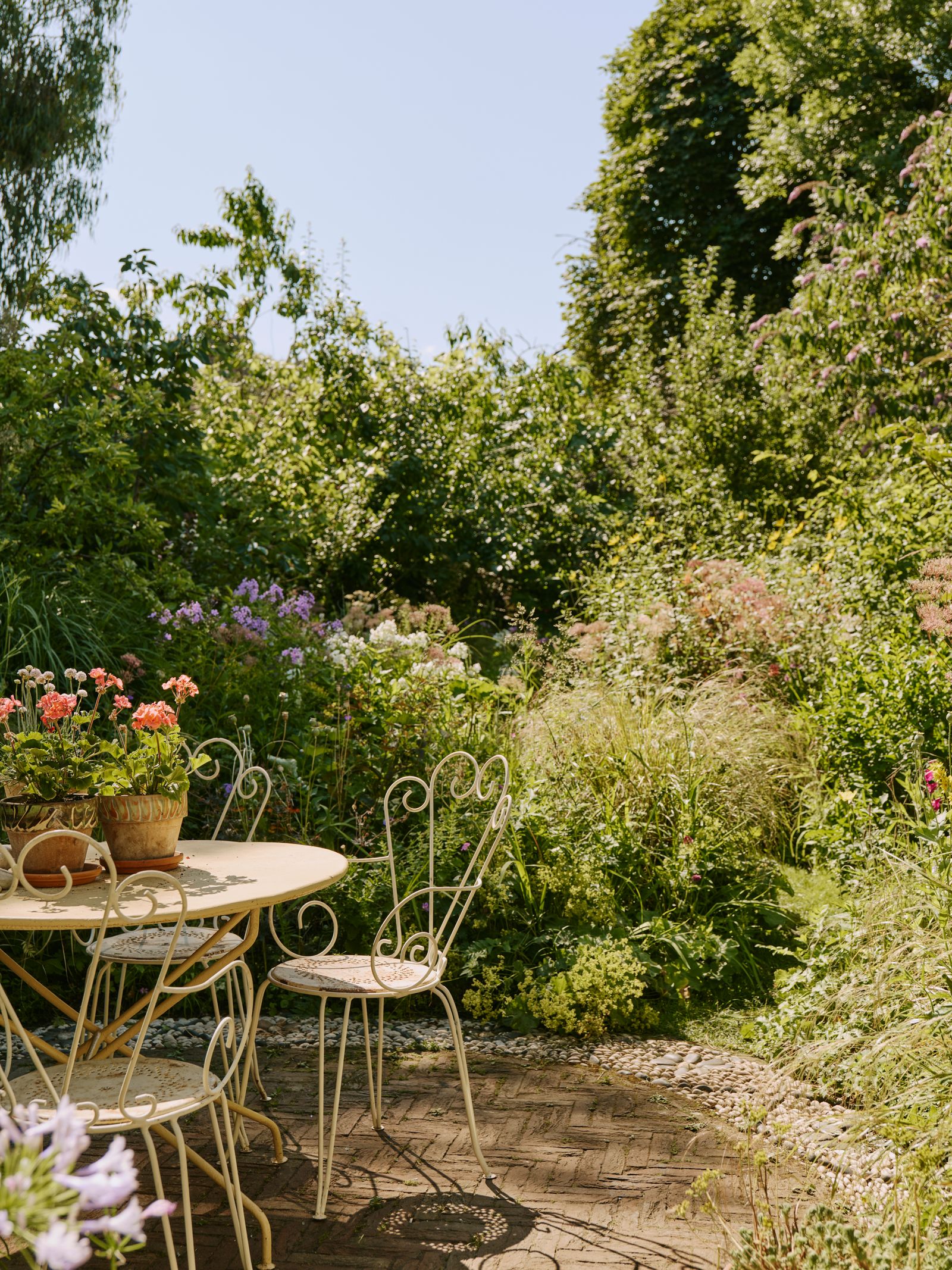
Tamsin’s garden in full summer bloom.
Christopher Horwood
Inside my own house, each room was designed to allow unfettered views of the garden, its gently cascading natural stream and the woodland beyond. Avoiding solid blocks of colour and all things new or shiny I chose paint colours, fabrics, wallpaper, art and furnishings with texture craftsmanship and an attention to detail.
Overly heavy curtains were jettisoned and in their place elegant linen blinds, printed in gentle tones of silver, jade and lilac now meet the fragrant tendrils of the wisteria tapping on the other side of the original window panes. In the kitchen my designs for joinery and paint colours were chosen and mixed to complement and enhance the warm honey toned sandstone walls, the flint outbuildings and the soft billowing grasses seen through a huge arched window framing the garden beyond. Upstairs, sunlight streams through tall large paned windows which offer views of the hills and ancient woodlands beyond, and in celebration of them I have kept the future modest, antique and mismatched. It is a lesson in the art of ‘less is always more’.
Comments are closed.