
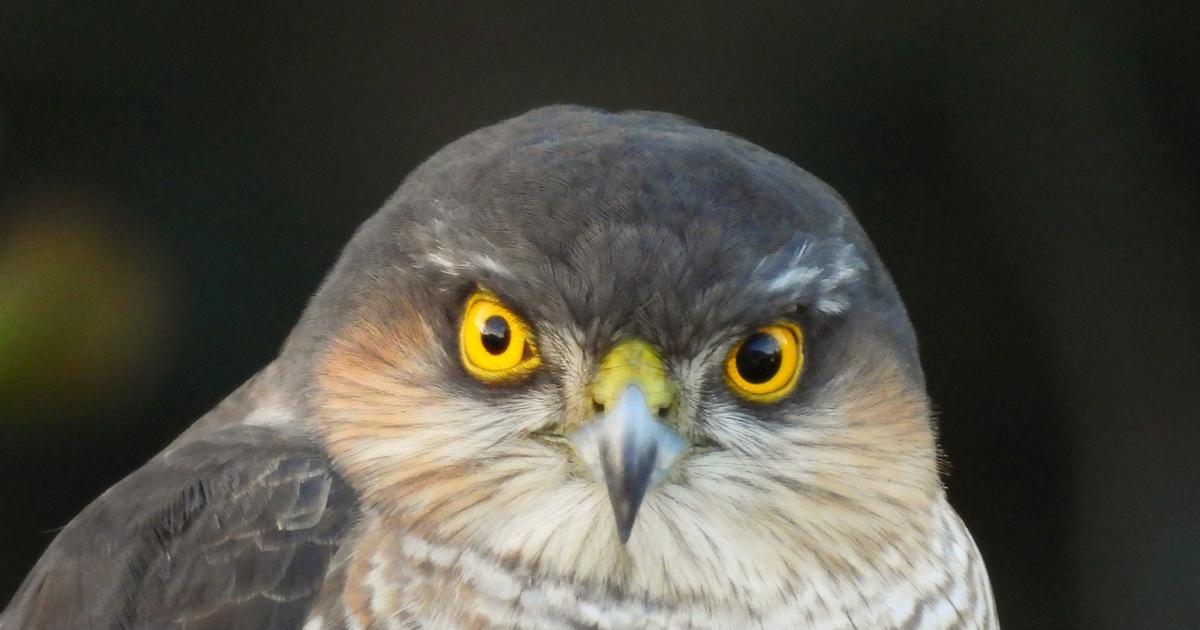
The Eurasian Sparrowhawk, believed to be a female, was captured on camera by Lesley Wood of Worcester News Camera Club.
She said: “We had a garden visitor who decided to rest a while on our pergola.”
QUICK: The sparrowhawk with an amber conservation status is known for its quickness and agility (Image: Lesley Wood via Worcester News Camera Club)
The photographs capture some of the features of the small bird of prey, including its striking, bright yellow or orange eyes as she looks directly at the camera.
According to the RSPB, these birds of prey are ‘adapted for hunting birds in confined spaces like dense woodland’ and gardens are also ‘ideal hunting grounds for them’.
A spokesperson for the RSPB said: “They’re fast and agile and hunt by surprise, using buildings and plants as cover before darting out at the last moment to catch small birds. They’re so quick, you might only be alerted to their presence by alarm calls and the sudden scattering of birds from your feeders.”
Adult male Sparrowhawks have a bluish-grey back and wings and orangey-brown stripes on their chest and belly. Females and young birds have brown back and wings, and brown stripes underneath. Sparrowhawks have bright yellow or orangey eyes, yellow legs and talons. Females are larger than males, as with all birds of prey.
Sparrowhawk numbers plummeted in the 1950s and 60s, mainly because of organochloride pesticides. These chemicals built up in the food chain and resulted in the shells of Sparrowhawk eggs becoming very thin and prone to breaking during incubation.
After these pesticides were banned, Sparrowhawk numbers rebounded. Between 1995 and 2023, Sparrowhawk numbers fell by 25 per cent, resulting in them being added to the Birds of Conservation Concern Amber List.
Comments are closed.