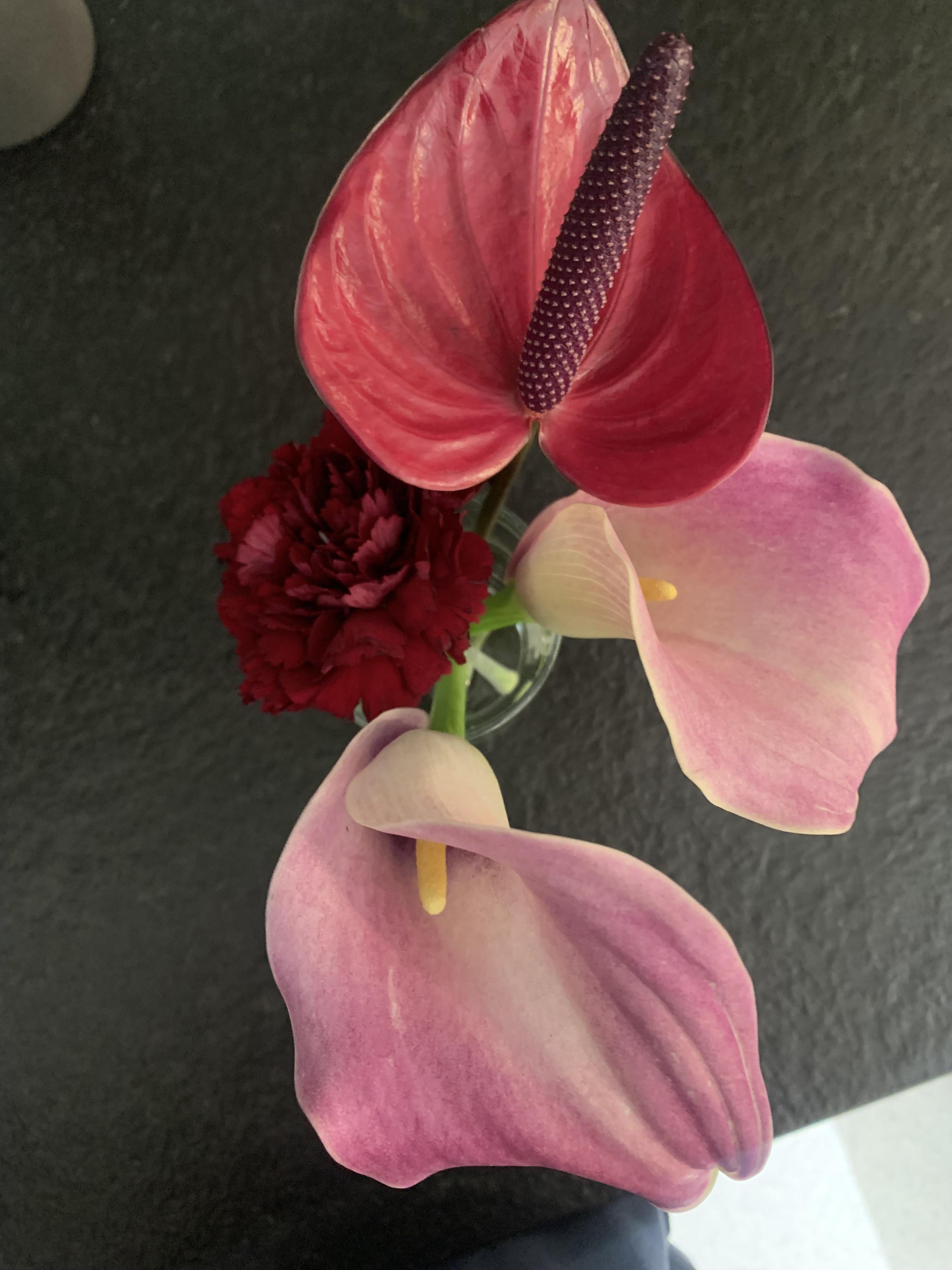
i got gifted these flowers from my crush >.< i dont know what flowers they are and i really need to know before i take them home to my kitties
by helplessbambidoll

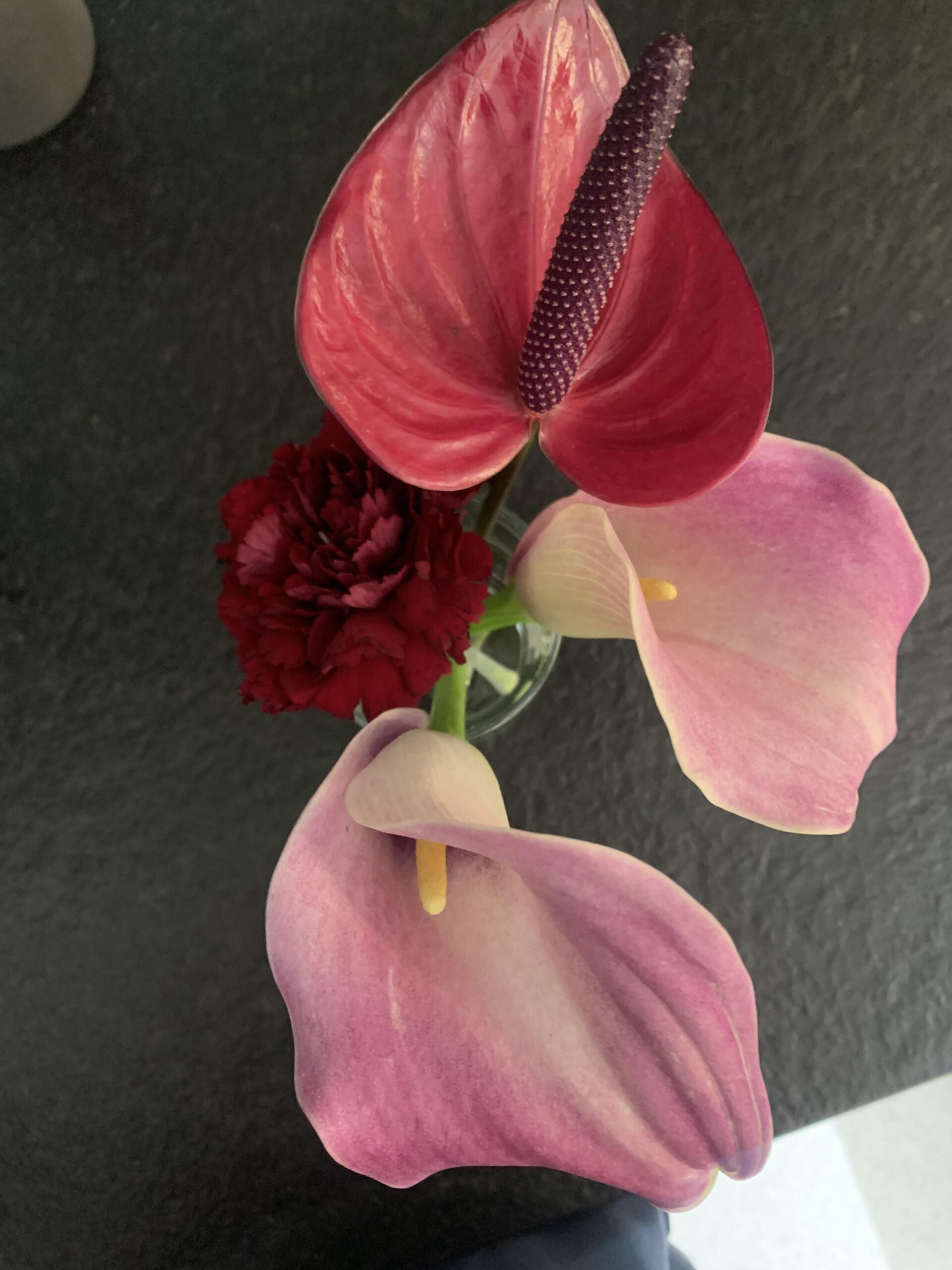
i got gifted these flowers from my crush >.< i dont know what flowers they are and i really need to know before i take them home to my kitties
by helplessbambidoll
5 Comments
Anthurium While these plants can produce beautiful flowers, they should be avoided if you have pets because **all parts of the plant are toxic**. This plant belongs to the Araceae family and has insoluble calcium oxalate crystals like other plants in the same family.
Yes, all three of the flowers are toxic to cats (cala, anthurium, dianthus)
Edit: someone brought up a good point that the toxic part of these plants is calcium oxalate, which are tiny crystal like substance (I believe it’s a salt) that causes mechanical damage to cells, so plants high in oxalate will cause immediate irritation which usually causes them to spit it out. They also can cause kidney stones and I think bladder stones. Oxalates are found in foods like spinach and peppers. I know someone with a history of kidney stones and they have to remove foods with high oxalates from their diet.
Ooph. Yeah, very toxic to cats. Dont leave them anywhere cats can reach them.
Sort of.
Disregard the “VERY VERY VERY TOXIC TO CATS” comment. The commenter has confused calla lilies with true lilies, which are extremely fatal to cats.
The plants you have pictured all contain calcium oxalate, which, while toxic, is rarely dangerous. If ingested in quantity, calcium oxalate can cause oral irritation, stomach upset, and vomiting.
Fortunately, calcium oxalate is unpleasant to ingest, and so cats and other animals are unlikely to eat it in any significant quantity. It takes quite a lot of calcium oxalate to pose a genuine health risk. Your cats may nibble, go “bleh,” and they will leave the flowers alone from then on.
Calcium oxalate is a deterrent that many plants produce to deter animals from eating them. If you have any houseplants, you almost certainly have plants that contain calcium oxalate around your cats already. Pothos, philodendron, monstera, snake plants, and most other popular houseplants contain the compound. While you shouldn’t blend these up and force-feed them to your cats, your cats are quite safe to be in the room with these plants.
I have cats myself, and I grow all of the flowers you have pictured, and have had them around my cats many times. Additionally, I have all of the houseplants I listed, plus others. Even my habitual plant-munching cat has never had the slightest issue. All of my plants bear a single set of tooth marks, and he has deemed them decidedly un-delicious.
Agreed with the majority. Technically toxic, but not a real risk to cats, it doesn’t taste good and it takes a lot to be harmful. No need to worry unless your cats starts eating it, in which case take it away.