
There is still a little time with weather good enough for a very simple soil amendment technique, called in-situ composting.
Adding organic matter to our garden soils is usually at the top of the list for a greater garden.
Putting leaves in paper lawn bags and having a big garbage truck pick them up is on the top of the list of wasted energy.
So I’ve got the simplest way to improve your garden soil and have a place to make your leaves disappear.
It’s called in-situ composting, or in-place composting.
Compost is a mixture of various decomposed organic materials, like leaves, grass clippings and animal manure.
Instead of making a compost bin and filling it with leaves and grass clippings, let’s put the leaves right into the soil now.
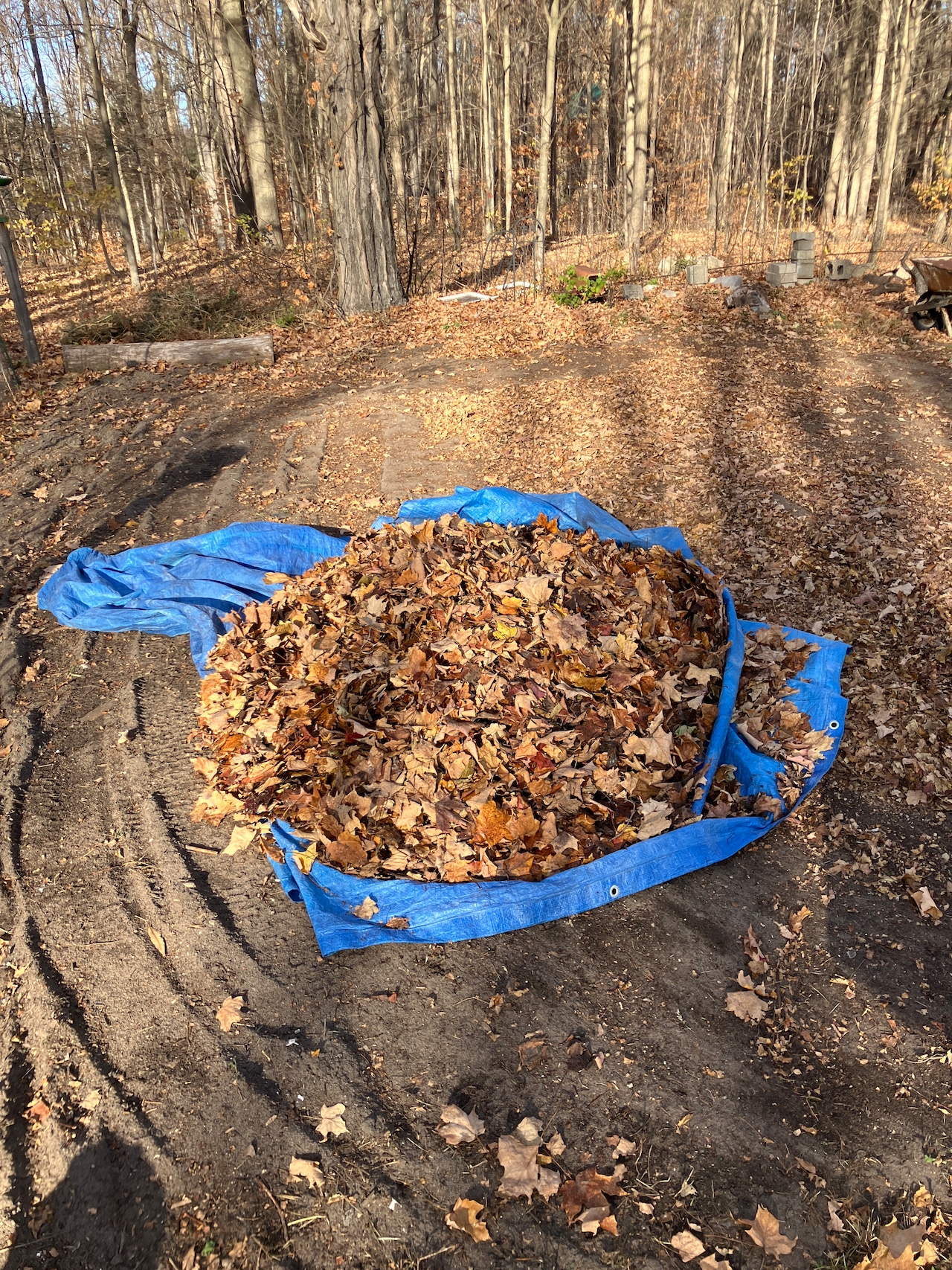 Emptying the yard’s leaves onto my clean, weed-free vegetable garden space.Mark Torregrossa
I rake up leaves and haul them over to my clean, weed-free garden bed. Look at the picture. I’m proud of that clean, weed-free space.
We then spread the leaves in an even layer. My 25-year old Craftsman mower can handle an 8-inch layer of leaves.
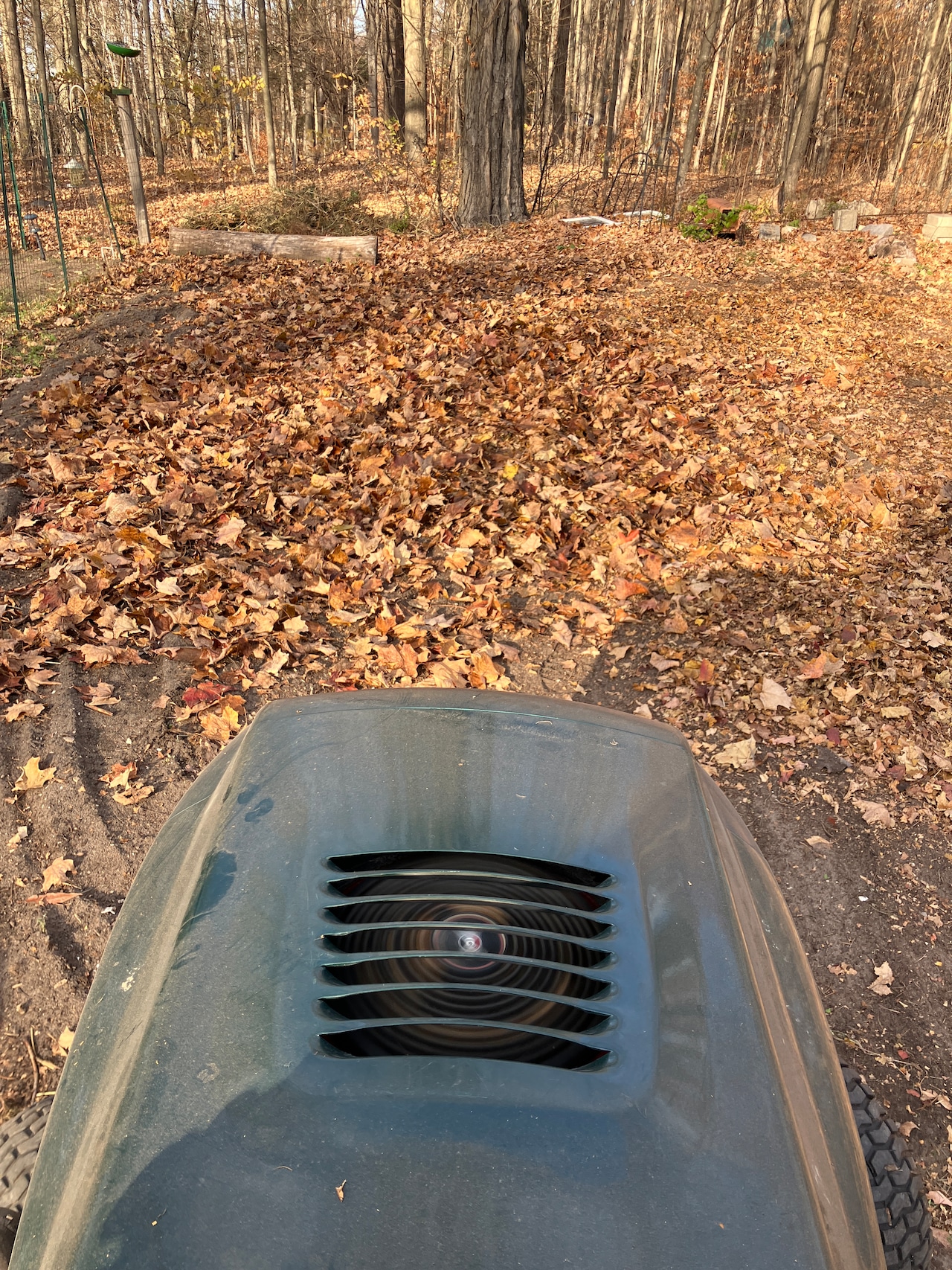 Mower getting ready to chop the leaves on top of the garden.Mark Torregrossa
Start mowing over the leaves. Keep going around in circles, chopping the leaves up into smaller pieces with each pass.
Now we want to spread the chopped leaves back out across all of the garden, hopefully covering all of the soil with an inch or two of leaves.
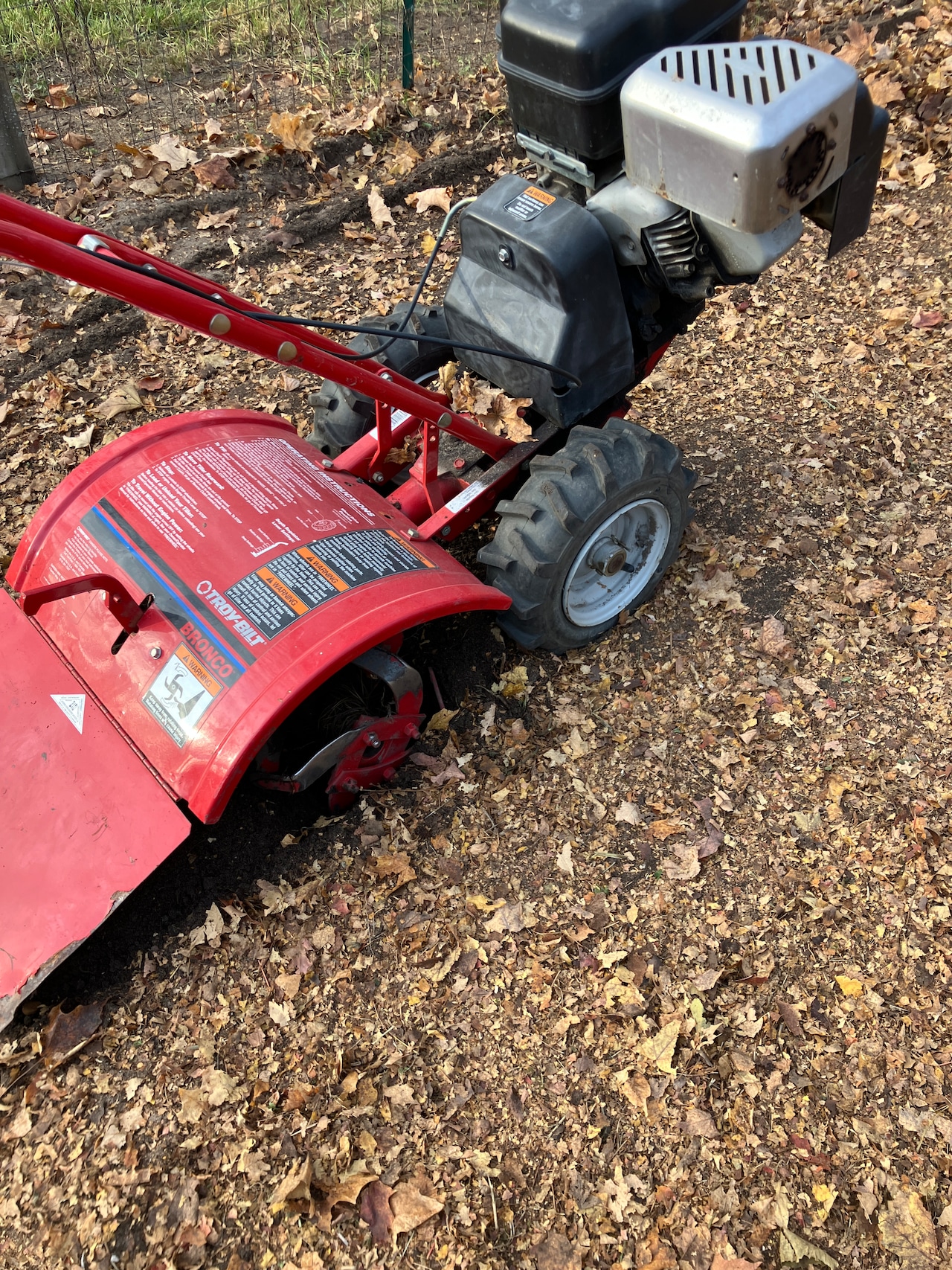 Rototiller mixing the chopped leaves into eight inches of soil.Mark Torregrossa
Let’s grab a shovel or better yet, the rototiller. Till the chopped leaves into the soil. You can go as deep as possible. It sure won’t hurt to have some material with water and nutrient-holding capacity down a foot.
The chopped leaves will decompose through winter and next spring. By summer, the leaves will be part of the soil and holding water and nutrients.
After you have done all of this, did you find more leaves to rake? Don’t worry. I’ve got another spot for those leaves.
Put these whole leaves right on top of your freshly-tilled garden area. Put a layer as thick as you want. The thickness will shrink in half by spring.
This blanket of leaves will do two good things. First, the leaves will keep the soil unfrozen over the winter. In this warmer soil, microbes will be eating away and speeding up the decomposition of the mixed-in leaves.
We will keep using the leaf blanket next summer. Unlike us in summer, our gardens won’t mind being entirely smothered in a blanket in summer.
When the weather has warmed some and we want our soil to warm, rake the leaves off of where we will plant. I envision this as leaves in a mound in the aisles and the rows are bare soil.
Once the plants are up out of the ground and 6inches tall, we can scoot the leaves back toward the plant bases.
The aisles will be covered with a thick layer of leaves, and we will all weed a lot less.
Finally, those leaves get tilled into the soil next fall.
We have maybe two more weeks to do this in southern Michigan. In northern Michigan, you better have this done before Thanksgiving. The coming cold may cover the ground with snow and freeze the soil, making it hard to dig.
If you purchase a product or register for an account through a link on our site, we may receive compensation. By using this site, you consent to our User Agreement and agree that your clicks, interactions, and personal information may be collected, recorded, and/or stored by us and social media and other third-party partners in accordance with our Privacy Policy.
Comments are closed.