
Key Points
Winter covers protect raised beds and help replenish soil cost-effectively.Insulating covers shield beds from harsh winds, snow, and freezing temperatures.Use materials like straw, burlap, or old blankets for simple, effective insulation.
Covering raised beds for winter protects against soil loss from erosion, compaction caused by freezing, and nutrient loss from leaching. Taking a few extra steps before the cold sets in means you’ll be ready and set to go as soon as the weather breaks next spring.
Follow these tips to find out when and how to cover your raised garden beds for winter.
When to Cover Raised Beds for Winter
When to cover raised beds depends primarily on your winter climate. You always have the option of cleaning out summer debris and leaving beds empty until next season. In USDA hardiness zones 3 to 10 it’s also possible and an efficient use of your space to grow fall and winter crops or sow perennial seed that needs cold stratification.
Leaving beds fallow is practical in zones 3 and lower, where winter crops need the greater protection of high tunnels and heated greenhouses. You may want to choose this option if you garden in a climate with harsh winter weather, regardless of your growing zone.
Around the time of the first frost, and after beds have been cleaned up for winter, is the time to add cardboard, tarps, or thermal coverings to protect soil and raised bed materials like wood or plastics.
Overwintering soil in raised garden beds
It’s more cost effective and efficient to enrich soil in permanent beds than to replace it every year. If you’re growing in smaller, portable beds you can move them to a sheltered location with the option of replacing soil in spring.
If you’re growing fall and winter crops in zones 3 to 5 where winters include freezing, heavy snowfall, and high winds, you’ll need to mulch to protect plant roots and install coverings like hoop tunnels and thermal blankets before the ground freezes. If you’re growing winter crops in zones 5 and higher, you’ll need, at a minimum, a layer of fresh mulch to discourage winter weeds and insulate roots.
Another option is to plant cover crops like clover, winter wheat, or a mix of grasses and legumes. Sow seed about a month before the first frost to help suppress late weeds.
Once the ground freezes, plants die back and can be tilled in the following spring to replenish nutrients. In warmer climates, be sure to cut the crop back before it goes to seed.
Want more gardening tips? Sign up for our free gardening newsletter for our best growing tips, troubleshooting hacks, and more!
How to Cover Empty Raised Beds for Winter
Taking time now to prepare and protect raised beds means less time and effort during busy spring months when you’re focused on sowing seeds and starting your summer garden. Here’s what to do.
Remove old mulch: Rake out old straw, grass clippings, and leaves, along with any other material used as mulch over the past growing season. This prevents insects from overwintering and reduces disease potential.
Add green material: Finely shredded green material like grass clippings, fallen leaves, or vegetable debris breaks down slowly over winter to enrich soil and replenish nutrients. Layer it evenly over existing soil.
Add compost: The soil level in your raised bed has likely dropped over summer due to erosion from watering, rainfall, and plant roots. Adding compost tops up soil levels, along with replacing nitrogen and other nutrients. Spread it out with a garden rake. You don’t need to dig or till it into existing soil.
Add a winter cover: Insulate your beds with a cover for complete protection. Be sure to anchor it in place.
Growing winter vegetables in raised beds.
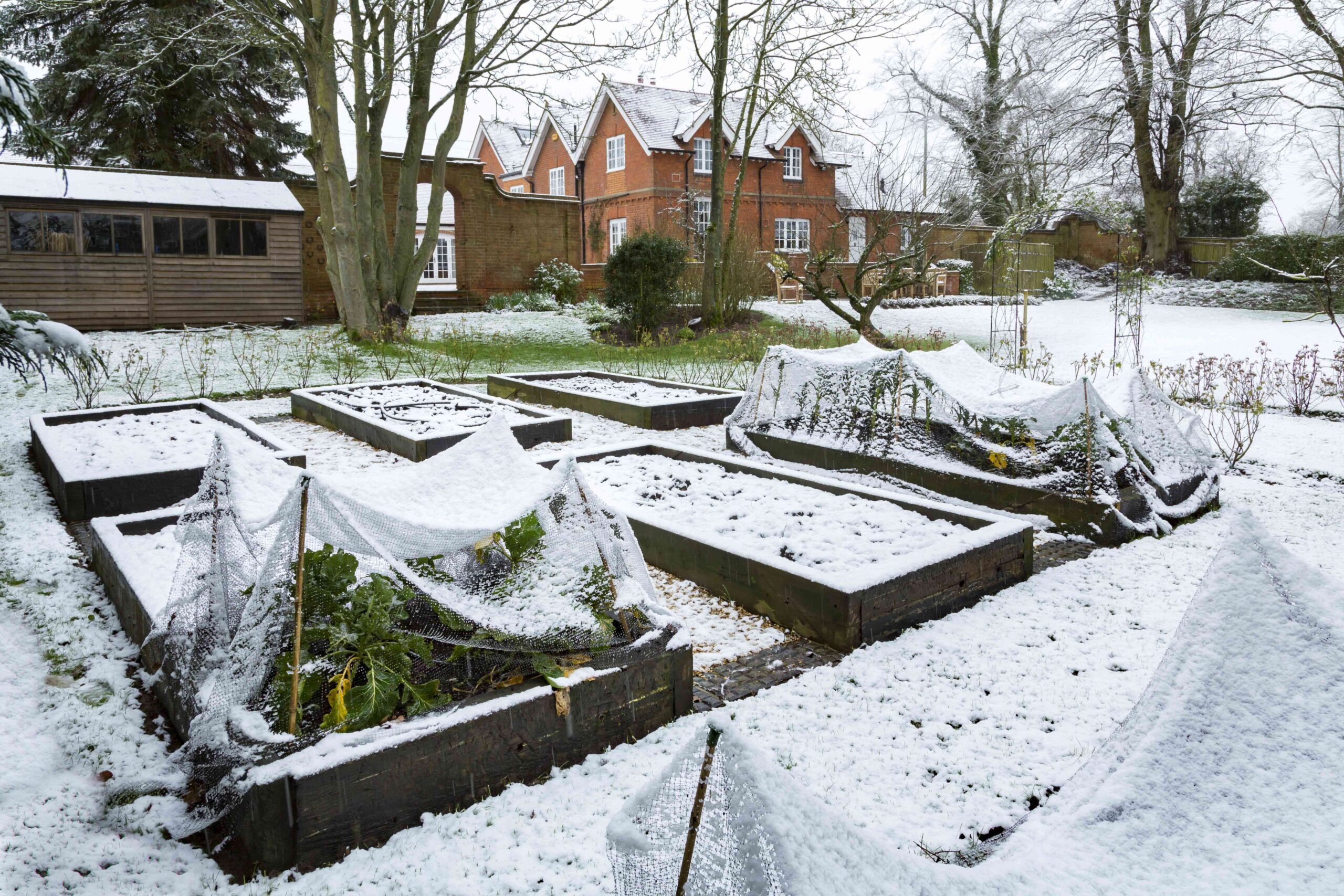
If you’re growing winter crops or perennials in raised beds, install supports early and have thermal row covers ready to secure in place.
Materials for Covering Raised Beds
Mulch: Straw, pine straw, grass clipping, and shredded leaves and bark break down slowly over winter to replenish soil. Mulch discourages weeds and erosion and protects the roots of late crops.
Cardboard: Thick cardboard prevents erosion caused by wind, rain, and snow, and is easy to install and remove.
Wood, stones, or bricks: Use these materials to anchor coverings in place.
Thermal blankets: Along with frost cloth, thermal blankets retain heat, protecting soil against freezing and compacting.
Tarps: Tarps keep soil and compost in place and prevent nutrients from leaching caused by precipitation.
Thick ply plastic: Anchor down four or six mil plastic sheeting. Black plastic is an effective weed suppressant with the added benefit of heating the soil earlier in spring.
Clips and anchor pins: Keep these items on hand for securing coverings.
Comments are closed.