

But the space can also be turned into something more practical to enhance your day-to-day life. ‘I have done a few laundry rooms in basements which are very handy for families,’ says interior designer Octavia Dickinson. ‘There is usually a lot of joinery, a solid sink, space for the washer-dryer, cupboards for linen and towels and an area for hanging ironing. While the laundry is not the exciting of jobs, it is possible to create a room that is quite joyful.’ A guest bedroom suite is another option, adds Clare. ‘And if you have a live-in nanny for instance, they could potentially have their own front door.’
Creating extra light can be a costly exercise as it usually means digging down from the basement, although this isn’t always necessary, according to Darren. ‘You don’t have to dig under the entire footprint of the house. You can dig in the garden as opposed to reinforcing the entire structure above you.’ But if you have no budget for building works, it might seem obvious to paint basement rooms white to maximise brightness. However this can be a mistake, warns interior designer Christian Bense. ‘You can never make a dark room feel lighter. But what you can do is make a dark room feel moody so it is better to lean into that,’ he insists.
Ruth Mottershead, creative director of Little Greene, who has created two bedrooms in the basement of her own home, also suggests darker tones. ‘Anything with a red oxide or a green base will add warmth,’ she says. ‘Our ‘Nether Red’ or ‘Jewel Beetle’, which is a green with lovely yellow undertones, instantly makes a space feel cosier and more intimate.’ For a larger basement, a lighter colour could work. ‘But again, ensure it has a warm undertone such as ochre and umber,’ adds Ruth. ‘If you put a cool colour in a space that does not receive much light, it will feel quite cold.’
Gloss paint can work wonders, says Tolù. ‘Try painting the ceiling in gloss as well as the skirtings, architraves and even the door itself. It allows light to bounce around and really lift the space,’ he says. In addition, Christian recommends wallcoverings such as grasscloth. ‘It has an organic softness so you get both warmth and texture,’ he says.
The basement can also be a great opportunity for pattern. ‘As well as bringing in colours on the joinery, you can introduce wallpaper although it needs to be hardy because of possible condensation,’ advises Octavia. ‘If you are using the space as a laundry room you can have lovely tiles.’ And don’t forget the flooring. ‘In a practical space, a lino floor in red and white check can look great.’
When it comes to lighting, the more layered – with table and floor lamps – the better. Christian is in favour of ditching ceiling lights completely. ‘Assuming ceiling heights are lower, you need to rely on wall lights where possible,’ he says. ‘They are very underestimated and often underused. You don’t necessarily need light from above if you’ve got ample light from the side.’
Materials and finishes require additional consideration. Avoid ultra-delicate fabrics which may not age well in lower-ground conditions. ‘If you are creating an atmospheric space like a bar, you might want fabrics like woven jacquards, mohair and velvets,’ says Tolù.
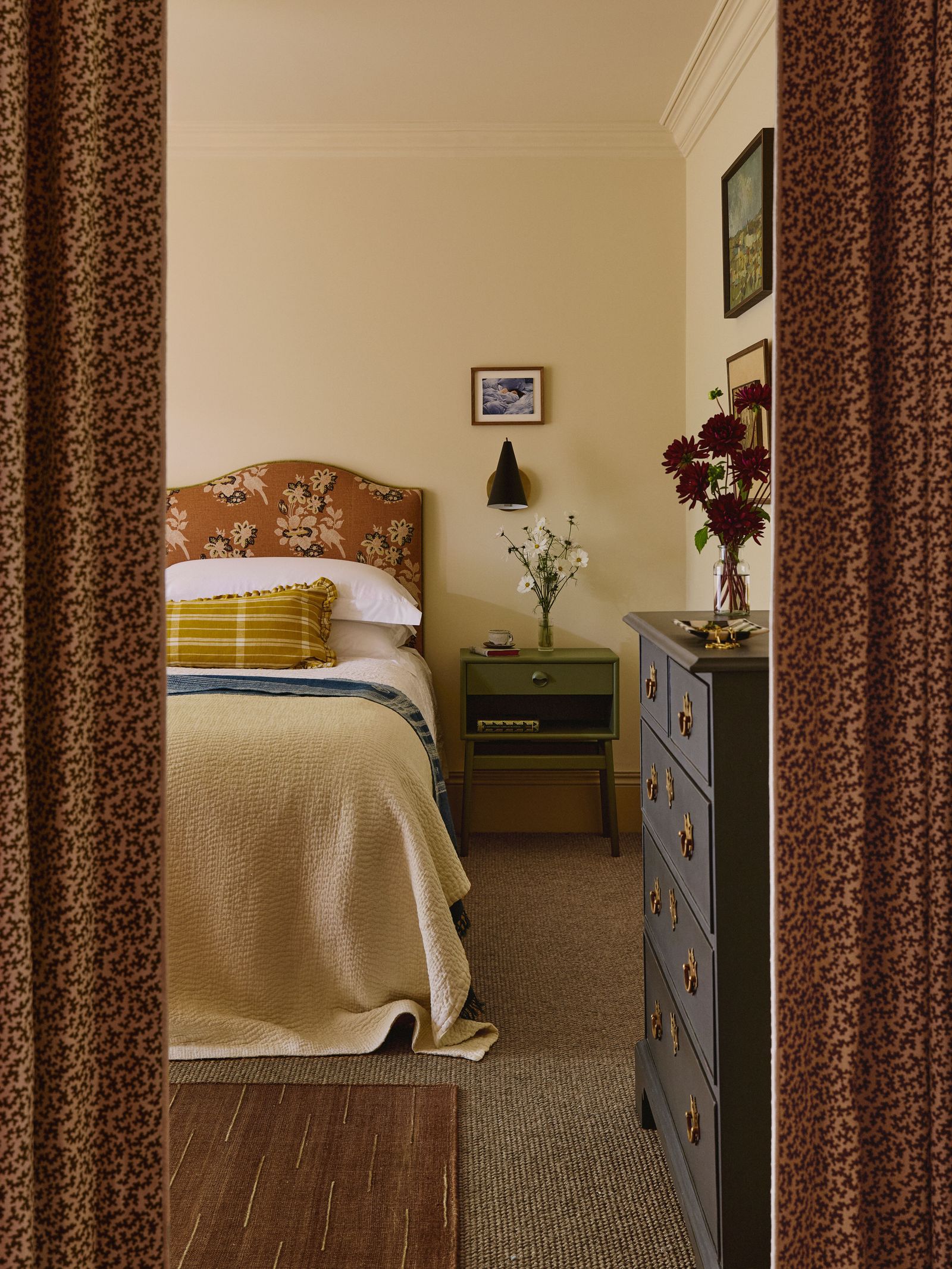
Thick carpet with rugs layered on top characterise the basement bedroom of this London house by interior design studio Golden.
Kensington Leverne
Comments are closed.