
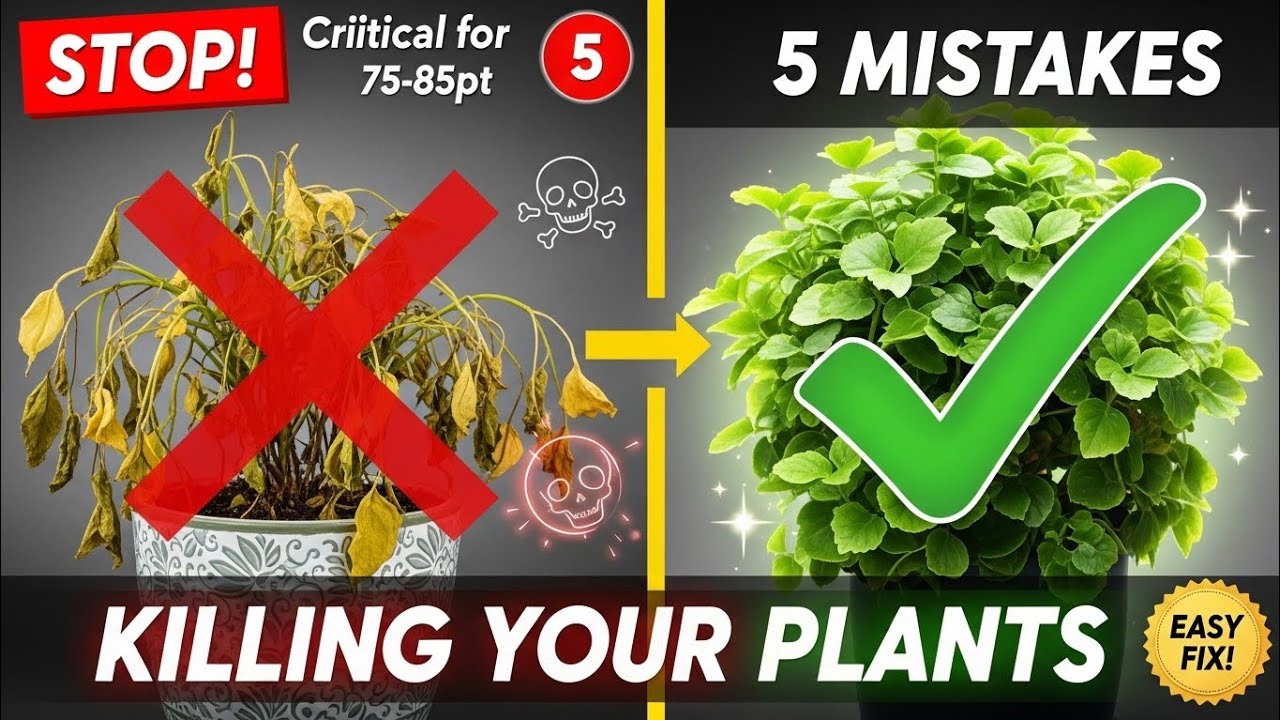
🚨 5 Container Gardening Mistakes KILLING Your Plants (And How to Fix Them!)
Are your container plants mysteriously dying? You’re probably making one of these 5 deadly mistakes. Watch now to fix them!
⏰ TIMESTAMPS:
0:00 – Why Your Container Plants Keep Dying
1:00 – Mistake #1: Containers Too Small
3:00 – Mistake #2: Poor Drainage Setup
4:30 – Mistake #3: Wrong Soil Type
6:00 – Mistake #4: Overcrowding Plants
7:30 – Mistake #5: Incorrect Watering
9:00 – Quick Recap & Action Plan
🪴 THE 5 DEADLY MISTAKES:
1. TOO-SMALL CONTAINERS – Your plant roots literally can’t grow properly
2. POOR DRAINAGE – One tiny hole isn’t enough and plants drown
3. WRONG SOIL – Garden soil in containers equals plant death
4. OVERCROWDING – Packing containers full wastes money and kills plants
5. INCORRECT WATERING – More plants die from overwatering than drought
✅ WHAT YOU’LL LEARN:
✓ Proper container sizes for tomatoes, peppers, herbs, and lettuce
✓ How to create perfect drainage in any pot
✓ Why potting mix is essential (not garden soil)
✓ Exact spacing requirements for healthy plants
✓ The finger test method for perfect watering timing
✓ Money-saving container gardening tips
💡 QUICK SIZE GUIDE:
Herbs: 8-10 inch pots
Leafy greens: 10-12 inch pots
Peppers & small tomatoes: 5 gallon minimum
Full-size tomatoes: 20 gallon minimum
💬 Which mistake are YOU making? Comment below and let’s troubleshoot together!
🔔 SUBSCRIBE to No-Fail Garden for weekly practical gardening advice that actually works!
#ContainerGardening #GardeningMistakes #VegetableGardening #UrbanGardening #SmallSpaceGardening #PatioGarden #GardeningForBeginners #GardenTips #BeginnerGardener #GrowYourOwn
Stop right there. Before you plant one more container this season, you need to hear this. I’m about to show you the five mistakes that are quietly killing your container plants. And I guarantee you’re making at least one of them right now. These aren’t little oopsies. These are full-on plant destroyers that waste your money, kill your harvest, and make you think you have a black thumb when you absolutely don’t. But here’s the good news. Every single one of these mistakes is fixable. And by the end of this video, you’ll know exactly how to spot them and fix them for good. Let’s do this. Hey everyone, welcome back to No Fail Garden. If you’re new here, this channel is all about making gardening actually work without all the confusing advice and complicated techniques. Before we dive in, hit that subscribe button because I share practical container gardening tips every single week that’ll save you time, money, and a whole lot of frustration. Now, quick question. Have you ever had a container plant mysteriously die on you even though you thought you were doing everything right? Comment below because I’m willing to bet almost everyone watching has been there. And that’s exactly why we need to talk about these five mistakes today. All right, let’s jump into mistake number one. And this one might surprise you. Mistake number one, using containers that are way too small. I know, I know that cute little decorative pot looks perfect on your patio. But here’s the harsh truth. If it’s too small, it’s basically a slow death sentence for your plant. Think about it like this. Your plant’s roots are like the foundation of a house. If the foundation is too small, the whole thing becomes unstable and eventually falls apart. When roots run out of space, three terrible things happen at once. First, they can’t absorb enough water, even if you’re watering constantly. Second, they can’t access enough nutrients no matter how great your soil is. And third, they become rootbound, which means the roots literally start strangling themselves. Here’s how you know if your containers are too small, are your plants looking stunted? Are the leaves yellowing from the bottom up? Are you watering more and more often, but the plant still looks thirsty? Those are all signs your container is too small. So, what size do you actually need? For herbs like basil and parsley, you need at least an 8 in pot, but 10 in is way better. For leafy greens like lettuce and spinach, go 10 to 12 in wide and at least 8 in deep. For peppers and small tomatoes, you need at minimum a 5gallon container. And for full-size tomatoes, don’t even think about anything smaller than 20 gallons. Now, I know what you’re thinking. Bigger containers are expensive and heavy. True, but here’s the thing. It’s actually cheaper to buy the right size once than to keep replacing dead plants over and over. Plus, you can find amazing large containers at thrift stores, garage sales, even on Facebook Marketplace for next to nothing. And if weight is a concern, look for resin or fiberglass containers. They look like ceramic but weigh way less. Or grab some container caddies with wheels so you can move them around easily. Here’s your homework. Go measure your containers right now. Compare them to the sizes I just gave you. Be honest about whether they’re big enough. Because even if you get container size perfect, mistake number two is lurking. And this one is straight up deadly. Mistake number two, terrible drainage setup. This is the number one reason container plants die. And I’m not exaggerating. More plants die from drowning than from drought. Here’s what happens. Your plant’s roots are sitting in waterlogged soil with no oxygen. They literally can’t breathe and slowly but surely they rot from the bottom up. The crazy part, the plant might look fine above ground for weeks while the entire root system is dying underneath. So, how do you know if you have drainage problems? First, does water pool on the surface when you water? Second, does your container smell sour or funky? Third, are the leaves turning yellow from the bottom? Fourth, do the stems feel soft and mushy near the soil? Any of these mean you have a drainage emergency. Now, here’s where most people mess up. They think one tiny hole in the bottom is enough. Wrong. That’s like trying to empty a bathtub through a straw. For a 12-in pot, you need at least 5/4in holes. For bigger pots, even more. But wait, I can’t drill holes in my beautiful ceramic pots. Yes, you can. Grab a ceramic drill bit from any hardware store for like five bucks. Drill slowly. Keep the bit wet and you’re good. Or ask a neighbor to help if you’re not comfortable with it. If you absolutely cannot drill holes, use the double pot method. Plant in a plain plastic pot with drainage, then set that inside your pretty pot. Just lift out the inner pot after watering to dump the excess water. Now, let me bust a dangerous myth. Some people put rocks or gravel in the bottom, thinking it helps drainage. This is completely wrong and actually makes things worse. Never put rocks in the bottom of your containers. The drainage holes are all you need to keep soil from washing out. Just place a small piece of window screen or a coffee filter over each hole before adding soil. Here’s a simple test. Stick your finger 2 in into the soil. If it’s soggy and water logged, you’ve got drainage problems. If it’s moist but not soaking wet, you’re perfect. Your assignment, go check every container for drainage holes. Count them. Test them by running water through. If water doesn’t drain within 30 seconds, you know what to do. Now, even if you nail the drainage, mistake number three is hiding in every garden center and it looks totally innocent. Mistake number three, using the wrong type of soil. Picture this. You’re at the garden center. You see a bag labeled garden soil and think perfect. So, you fill your containers and then wonder why everything struggles. Here’s what they don’t tell you. Garden soil is designed for in ground gardens, not containers. Using garden soil in containers is like wearing hiking boots to go swimming. Sure, they’re both shoes, but completely wrong for the situation. Garden soil is heavy and dense. When you put it in a container, it compacts down like concrete. Water can’t move through it. Air can’t reach the roots, and your plants basically suffocate. So, what should you use? Potting mix or container mix. These are specifically made to be lightweight, fluffy, and well- draining. They have ingredients like Pete Moss, perlite, and vermiculite that keep everything airy. Now, here’s the tricky part. Labels aren’t always clear. Look for bags that specifically say potting mix, container mix, or potting soil. Avoid anything that says garden soil, top soil, or just compost by itself. Pro tip, a good potting mix should feel light when you pick up the bag. If it’s heavy as a rock, it’s probably not right for containers. I know potting mix costs more than garden soil, but it’s still way cheaper than replacing dead plants every season. Plus, you can stretch it by mixing in some compost, about three parts potting mix to one part compost. Here’s a simple test. Take a handful of moist soil and squeeze it. When you open your hand, it should hold together loosely but crumble when you poke it. If it forms a tight ball, it’s too heavy. If it falls apart instantly, it’s too sandy. Check what you’re currently using. Read the bag labels, do the squeeze test, and honestly evaluate whether your soil might be the problem. Switching soil could be the breakthrough your garden needs. But even with perfect containers, drainage and soil, mistake number four can still wreck everything and it comes from a good place. Mistake number four, overcrowding your containers. We’ve all done this. We want to grow as much as possible, so we pack containers full of plants, thinking more is better. But what we’re actually creating is a battle royale where plants fight each other to the death. Imagine being stuck in a tiny room with five other people, but only enough food and water for three. Everyone’s competing. Everyone’s stressed. And ultimately, everyone suffers. That’s exactly what happens with overcrowded containers. Here’s what goes wrong. First, they’re competing for nutrients, and container soil has limited nutrients to start with. Second, they’re fighting for water, so you have to water constantly. Third, they’re battling for light, which leads to tall, spindly, weak growth. How do you know if you’re overcrowding? Your plants are tall and leggy instead of bushy. Lower leaves are yellowing and dropping. You’re getting tons of flowers, but barely any fruit. And you’re watering like three times a day. Here’s something important. The spacing on seed packets and plant tags, those aren’t suggestions, they’re requirements. When a tomato tag says 18 in of space, that means 18 in from the center of one plant to the center of another, not edge to edge. Let me give you my spacing guidelines. In a 12-in container, you can grow one small tomato plant or three to four herb plants or six to eight lettuce plants. In an 18-in container, one large tomato or pepper or six to eight herbs. in a 24-in container. One large tomato plus some herbs around the edge. I know it feels weird to plant just one thing in a big container with all that empty space. It looks wasteful at first, but within weeks, you’ll see exactly why that space was necessary. The plant will fill out, stay healthy, and actually produce. Here’s the financial reality. If you buy six tomato plants for 30 bucks and overcrowd them, you might get 20 tomatoes total. But if you space them right, each plant could give you 20 lb of tomatoes. That’s the difference between wasting money and actually getting a harvest. Go measure the spacing in your current container. Compare it to what plant tags recommend. Be honest about whether you’ve been squeezing too many plants in. Now we’re at the final mistake. And this one kills more plants than everything else combined, even when you do everything else right. Mistake number five, watering incorrectly. Here’s the truth. Most people kill their plants with kindness by watering way too much. I see this everywhere. Loving gardeners who water every single day like clockwork, thinking they’re being responsible. Meanwhile, their plants are drowning, developing root rot, and dying from the very care meant to save them. Here’s what you need to understand. Plants don’t sip water constantly like we drink coffee. They absorb water, use what they need, and then actually need the soil to dry out slightly before the next watering. This wet dry cycle is crucial for healthy roots. The biggest mistake is watering on a schedule regardless of weather, plant needs, or soil conditions. This creates shallow, weak root systems because roots never have to search for water. Here’s the game changer. Water based on conditions, not calendar days. On cool, cloudy days, plants use way less water than on hot, sunny days. After rain, they might not need water for several days. Let me teach you the most reliable test, the finger test. Stick your finger into the soil about 2 in deep. If it feels dry at that depth, it’s time to water. If it’s still moist, wait another day. If bending down is tough, use a long chopstick or wooden dowel. Stick it in the soil, pull it out, and check if it’s damp. Here’s another crucial thing. Timing matters. The best time to water is early morning, between 6:00 and 10:00 a.m. This gives plants time to absorb water before the heat of the day. And any water on leaves dries before evening, preventing fungal diseases. Avoid watering in the evening unless it’s an emergency. When you do water, water deeply and thoroughly. That means watering until water runs out the drainage holes. This ensures the entire root zone gets moisture. Light frequent watering creates shallow roots. Deep, less frequent watering creates strong, resilient plants. Let me help you diagnose problems. Overwatered plants have yellow leaves that drop off, mushy roots and soil that smells sour. Underwatered plants have brown crispy leaf edges, wilted leaves, and soil that pulls away from the sides. If you’ve been overwatering, stop immediately. Let the soil dry out. Improve drainage if you can. Remove any rotted parts. If you’ve been underwatering, give it a good deep soak. Then return to checking before watering. Here’s your action plan. Starting tomorrow, stop all scheduled watering. Instead, check containers daily with the finger test and only water when needed. Keep a simple log for a few weeks to learn your plant’s patterns. This one change will transform your success. All right, let’s recap these five gamechanging principles. First, size your containers properly so roots have room to grow. Second, ensure excellent drainage with multiple holes. Third, use quality potting mix designed for containers. Fourth, give plants proper spacing so they thrive instead of compete. And fifth, water based on plant needs, not schedules. Don’t try to fix everything at once. Pick the biggest problem and tackle that first, then move to the next one. Here’s what I want from you. Comment below and tell me which of these mistakes you found in your own garden. Don’t be embarrassed. We’ve all made them. Share your story so others can learn, too. If this video helped you figure out why your containers have been struggling, smash that like button and subscribe to No Fail Garden right now. Hit the notification bell so you don’t miss next week’s video where I’m showing you three foolproof container combinations that produce food all season long. Remember, container gardening is supposed to be fun and rewarding, not frustrating. By fixing these five mistakes, you’re setting yourself up for the thriving, productive garden you deserve. Until next time, keep growing, keep learning, and remember, no fail gardening is about working smarter, not harder.
1 Comment
Pity it's AI vocals and images though. It doesn't inspire a lot of trust.