
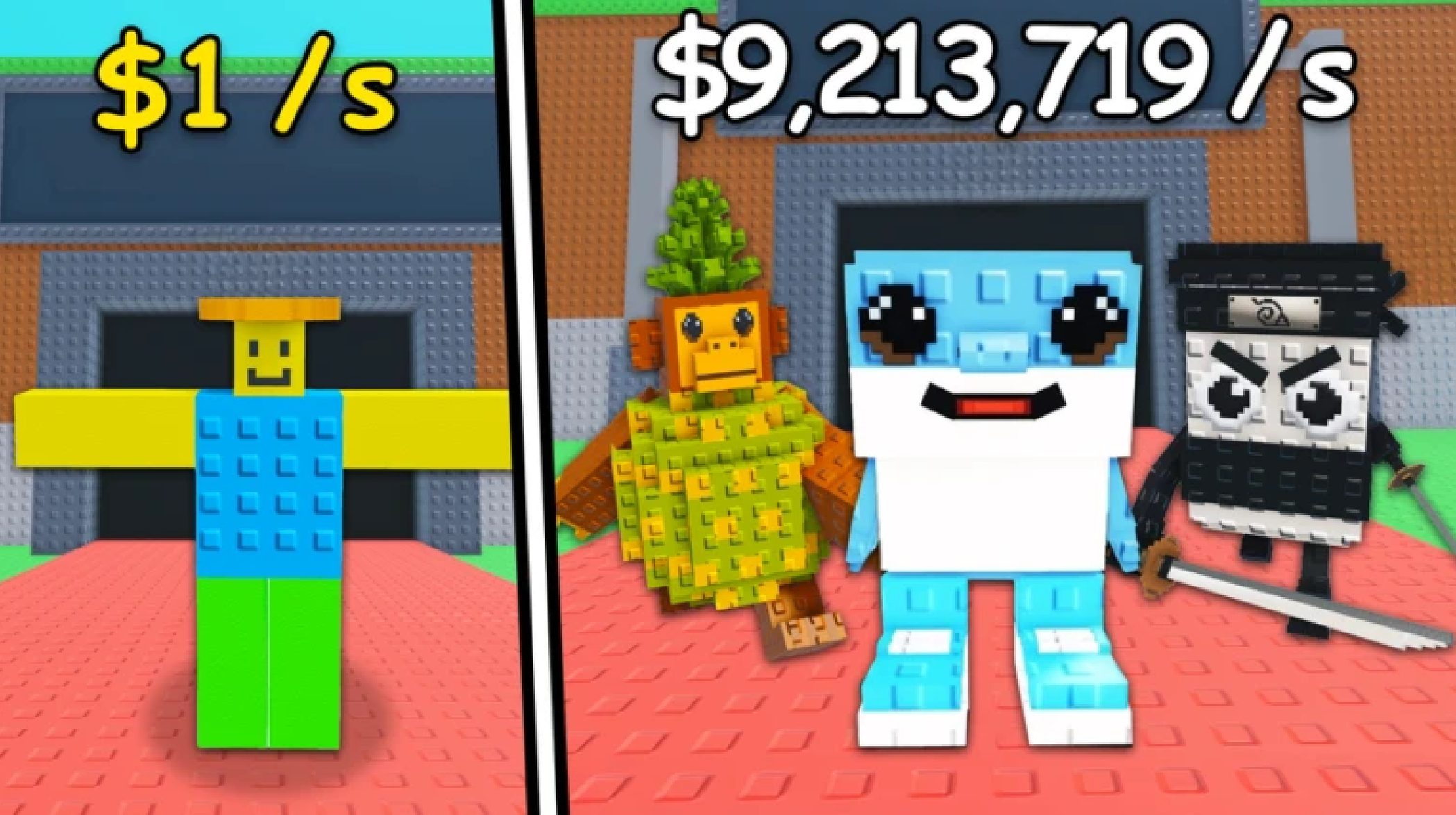
The maker of one of Roblox’s top games is taking brainrot to court. Developer Spyder Games filed a complaint in a California court on Thursday, which has been reviewed by Aftermath, over what it calls a copy of its record-breaking Steal A Brainrot.
Steal A Brainrot is consistently within the top three games on Roblox. It’s a simple game: You collect and steal brainrots from other players. It’s kind of like capture the flag, but instead of one or two flags, there’s a lot. And they’re also not flags—they’re brainrots. Brainrots in Steal A Brainrot are based off Italian brainrot, which is a bunch of weird, absurd memes, like a shark wearing three Nike sneakers. (He’s Tralalero Tralala.) Or it’s a cappuccino mug that’s got a ballerina body. (Ballerina Cappuccina.) The brainrots in Steal A Brainrot are based off these memes. By stealing brainrots, you earn currency to upgrade your base and thus defend your brainrots.
Attorney Adam Starr is tasked with explaining all this to the court. He describes it in the complaint as “a treasure hunt in a world filled with unique ‘brainrots,’ which are based on silly internet meme characters.”
“The brainrots march slowly in a line down a red carpet that runs through the center of the arena of game play,” Starr writes. “Players capture the brainrots and take them to their base, which is like a mini jail on the edges of the arena, to earn virtual currency. Different brainrots have differing values, depending upon their rarity. Meanwhile, players can steal each other’s brainrots from their respective bases. The virtual currency a player earns from the brainrots can be used to upgrade their bases or unlock special abilities (like grabbing brainrots or escaping thieves more easily).”
It’s absurd, and that’s kind of the point. Steal A Brainrot is exceptionally popular. In October, it had 25.4 million people logged into the game at one time, surpassing both Grow A Garden, another supremely popular Roblox game, and Fortnite’s peak of 15.3 million concurrent players.
Steal A Brainrot’s playerbase goes up when there’s an update, but typically decreases, though not enough to take it out of the top three Roblox games. There are more than 619,000 players in the game at the time of writing. The game often goes viral on TikTok and other platforms because its chaos is good content—like kids crying over brainrot. All this is to say that Steal A Brainrot is really popular, which makes it really lucrative for developers earning money by selling items and through Roblox’s creator rewards program.
The developers have Steal A Brainrot copyrighted, as of August. There are a lot of Steal A Brainrot copycats or offshoot games on Roblox, but one on Fortnite’s user-created platform, an alleged copycat, stands to earn a lot of money: Steal The Brainrot. Steal The Brainrot, which is at issue in the complaint, has more than 33,000 active players at the time of writing, but has reached peaks of more than 531,000 concurrent players. (Ironically, Steal A Brainrot attorney Starr congratulated the developer for the concurrent player number in early October.) Steal The Brainrot is effectively Steal A Brainrot, but a version that’s rendered more closely to Fortnite. Fortnite publisher Epic Games and CEO Tim Sweeney even posted the game on its official social media accounts. Steal The Brainrot is the most popular user-created Fortnite island at this time, drawing in more players than even some of Epic Games own modes, like Save The World, Lego Fortnite Odyssey, and Fortnite OG Zero Build.
“Our client takes its intellectual property rights seriously and brought this action to protect its work,” Starr said in a statement to Aftermath. “We always prefer to resolve these matters cooperatively, but when necessary we will take appropriate legal steps to safeguard our IP.”
Fortnite’s creator program pays out money to developers based on user engagement, but Epic Games will let users create and sell in-game items directly in their games starting in December—a new revenue stream.
Starr, representing the Steal A Brainrot makers, says in the complaint that Steal The Brainrot was uploaded in July and copies Steal A Brainrot’s “protectable expressions,” like its artwork, objects, design, and game elements. “[The similarities] are the result of willful infringement by defendant in an effort to steal the market for plaintiff’s game,” he writes.
Spyder Games wants the court to take Steal The Brainrot down and to receive damages and profits related to the infringed content.
Aftermath has reached out to Steal The Brainrot developer ferins, identified in the complaint as Thomas van der Voort of the United Arab Emirates, for comment.
Comments are closed.