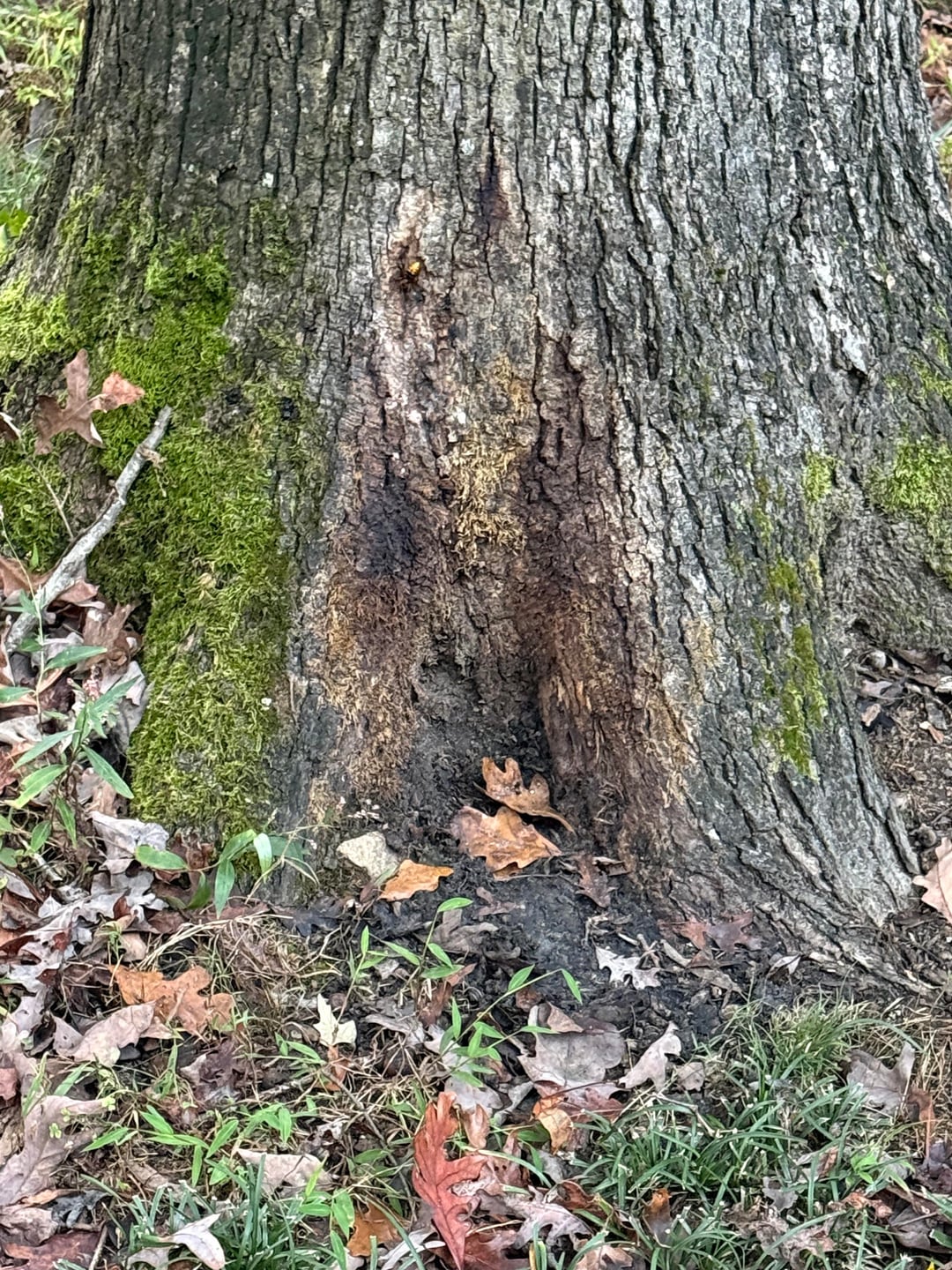
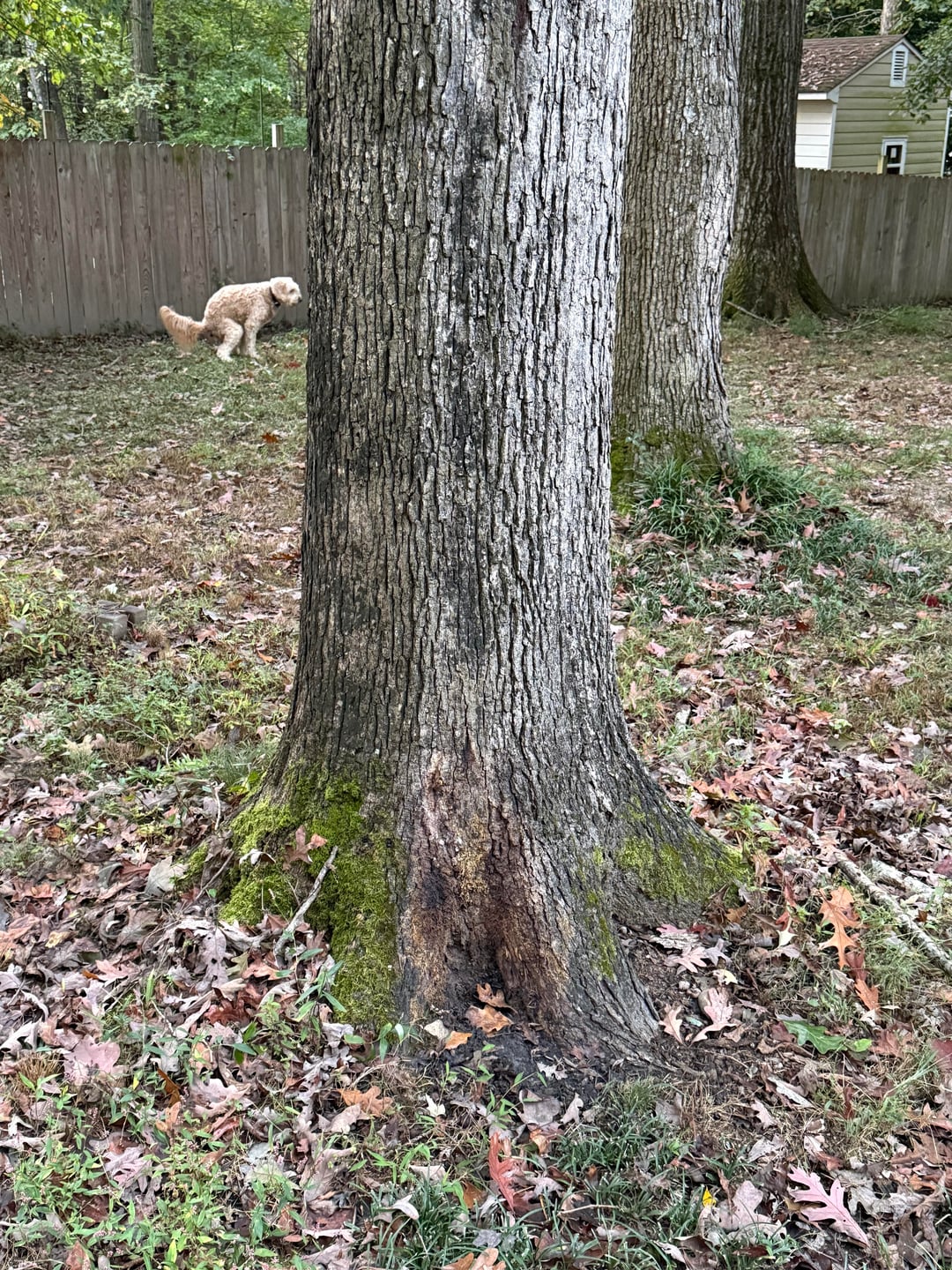
Any ideas on what is happening at the base of this tree? It began a few weeks ago with a thick liquid kind of oozing. Now the ground is very muddy around it and the trunk is turning black.
by operadog

Any ideas on what is happening at the base of this tree? It began a few weeks ago with a thick liquid kind of oozing. Now the ground is very muddy around it and the trunk is turning black.
by operadog
15 Comments
I believe the dog is having a poop. The tree? No clue.
Does doggo pee alot on the tree in that spot?
Poopin’
It looks like semi-dried up Phytophthora Canker “Bleeding Canker” which is technically a funga disease but we typically interpret it more as a symptom of stress/stressful events. We usually see this on trees that have had their lower buttress (wide structural) roots hit by lawnmowers or a significant tear out up in the canopy.
Also, yes as others have stated, it seems your doggo is simply focused, nothing more to see there.
Could’ve been old moss that has died off or it could be the start of decay in the trunk.
Could also be dog kisses there a lot
QUALCHE BRAVA PERSONA DEVE AVERE ACCESO UN FUOCO….
That’s an old tree, so it’ll have many types of bark-dwelling fungi growing on it, similar to that moss nearby. This is a symbiotic relationship by which fungi can pull nutrients from the air (like nitrogen) and release it back into the surrounding soil as it rains. This might also have the side-effect of creating a very rich and humus-like substance at the base. Hard to say exactly what is happening from simple bark-discoloration. Did you recently disturb that area by pulling up dead leaves and digging a little? If it was covered up the moss would’ve turned yellow as it went into dormancy.
Rot.
Certified arborist here. It’s challenging to tell from only photos, but I suspect this is “bacterial wetwood” or “alcoholic flux”. While they are different things, they are similar enough to be treated as the same thing in most instances. I’m betting that wood has a strong fermented sort of smell to it and the bugs love it, if any are still active right now. It typically gets worse in the spring and summer, but it can happen in the fall as well. It could also be something else entirely.
This is typically a sign of stress, which could be something obvious, like construction (root) damage or a recent drought. Or it could be something much less obvious like a nutrient deficiency in the soil or a change in the microclimate around tree.
A common treatment for bacterial wetwood is a sprayed application of a phosphonate fungicide. Don’t expect miracles but I’ve seen it help trees that are otherwise in good health. White oaks typically respond quite well to it, with the wood drying up within a season. It is beneficial to remove any dead bark around the wound, though I recommend having an experienced professional do that, since it can make the problem worse if done incorrectly. Also, a contract insecticide can help to keep bugs off the tree, helpful in the spring and summer when bugs are active. Bugs such as the ambrosia beetle are drawn to stressed trees.
You’ll want to have a certified arborist visit for a proper assessment, prescription and treatment. You can find an ISA certified arborist in your area [here](https://www.treesaregood.org/findanarborist).
Good luck!
Bet your dog is peeing there!! Causing it to rot and break down.
Have something similar on a large sycamore tree. Arborist didn’t seem too concerned. We had the tree trimmed so there is now a lot more light that can access the spot and keep the ground around it more dry hopefully, hoping it gets better over the next year otherwise looking into other options.
I had something similar on a couple of my trees. The arborist I hired applied phosphite (note the spelling) on two separate occasions. Phosphite encourages compartmentalization, according to him.
Ur dogs going poops
Definitely not singing opera in the background