
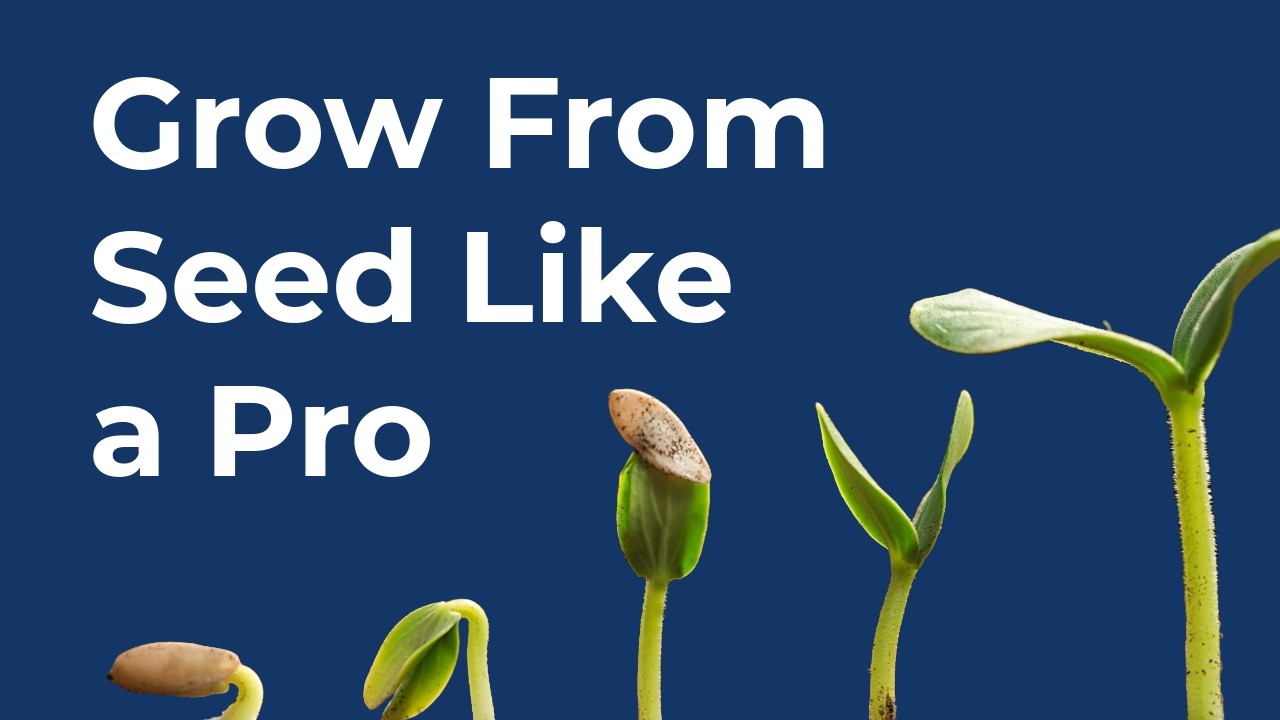
In this video, we’ll show you our favorite method for starting seeds—anyone can do it! Whether you’re a beginner or an experienced gardener, these tips will help you grow strong, healthy seedlings every time.
🔹 Timestamps:
00:00 Intro – My favorite way to start seeds!
00:07 Why I use a tray without holes (bottom watering)
00:27 Seed tray setup – 72-cell insert & humidity dome
00:45 Grow lights vs. natural light – What works best?
01:26 Choosing seeds – Cucumbers, peppers, and tomatoes
01:53 The importance of plant tags (Don’t rely on memory!)
02:08 Picking the right seed-starting soil (No fertilizer needed!)
02:53 Filling trays properly – Avoid compacting soil
04:01 Planting seeds – Depth tips & hacks
05:00 How many seeds per cell? When to thin seedlings
05:23 Seed age and germination rates
05:38 Planting cucumbers & tomatoes
06:14 Saving seeds from store-bought produce
06:37 Easy hack for planting depth (using a Sharpie!)
06:58 Proper seed storage tips (Extend seed life)
07:09 Encouragement – Be brave and just plant! 🌱
07:41 Watering seedlings – The best way to do it
08:20 Why microbes help seeds grow better (Big benefits!)
08:48 How to add beneficial microbes when watering
09:04 Why misting is better than a watering can for seeds
09:45 How to properly moisten seed-starting soil
10:18 Avoiding dry pockets in the soil (Critical for germination)
10:48 Using a heat mat for better seed germination
12:00 How to use a humidity dome (When to remove it)
12:20 Final setup – Heat mat, grow light, and finishing touches
13:55 What’s next? Subscribe for the transplanting guide!
🌱 What You’ll Learn in This Video:
✔️ How to set up a seed-starting tray for success
✔️ Why bottom watering helps with seedling health
✔️ The benefits of using a humidity dome and grow lights
✔️ Choosing the best seed-starting soil (and why fertilizer isn’t needed at first)
✔️ The best way to plant cucumber, tomato, and pepper seeds
✔️ How to water without disturbing delicate seeds
✔️ Why adding beneficial microbes can improve germination
✔️ Using a heat mat to boost seedling growth
We’ll walk through everything step by step, from preparing the tray to misting and watering for optimal moisture. Plus, I’ll share some handy hacks—like how to reuse seed packets and why a spray bottle is better than a watering can for seedlings.
💡 Want to see what to do next?
Subscribe so you don’t miss our follow-up video on transplanting seedlings into their final home!
🌱 Products Used in This Video:
Gardin’s Microbe Feed Plus +: https://gard.in/products/microbe-mix
Got questions about seed starting? Drop them in the comments below! Happy planting! 🌿✨
#SeedStarting #GardeningTips #SpringGarden #GrowYourOwn #GardeningHacks
I’m going to show you my favorite way to start seeds for spring that anybody can do and have a lot of success with. All right. I use a tray without any holes cuz I actually like to catch the water um at the bottom and allow bottom um watering of my seeds. I’ll use an insert. This is a 72 cell, which means that it has 72 spaces for seeds in it. You don’t have to use them all. And then I’m also going to use a dome. I love using a dome because it locks in humidity um and helps me out if I’m not as great about remembering to water. It gives me a little bit of more time between waterings without risking my seeds drying out. I’m also going to use a light above my seedlings. If you’ve got a really great window that has a lot of light, you certainly can use that. Just be aware that um as your seedlings grow, they’ll be growing towards the light. So, you might have to rotate the tray. And if you’re starting early, which all of us gardeners aim to do, you might not be getting all the light um that you need initially. So, uh if you have the option to add a dedicated light source, I just find it to be really really helpful. Plus, all the seedlings grow consistently straight up, which who doesn’t love that? Uh and then I have them on a stand here just for convenience. Um but you don’t have to have you can certainly, you know, put your light directly um tied up to a shelf or a ceiling. Um, but I like this ability to kind of raise and lower the light as the seedlings grow. And then, of course, the most important elements. You have to choose which seeds you’re starting first. I’m going with a cucumber, uh, a sweet pepper, and a cherry tomato. Um, and I picked these cuz all three are really great about being transplanted um later. Uh, so I’m these are going to do just awesome in here. plant tags because no matter how much I tell myself, I’ll remember where I planted everything. I never do. Um, so I try to be really diligent about adding these. Um, a good seed starting soil. I’m going to use Coast of Mains. A big thing to keep in mind when choosing a seed starting soil is that seeds actually don’t need any fertilizer for their first few weeks of life. This is because the actual seed contains all the nutrients that the plant needs to get going. And actually, if you add too much fertilizer at the beginning of your seeds growing, you can kill them because it actually burns those tiny little roots that are coming out. So, you can start with actually no fertilizer. You could just use an inert media for the seeds to grow in and add fertilizer down the road. We’re going to use Coast Main seed starting mix. It’s very gentle, really light and airy. You can see the perlite that’s in there. And this will allow the young roots to move through the soil. It’ll allow the chute of the seed to pop through easily. All things we love. There’s a little bit of food that the plant will be able to grab as it begins growing, but it’s not too much that’ll burn those young little roots. All right, let’s get going. First thing to do is to fill up the 72 cells with your soil. I’m actually brought grabbed a second tray. You don’t have to do this step, but if you have one, it just helps to keep your final kind of dome greenhouse setup nice and neat. So, I’m going to put this in here. You’ll see that this gets a little bit messy. And then, uh, just fill everything up. And then I’m going to try to do it nice and even. Um, do not compact it down. Again, they’re going to be small, young, little roots and shoots um moving through the soil, and you want to make it super easy for them to grow down with the roots and to pop that little seedling out the top. So, um I don’t ever compact. Just kind of lightly spread it all in. It’s time to plant these seeds. Quick hack. If you don’t want to make 24 plant tags, you can make two and then just label your rows. So, in the front here, I’m going to do these uh California Wonder sweet peppers. Before you plant, just look on your seed packet guide to see how deep they need to be planted. These peppers are about a/4 of an inch uh deep. Generally, the smaller the seed, the closer to the surface that they need to be. Um so, let’s go ahead and get these going. So, what I’m going to do is just pour a couple out. Then, I’m going to literally, you know, guess about a quarter of an inch, make a little hole in the center, drop one of these babies in, and then just push it on top. Really light like that. Now, if you’ve got a ton of seeds, it’s not going to harm if you put more than one in a hole or or more than one in one of these little inserts. you’ll just probably have to thin out um if more than one of them does uh germinate. And another tip is if your seeds are older, they’ll probably have lower germination rate. Like maybe only half of them will actually germinate. And it’s it’s no fault of yours. Um so in that case, you know, it is a really good idea to plant more than one um in a um in a spot and then that way hopefully one of them will will pop up. And if you are lucky enough to get more than one, you can always thin out. Next up, I’m going to do the cucumbers and check in the back of the packet. These need to be planted about at a half inch uh deep, which makes sense because the seeds are a lot larger. Um, so as I was saying earlier, the smaller the seed, usually the closer to the soil. The larger the seed, the deeper they usually tend to go. So, first put in my markers, drill down a little bit deeper than I did previously, and start adding my seeds, and then just gently back [Music] filling. And you know, one thing to remember is you don’t have to buy um seeds. If they’re if you’re, you know, one day eating a cucumber that you just absolutely love, you know, that you purchase at a farmers market or at your grocery store, save a seed. You know, the worst thing that can happen is that they won’t germinate. Um and the best thing that’s going to happen is you’re going to grow your favorite variety of fruits and vegetables. So, another hack, if you don’t want to use your finger, you can also use um like a pen or a pencil, or I’m going to use this Sharpie to create a nice little tunnel straight to the depth that you want. Quick seed starting hack. Most seed packets have a resealing self-adhesive top, so I often just tear open the bag of seeds. Don’t do it. If you if you unstick this, you can then pour out the amount of seeds that you want to use and then reseal the packet for next year. And if you are going to keep them to next year, if you want to store them in the fridge, it’s not a bad idea. Most seed varieties do better and will last longer when stored in cooler temperatures. So, these next two rows are going to be our sweetie cherry tomatoes, and they’re also planted at about a/4 in depth, the same as the uh peppers were. I always tell people who come to the shop and ask me about gardening, the big thing is to be brave. Don’t worry too much. Take your best stab. Embrace failure. There’s lots of ways to do this and be successful. There’s some ways that it can go wrong. Just do your best. I don’t think there’s any perfect way to garden. Just enjoy it. Now that you’ve got your seeds planted, the next thing to do is water them. But I’m not just going to water them with water. I’m actually going to add beneficial microbes to the water that I’m about to use. And there are a lot of great reasons to add beneficial microbes if you’ve got access to them. Microbes are so awesome for seeds that many seeds actually release a chemical that attract microbes to them. Microbes do a few things for seeds. They help to break down the seed coating which allows seeds to germinate faster and they help to make seeds more drought tolerant and disease resistant. I mean just incredible. Something amazing about adding microbes at the seed stage is they’re not only going to help the seeds now, but many of these microbes will actually stay with the plant for its entire life, helping them break down nutrients and uptake them and even helping to prevent disease. So, because of that, if you have access to a really good micro, we’re going to use gardens micro feed. Um, it’s a great idea to add it to your watering so that you can get those microbes into the soil so that they can help your seeds. I’m going to add a/4 teaspoon to our water here. And then I’ll mix it up and then that’s I’m going to use to water all of these seedlings and inoculate them with all those beneficial microbes. Now, you might be wondering why I’m putting all of this in a misting bottle or a sprayer and not in a watering can. Well, one of my favorite hacks that I tell people when starting starting seeds is do not use a pitcher or a watering can. If you remember some of those tiny, delicate seeds that we put in, if I were to pour water on those, it could blast them right out of the hole that they’re sitting in, push them into other um into um other cells and just create havoc in my tray. So, a nice gentle mist is a great way to get your entire soil layer wet without u drowning your seeds or pushing them out of the cups that they’re in. When I miss, I want to do it very thoroughly in the beginning so that the entire uh pocket of soil gets wet. If it doesn’t get watered thoroughly from top to bottom, you can actually have hydrophobic or waterresistant pockets that will stay dry. And if that happens to be where your seed is, they’re never going to germinate. So, when you’re first starting, this takes a little bit longer to mist each one, but it’s a good way to do it because you’re keeping your seeds protected without compressing the soil on top of them with a big thick blast of water. Um, and then in addition, you can just keep up with misting as your seeds begin to grow. All right, so you’re looking at this and you’re thinking, “Girl, you overwatered. Look at this muddy mess you made. What happened?” Well, believe it or not, I still don’t have enough water. I’m going to show you how I know that. First thing is there’s no water that has soaked through to the bottom of the tray yet. The second thing is, similar to baking a cake, if I insert my screwdriver here, you can see, or at least I can see very easily, that it’s dry and crumbly in there. Actually, there’s a piece that’s just come out here. If I pull it out, look at how dry that is. Not even touched with water. Bone dry. So what is happening? We always say at garden, water attracts water. This soil was bone dry when I put it in. So think of it like a dry sponge on your countertop. If you take a bone dry sponge and try to pick water up with it, all it does is push the water away. But if you take a damp sponge and put it into that puddle, it’ll suck it up. Same is true for soil. This soil has to get damp in order to attract more water. So, I’m going to do two things to solve for this issue. I’m going to um leave my muddy looking soil here at the top. It’s totally okay. I know that the water that’s sitting on top is going to absorb in. The second thing I’m going to do is I’m going to add some water to the bottom here to start getting the bottom damp so that it begins wicking moisture from the top and wicking moisture from the bottom to help close that gap where it’s dry. Um, and the third thing I’m going to do as soon as I see this start uh to lose these puddles, I’m going to mist again. We got to do a lot to get this soil moist all the way through. And I’m going to make sure it’s happens because getting the seeds wet is one of the things that triggers them that it’s time to grow. All right. So, I’m going to go ahead and dump this entire rest of this bottle just into the bottom tray here. Once I’m confident that the soil is fully moist all the way through, I’m going to leave just enough water in the bottom tray. I’ll use this as an example so that the water is just sitting in the grooves, but not above. This way, the young roots aren’t sitting constantly in water. However, there’s kind of this nice water layer just below where the roots are sitting that’s being heated up by the heat pad and helping to create moisture and humidity. We’re going to go ahead and use a dome because it’s really dry where we are. However, if you’re in a place where the humidity is high, let’s say above 70%, you probably don’t need one. Eventually, you are obviously going to need to remove the dome. So, the double-edged sword is it’s going to your plants are going to be used to having a dome. So, as much as you can as your plants grow, take this off more and more so they can get used to the ambient humidity. All right, and let’s put them in their final setup. I’ve turned on our heat mat. Um, heat maps help with germination rates because they warm the soil. I like to think about it in the springtime. The sun’s beating down. It’s heating up the soil in the ground and that’s signaling the seeds to say, “Oh, it’s warm. It’s time to germinate. We’re basically creating that here inside and a little bit early if you’re starting your seeds early.” So, that’s why we use the heat mat. All right. So, I’m just going to go ahead and turn on my light. And then I want to position it so it’s just above the dome here. If you’re not using a dome, you’re going to want to have it about four to six inches away from your seedlings. And then for this one, I can just lock it into place. And we are good to grow. If you want to see what to do after your seedlings start to sprout and you’re ready to transplant them into their final home, make sure to like and subscribe cuz we’ll be showing you exactly how to do that. Thanks so much for joining me. See you soon everyone.
1 Comment
Excellent advice! My seed starting mix is just my home made soil and then I do the shifty sift a couple extra times than normal till its super fine. Totally free, totally vegan friendly, and works amazing. Love the channel 😄👍