
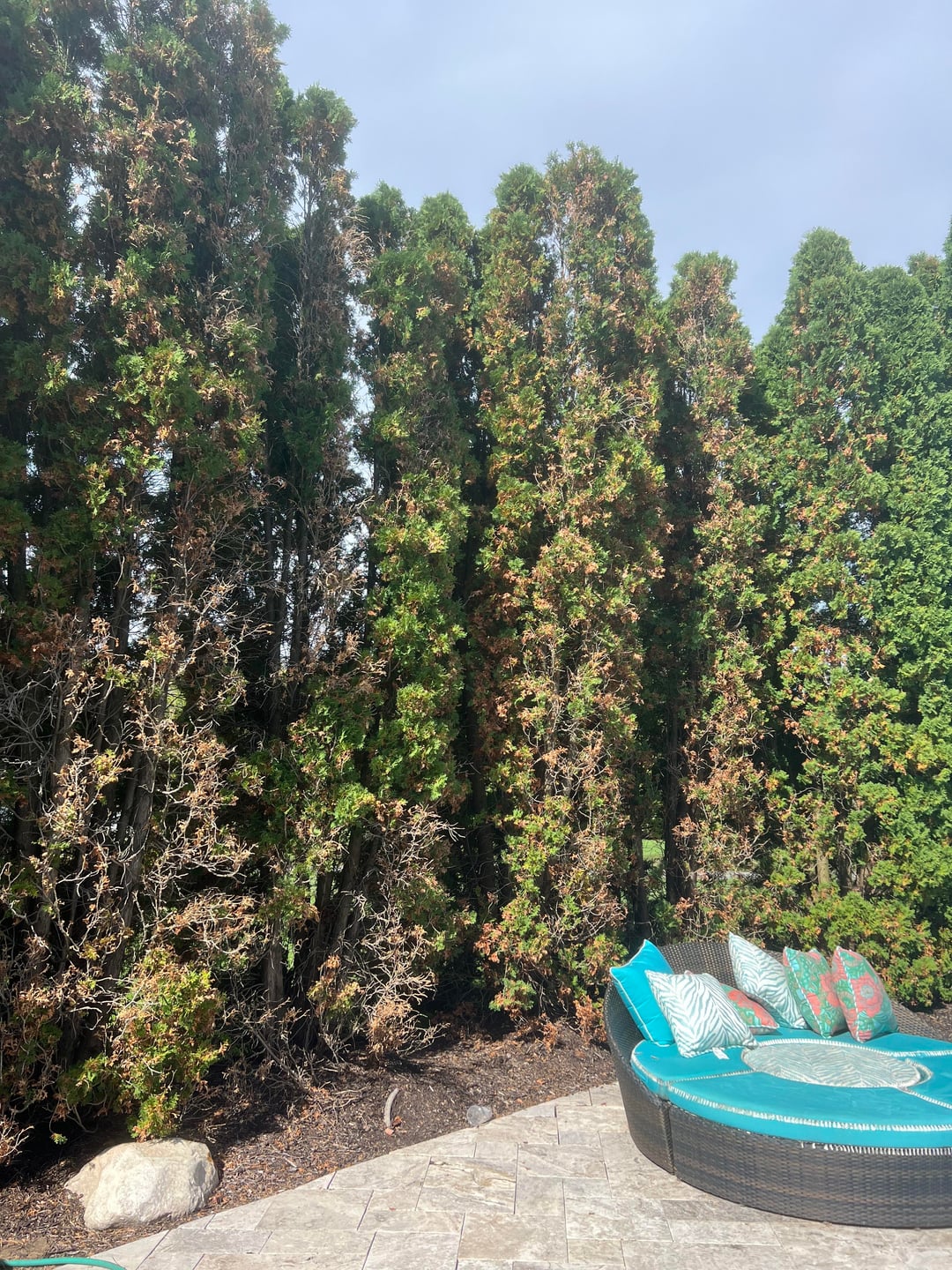
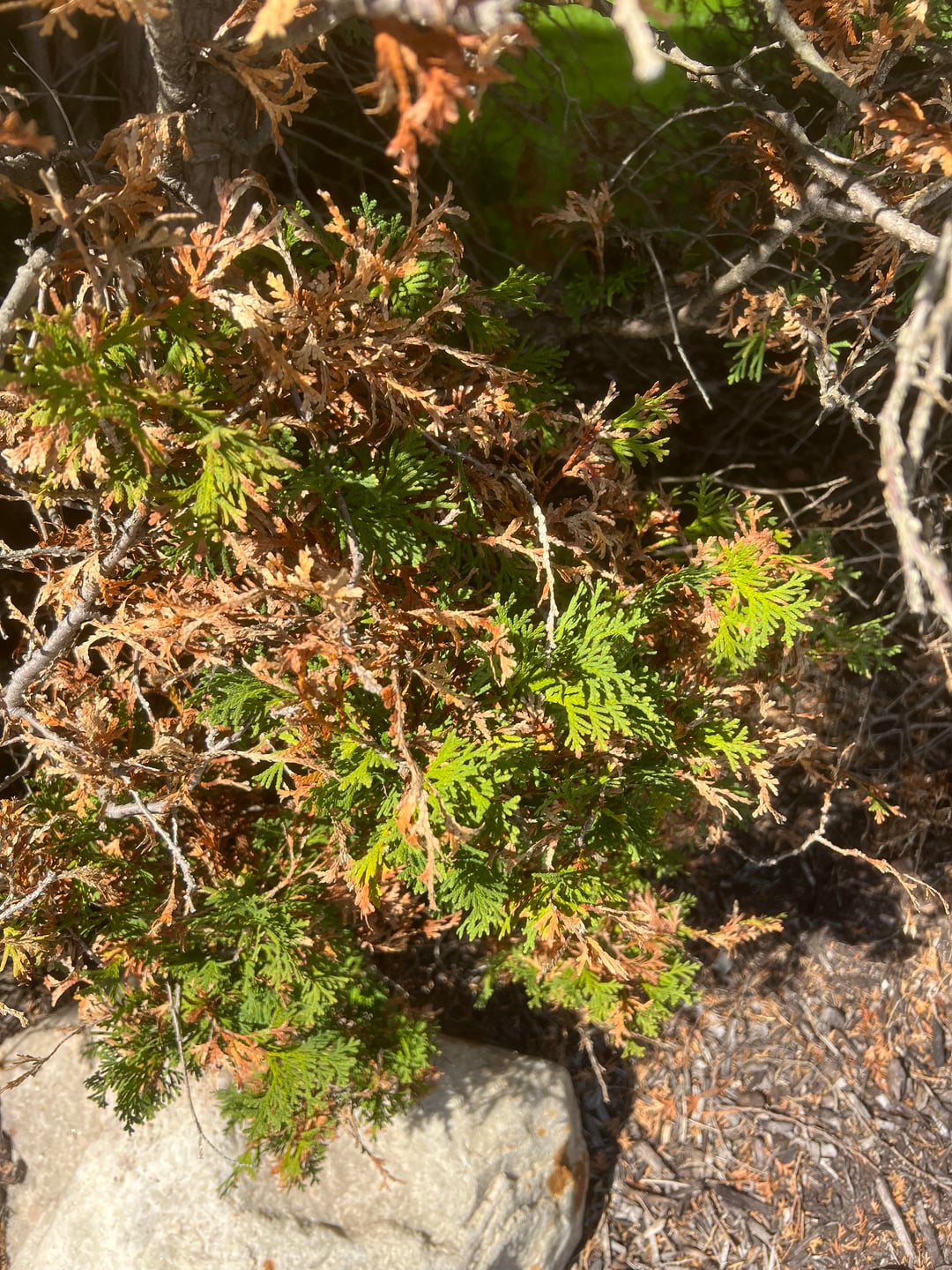
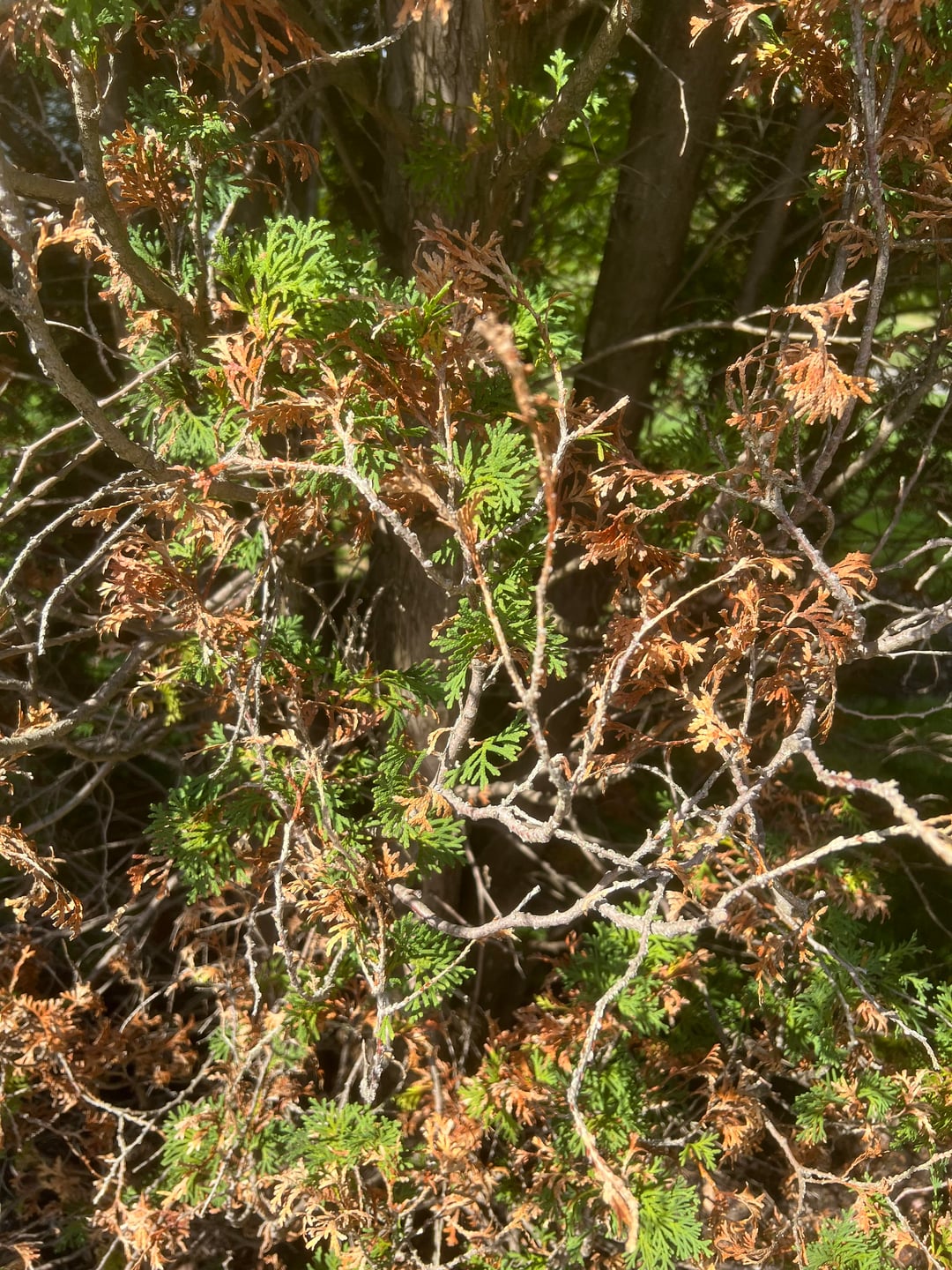
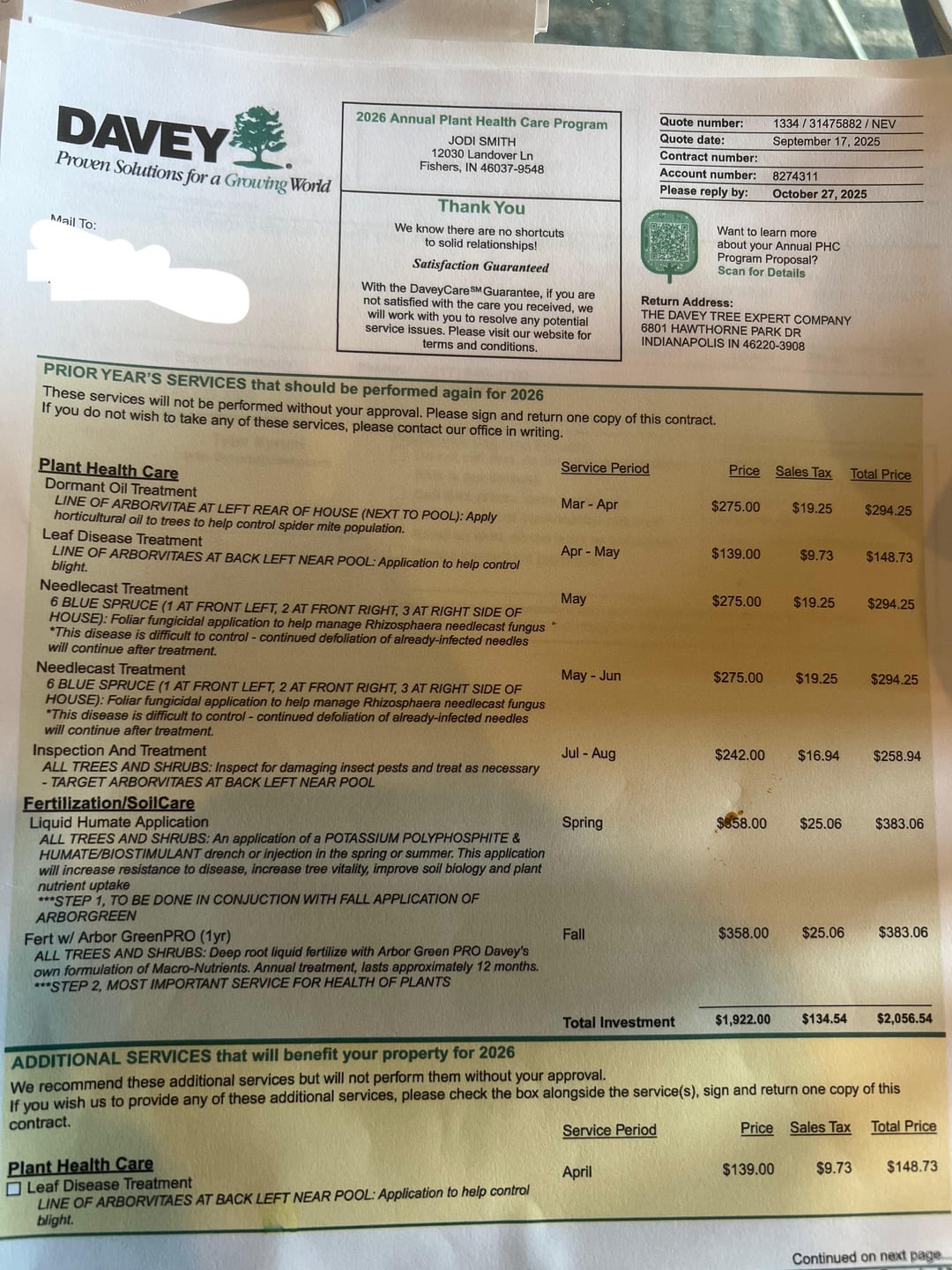
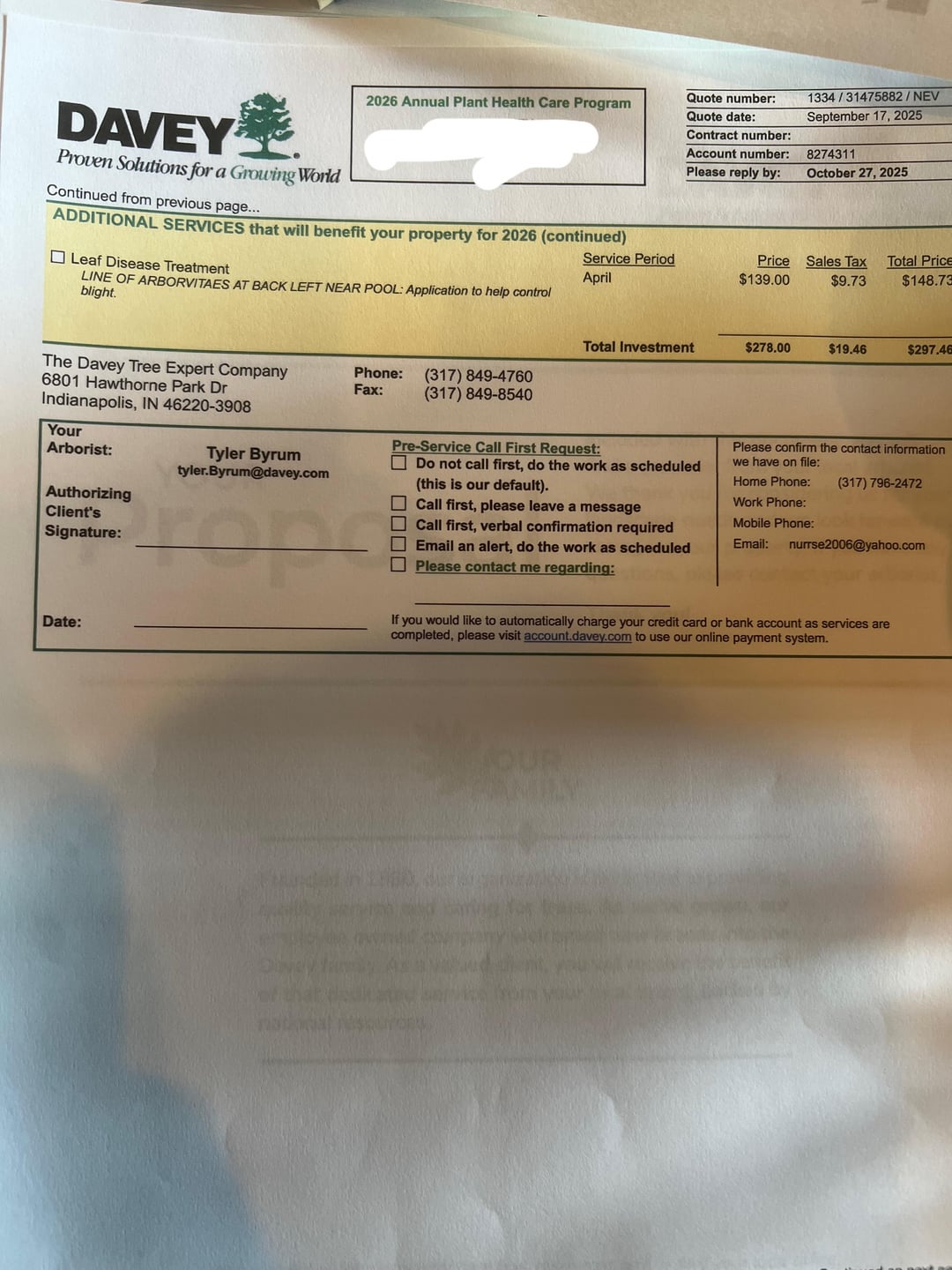
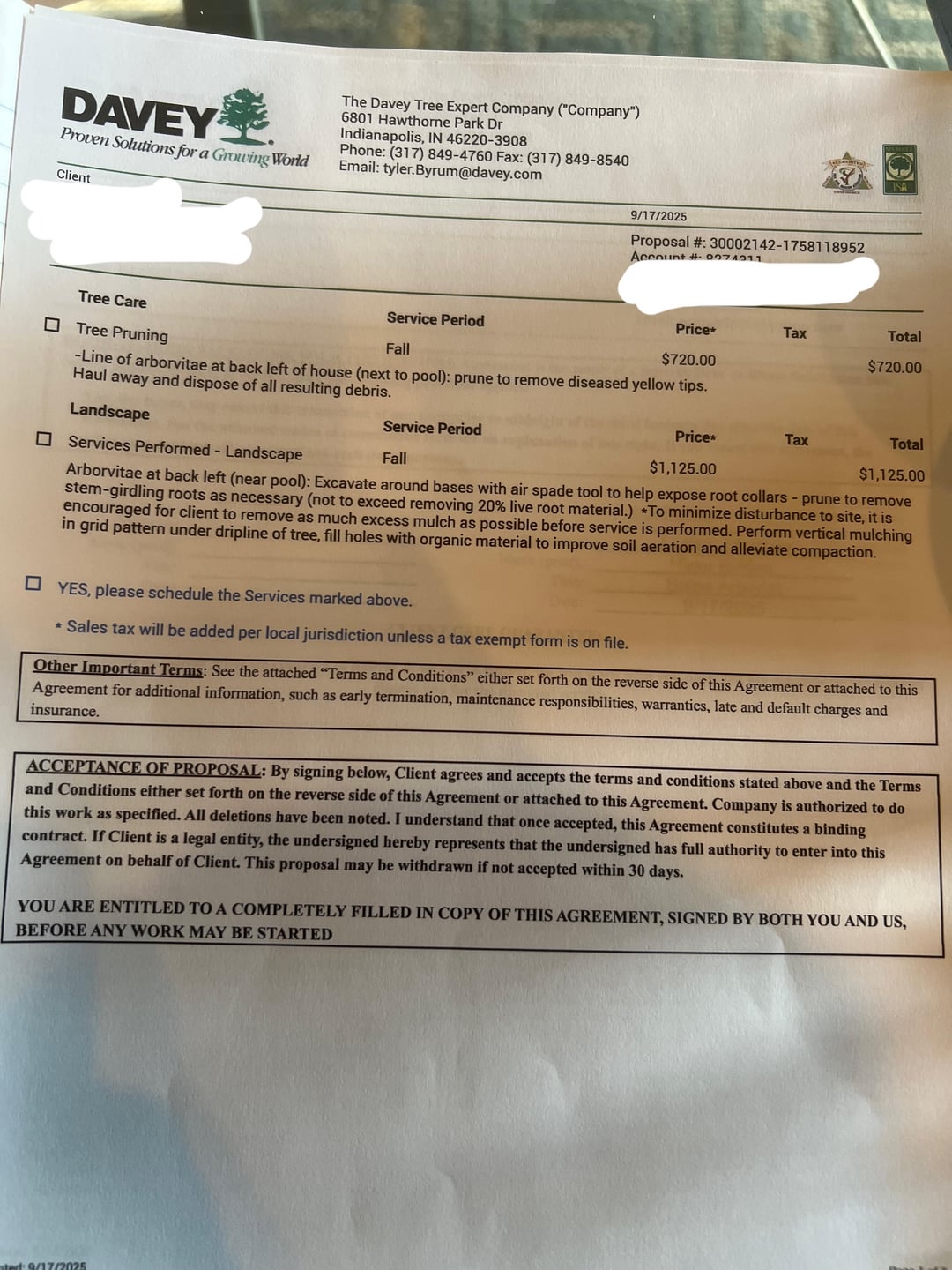
I have a large row of arborvitae trees in my backyard. A few years ago I started to notice the trees were getting brown. I had an arborist come out from Davey Trees to look at them and they recommended some steps. They got a lot worse. So I had the arborist come back out and take a look and he did a test on the trees and he says that they have “needle blight.” They were assessed with needle blight last year, and the arborist made some recommendations, which I followed. They didn’t really get any better last year and have pretty much been consistent over the course of the year. Can anyone help me assess their plan for this year to ensure that these will improve? Or are these trees lost for good? He’s making additional recommendations this year, including an air spade tool evacuation around the bases to expose root collars. That alone is over $1000 I’ve included the proposed invoice for all of their services. (It’s for my entire yard so there is more on here than just the arborvitae’s). Hopefully an expert can weigh in on my dilemma.
by Bubmack
12 Comments
These are not likely to get better, aesthetically. All the brown dead areas will not regrow.
Arborvitaes love to die. One day they are fine, the next they are dead. They are great privacy hedges until they aren’t.
I wouldn’t invest into saving them but rather replacing them.
There is a lot to unpack here. Ill do my best as I write work like this all the time. First, if the air spade is done right, it can be the most beneficial treatment for the trees over health. The needle blight can be extremely difficult to control, and you may never even get full control and be doing a similar plan for years to keep them alive or reduce their decline. They will never look 100% again if you get back to 70-80%, which would be a win. This should be conveyed to you. They should explain the realistic outcome of this and that it will be ongoing to maintain and not just another year of treatments. I would recommend doing a lot of these treatments for the best results, but the results are never guaranteed. If these are important privacy walls, it could be worth the investment, but removal and replace could also be an option. A good arborist weighs the outcome and the value of what the customer needs and wants. I have people spend 3k a year to maintain their hedge as losing it would be more costly to them and remove their privacy, but thats up to you.
That is a shame. Sometimes it’s better to replace than spend thousands chasing after the fix. They will never come back, not even close. Years ago I had an oak wilt problem on my acre lot in Minneapolis. At that time a treatment was trenching the roots 5 feet below the surface. This was done with a bulldozer equipped with a spade. We trenched all of our oaks (we had about 20 mature). Very expensive. They continued to die. Point is, sometimes you just throw money away. Nobody can guarantee it’ll work either. In my case, I clear cut our yard and replanted with balled and burlap.
If it’s positive for Phyllosticta Needle Blight, that’s a rough one to work with. While it’s typically a weak, secondary disease it can do quite a bit of damage in a short period of time. To my knowledge, nothing has been proven successful in managing it over time.
If it’s positive for Phyllosticta Needle Blight, that’s a rough one to work with. While it’s typically a weak, secondary disease it can do quite a bit of damage in a short period of time. To my knowledge, nothing has been proven successful in managing it over time.
If it’s positive for Phyllosticta Needle Blight, that’s a rough one to work with. While it’s typically a weak, secondary disease it can do quite a bit of damage in a short period of time. To my knowledge, nothing has been proven successful in managing it over time.
Phyllosticta and Pestalotiopsis can be secondary signs of Thuja stresses. Davey is assessing they are planted too deep and/or over mulched. I see these two fungal diseases on Thuja occidentalis vars most often when cited as pool screening and or with automatic turf head watering. I’d remove all mulch and dropped foliage cleanly. Refresh with uncontaminated wood mulch and fert. Keep them thriving but don’t over fert.
trimming will not help
Never use Davey $$$$ and those trees are not coming back . Replace them .
Considering they’ll never look that great again even if the disease is treated (slim chances from what I’ve seen with my work), I’d take that $2,000 and put it toward removal, new trees and replanting.
You still have unmasked PII on this doc (account #, phone #, email address, and quote #) might want to take it down.
Water water, reduce stress, severe pruning of all those bits and that’s daunting and maybe maybe the plant will improve. At this point you got nothing to lose. Healthy locations probably watered plants with decent amount of fertilizer Is the ticket. Stressed plants, are the weakest. I really have problems with them in New England except in crappy poorly located plantings on commercial sites That experience overwatering with sprinklers which is not good watering, and/or winter abuse sand and salt. Otherwise they rock and are the backbone of the garden in a cold climate, the evergreen workhorse