
Southeast U.S.
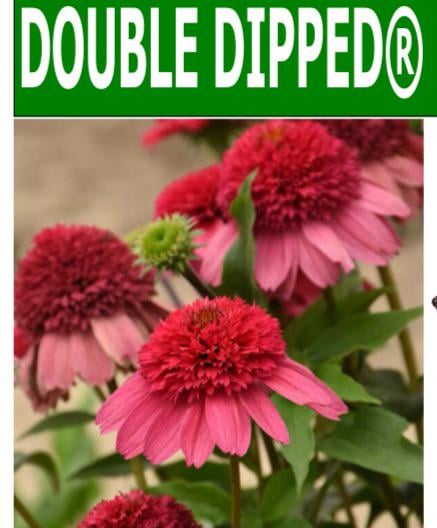
I’m new to natives and have a nursery near me that sells some native varieties. I’d like to add a couple more to what I already have but am confused about whether or not all of the plants marked as “native” by the nursery are actually native. For example, yarrow and coneflower are both native to my region. When I look at the list of natives at this nursery, it includes the basics (echinacea purpurea and achillea millefolium) as well as a bunch of varieties that seem to possibly be hybrids and/or have proprietary names that make me think they might not be the same as standard natives (Achillea millefolium ‘Balvinwite' New Vintage™️ white yarrow and Echinacea DOUBLE DIPPED® ‘Watermelon Sugar,’ for example, are both listed as natives).
Are plants like these truly native? Is this what people mean when they say “nativar?” I know to stay away from tropical milkweed, for example, and just curious if this is a similar scenario of deceptive marketing, or if these varieties would be equally beneficial to pollinators as the “regular” native varieties. I was a little traumatized when I learned the truth about butterfly bush and don’t want to make the same mistake again.
by AppointmentExact8377
16 Comments
I only by the ‘boring’ originals because I’ve heard that most hybrids don’t provide enough nectar or pollen to be valuable to bees. Bees will waste energy at the wrong plants. Also the originals tend to be cheaper.
I doubt it’s native.
Yes, nativars are cultivars of native plants. That echinacea sounds like it’s probably a hybrid though, since it doesn’t list the species.
The wildlife value wildly depends on what’s been selected for. Some are fine, others aren’t.
That echinacea looks too modified to me.
I don’t find the overly-petaled cultivars to be visited by pollinators as often as straight species or more close to cultivars, but it isn’t the end of the world to mix a couple of them into the garden.
I actually have one of these plants I got before I knew better, and it’s been 3 years in a row that I haven’t seen a single bee visit them. There’s lots of other options in my yard, so I know that’s a factor, but the flowers are so dense I’ve honestly wondered if anything could even get nectar out of it. I see moths and butterflies land on them sometimes, but not for long. They are interesting looking, but it seems to me they offer no other benefit.
This is a “nativar” aka a native species that has been modified for aesthetics but is probably useless to pollinators.
It’s so frustrating that the landscaping industry sees the interest in native plants yet completely misses the point.
I don’t even bother checking stores around me any more, just order seeds online and start them yoursf.
About 99% of plants with names in “quotes” are not going to be the straight species, if you are truly worried just look for the true straight native plant. “Navitars” can have issues like reduced pollen or nectar, can be improper host plants and possible potential for invasiveness. It is deceptive marketing, maybe try to find a true native nursery near you?
They’re native, but modified. Quite a bit I’d say.
No
It’s a cousin at the closest. The native is going to be the straight species, Exhinacea purpurea, and the nativar (cultivated native) has a name in apostrophes – Echinacea ‘Double Dipped’. The apostrophes are for the cultivar name and the registration mark is for the line. This is likely a Double Dipped ‘Magenta’ or something.
All in all, the benefit of a nativar relies directly on the changes made. Doug Tallamy is the guy to look up for this, but basically as long the flower shape doesn’t change much and the flower/foliage color stays pretty much the same you should be fine. Something like this with extra petals prevents pollination as it’s a physical barrier. Caterpillars don’t like purple leaf cultivars, etc.
Hybrids in nature are extremely rare and few between, they’re usually created by humans and they usually combine species from very different regions. For example, a lot of plants from one continent are related to plants from another…this has everything to do with the continents splitting. Sometimes it’s more localized to one continent and that has to do with climates shifting, so a plant from the West Coast can easily hybrid with a cousin from the Eastcoast.
So for me my personal rule is simple, if one of the parent species isn’t native then the whole isn’t native. You can do a quick and easy web-search to find out. Just search the history of the hybrid. Heck, a lot of times the hybrid will have the two or three species listed in Latin under the name or on the back of the envelope.
…
Second—Here’s something you can take away and apply during your shopping—plants are native to regions, not man made borders. Keep that in mind when you see a label that’s like “New England Native” or “Southwest Native.” It may be largly accurate but again, these regions have man-made borders. Instead, think of Mountain Ranges, Zones, Large Rivers, and Watersheds.
Straight species are best for pollinator value. Cultivars are better than non-native plants, definitely avoid any that change leaf color.
Nativar is just marketing that is supposed to be a shorthand of native cultivar.
Cultivar itself is a shorthand of cultivated variety. The single quotes are a genetic ID tag that indicates it is a cloned variety or very very pure seed strain. For instance if you buy a Honeycrisp apple anywhere in the world you’re guaranteed it’s a Honeycrisp because it’s cloned via grafting.
Hybrids and pure species can be given a cultivar designation. Callicarpa americana ‘Welch’s Pink’ is a pink fruited native beautyberry propagated from a plant discovered in the wild. Echinacea ‘Mango Meadowbrite’ is a cultivar of a hybrid cross between E. purpurea and E. paradoxa.
If the cultivar is of a pure species it is falling within the naturally occurring variance of that species. Someone just decided to give it a name and distribute it to fellow gardeners who appreciate it. I found a variegated Hornbeam in the woods and have sent material to grafters and since named it ‘Forge Sparks’. It is still a Carpinus virginiana, it just did something weird that makes it worthy of cloning.
Hybrids and cultivars of native species have never been empirically tested regarding their pollen or nectar content as compared to wild types. Though it would not be unreasonable to assume hybrids have more. Hybrid vigor is a well known phenomenon where the influx of new genetics makes plants grow bigger, flower more, etc. Cultivars of pure species would fall within the normal range of pollen/nectar content. The only documented exception are petaloid doubles that have all sexual parts of a flower replaced with petals.
That Echinacea hybrid you posted is a petaloid double. Though it provides no benefit it also does no harm, unless you theoretically had a garden of only petaloid doubles. But a few peppered in amongst your other fertile Echinacea will cause no issues. Bees especially remember which flowers pay out and which don’t and report it back to the hive with an elaborate dance. Once they learn it’s a dud they’ll ignore it.
Hope that helps.
insects never really land on it, it has native genetics but the parts that help the insects have been selected to double the flower and it makes it unusable.
Edit: to add its still a nice plant to mix in with some strait native cone flowers, a cultivar is still better than a eurasia counterpart some cultivrs make double the nectar with the same nutrient content ie. jeana phlox. only double flowers, and changing the leaf color to red, only when that does not occur naturally are large culprits of making themseves unusable.
Dont buy red varieties of plants that are liked by bees. Bees cannot see red colors like humans, so they will not usually visit red flowers. Other pollinators like hummingbirds may still visit, but no bees.
You might be interested in the [Mt Cuba Center varietal trials.](https://mtcubacenter.org/research/trial-garden/) Varietals can range from better than wild type to useless for wildlife, and it’s interesting to see how they stack up.