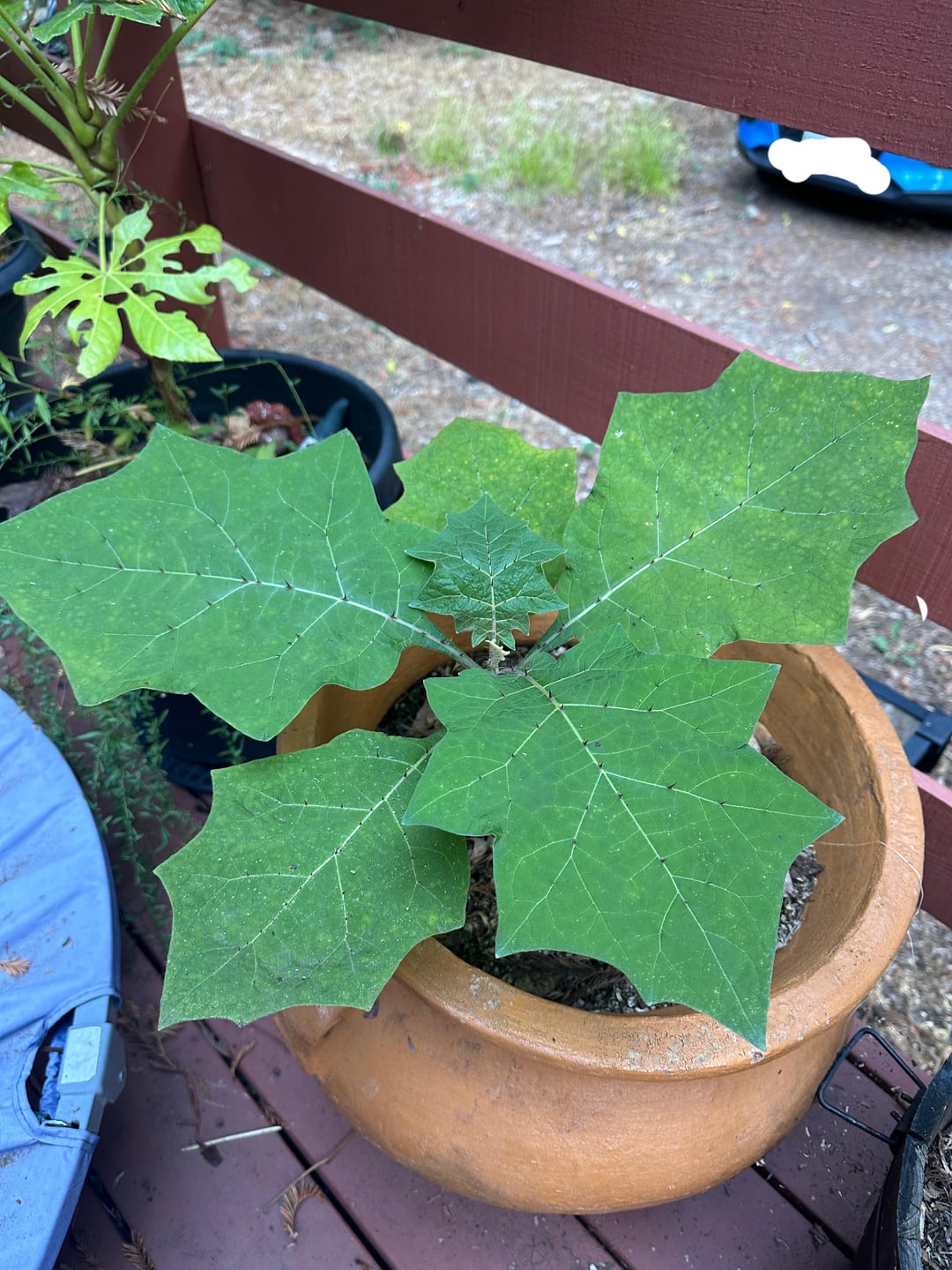
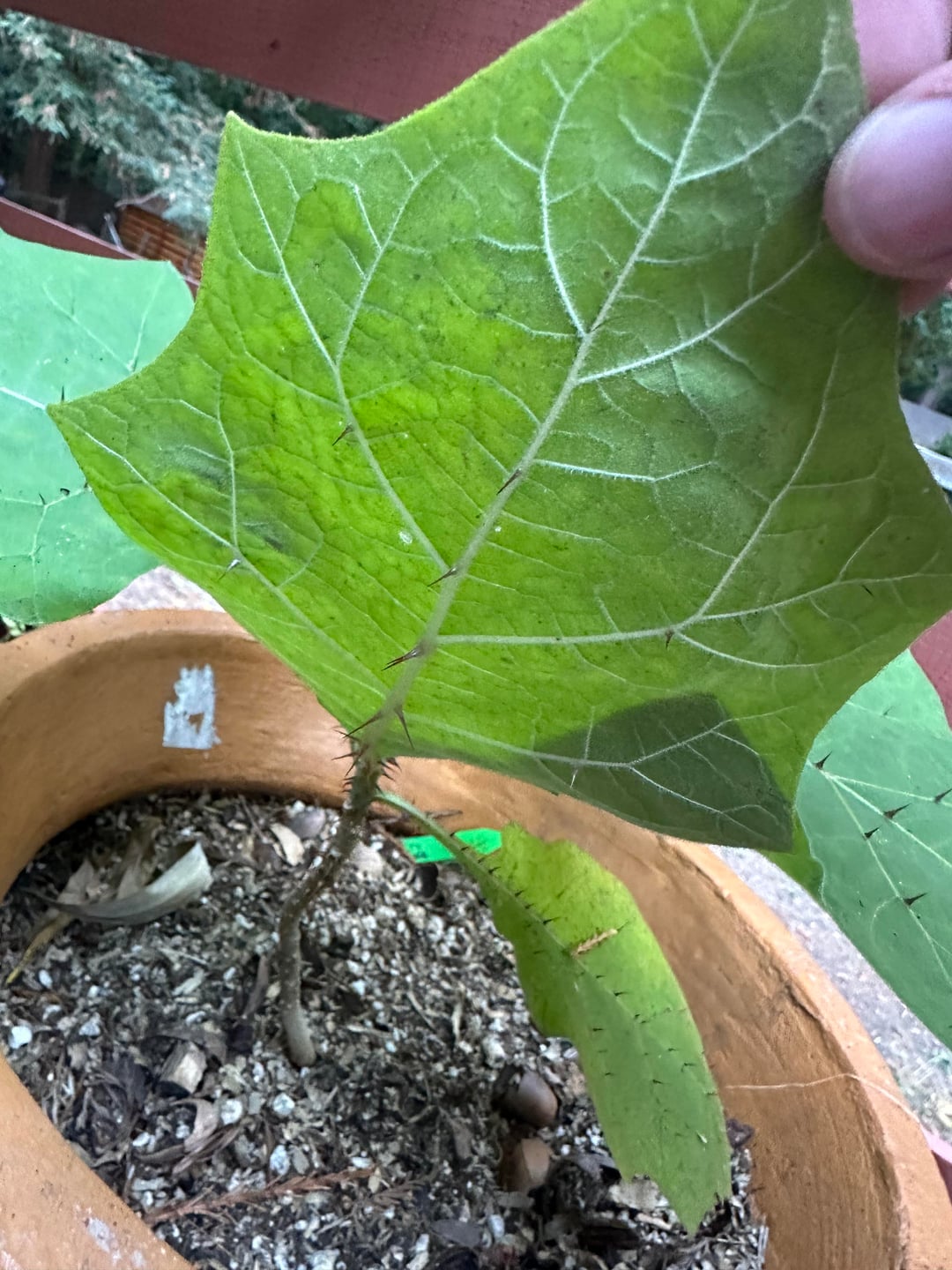
Supposedly it’s a recently discovered species, he said it didn’t have a scientific name when I got it a few years ago. Any clue what it is? Does it have a common name?
by saampinaali

Supposedly it’s a recently discovered species, he said it didn’t have a scientific name when I got it a few years ago. Any clue what it is? Does it have a common name?
by saampinaali
7 Comments
It looks like [Turkey Berry](https://en.m.wikipedia.org/wiki/Solanum_torvum) which is invasive in some parts of USA like Florida.
Looks like a naranjilla to me, which would fit with it being an exotic fruit (since they are actually used as a fruit in the culinary sense).
This looks like one of the members of the Solanum hexandrum group within the genus, which consists of [S. hexandrum](https://www.inaturalist.org/taxa/634898-Solanum-hexandrum/browse_photos), S. hydroides, [S. stagnale](https://www.inaturalist.org/observations/66650570), S. aciculare, S. phrixothrix, and [S. sublentum](https://www.inaturalist.org/observations?taxon_id=1440248). The way the leaf blade is decurrent onto the petiole is a trait that species in this group have; it also rules out the other commenter’s suggestion of S. torvum, which does not have decurrent petioles *(ETA: I see naranjilla/S. quitoense is being suggested, but that species also* [*does not have decurrent petioles*](https://www.inaturalist.org/observations/230546517)*; additionally, it would always have at least some purple coloration on its leaves)*. The species in this group are all relatively newly discovered/named. However, all of them are endemic to Brazil and do not occur in Peru. When/if the plant flowers, you should repost with pics of the flowers for a better ID. If you’re able to get a close photo of the hairs on the plant, that would also be helpful.
Do *not* eat any fruits this plant produces without getting a definitive ID for the species. Many prickly nightshades have toxic berries. If this is a species in the S. hexandrum group, the fruits may be toxic (there is no recorded data on their edibility). You can dm me pics of its flowers/fruits in the future, or tag me in an ID post, and I will see if I can ID it for you. I have some experience with this group and lots of experience with the Solanum genus in general.
Looks like my ground cherry, but with much larger leaves.
Solanum quitoense. Its fruit is quite good. Kind of like a sweet, citrusy tomato. Common names are lulo and naranjilla.
Forgive my ignorance to the people saying Naranjilla, but could it also be cocona? Plant looks similar and native to Peru
Maybe Solanum oocorum? It’s not from Peru, though. It is a recently discovered species. No purple coloration on the leaves or stems, and it has spines everywhere. Very may spines in the stem. They get pretty big and you need 2 plants for fruit.