
HEELLLP!
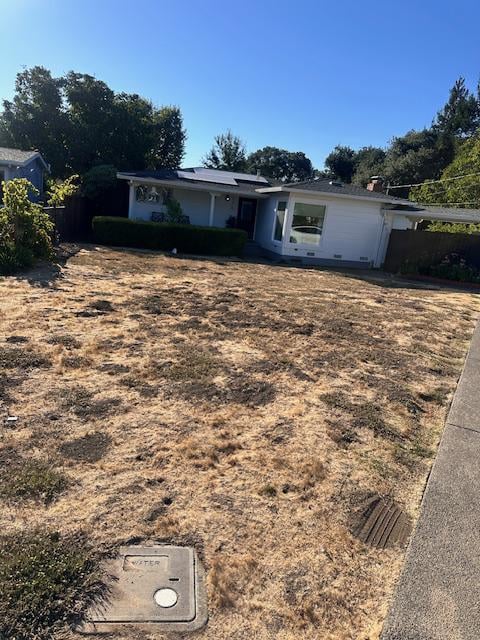
Brand new to gardening/landscaping. Brownest Thumb Ever. I have a 1800sqft dead lawn in Northern California- USDA growing zone 10a.
I just want to do a DIY paver+gravel pathway + mulch. Will do sheet mulching. Will add plants over time, once budget allows-I just cannot look at this any longer!
The current soil is extremely dry and compacted, probably clay-cant get a shovel in there easily. How do I remove the soil to start making a gravel/paver path?
Any beginner and budget friendly tips/ ideas appreciated. Been putting this off for 10 years because I am overwhelmed! Thanks so much!
by Antique-Ad-5749
6 Comments
Well, you’ve already achieved the “no lawn” part of it, so you have that going for you which is nice! Does it rain at any time of the year? because if so it’ll be easier to dig then.
Check out calscape.org native plants for your area that tolerate your soil, weather, elevation
[https://www.crimepaysbutbotanydoesnt.com/kill-your-lawn](https://www.crimepaysbutbotanydoesnt.com/kill-your-lawn)
Here’s a little read if you have the time. It’s a little hard to follow and might not be a direct guide for your situation. But getting native plants established and adding moisture retaining mulch will help to return the soil back to something more healthy. At which point it would be easier to get a shovel in the ground. Look for what pioneer species are native to your location, they will help to get the process started and support an ecosystem for more delicate plants.
Edit: It’s not a short process. If your goal is to get pavers in right now, then heavy machinery is needed.
Helpful quote from the link: “Use a service like [chipdrop.com](http://chipdrop.com) or call tree companies out of the yellow pages. Mulch can sometimes be very easy to come by for free.”
Get sheet mulch down now before the rains begin and it turns a lovely weedy green. Again. You might mark where the path is going and avoid the area.
Since there’s no frost heave you really only need to remove the layer of dirt with lots of organic matter which is probably only 2-4″ deep and comes off easily. My soil looks like soil for about 3″ then there’s yellow mostly sand studded with pebble sized rubble. I only need to scrape to the yellow.
A mattock is your best digging buddy. Even so I had to resort to scraping a saucer, filling with water, stab with the mattock and remove the softened soil several times to get a gallon pot sized hole dug back in 2021 when I removed the last of the lawns.
Measure the yard and either check soil web or do a soil texture jar test and dig a percolation hole to figure out what’s going on. Better to avoid bog plants if it’s sandy loam…
For how tos see [https://inlandvalleygardenplanner.org](https://inlandvalleygardenplanner.org) ‘s YouTube channel.
I hope you go with native plants. I did not water my long established ones through the winter of 2020-2021 when we got 3″ of rain and lost no plants although the redbud tree did get some water that summer as it was looked peaked. [calscape.org](http://calscape.org) and r/Ceanothus is an active subreddit you might want to visit and listen to a talk by Doug Tallamy on why it’s good for the wildlife as well.
This is extremely daunting. I’ve been designing my own yards for years, removed most of the lawn and that last 800+200 square feet of former lawn took 3 months of frantic research to figure out how to plant.
Once you have the yard measured get any trees and larger shrubs you want in the ground this fall. Since it’s best to buy smaller plants the hit on the wallet is lessened and you don’t need many of them to fill the yard. Some native plants show up very quickly. My backyard was full in 6 months with gumweed, bush sunflower, desert globe mallow and deergrass and the toyon designated as future tree was several feet tall from an 8 leaf seedling I’d transplanted. If you don’t want all natives then Mexican Bush Sage made lovely large flowering clumps by that time as well.
Yes, sheet mulch now, check if chip drop exists near you for free mulch. You probably don’t even need cardboard if you just do it now with a thick layer (six inches or more).
You might take a look over at r/landscaping for DIY garden paths, how deep to dig, using crushed rock/sand/gravel or not (you probably should, looks like periodic flooding of bone dry earth is your new norm), there’s lots of videos too. DIY site prep will be a literal pain, a question of $ vs. back pain.
For the paths, I would use extension cords or hoses to plan them out. I would make slightly curved paths, not straight angular paths.
If you want to start on some of the path sooner, you could try laying out soaker hose along the area you want to excavate. Since the soil will likely be hydrophobic, do 5 minutes, wait, then 10 minutes etc, before leaving it on for longer. Try it with a small section and try to excavate to see if it works.
But honestly, if I was starting from scratch like this, I would do cedar chip paths because it is a lot easier to fix if you don’t end up liking an aspect.
I would plant mainly native plants. Kaiser andMsMaynard have provided some good tips. I would plant at least one native tree and a variety of native shrubs. Plan for their full size to ensure adequate spacing.