
CLEVELAND, Ohio — When is a weed not a weed? As more gardeners are incorporating native plants in Northeast Ohio, some plants still have a polarizing reputation.
Take common milkweed, Joe Pye weed, and ironweed, for example. They can grow taller than a basketball player, spread aggressively, and have “weed” right in the name.
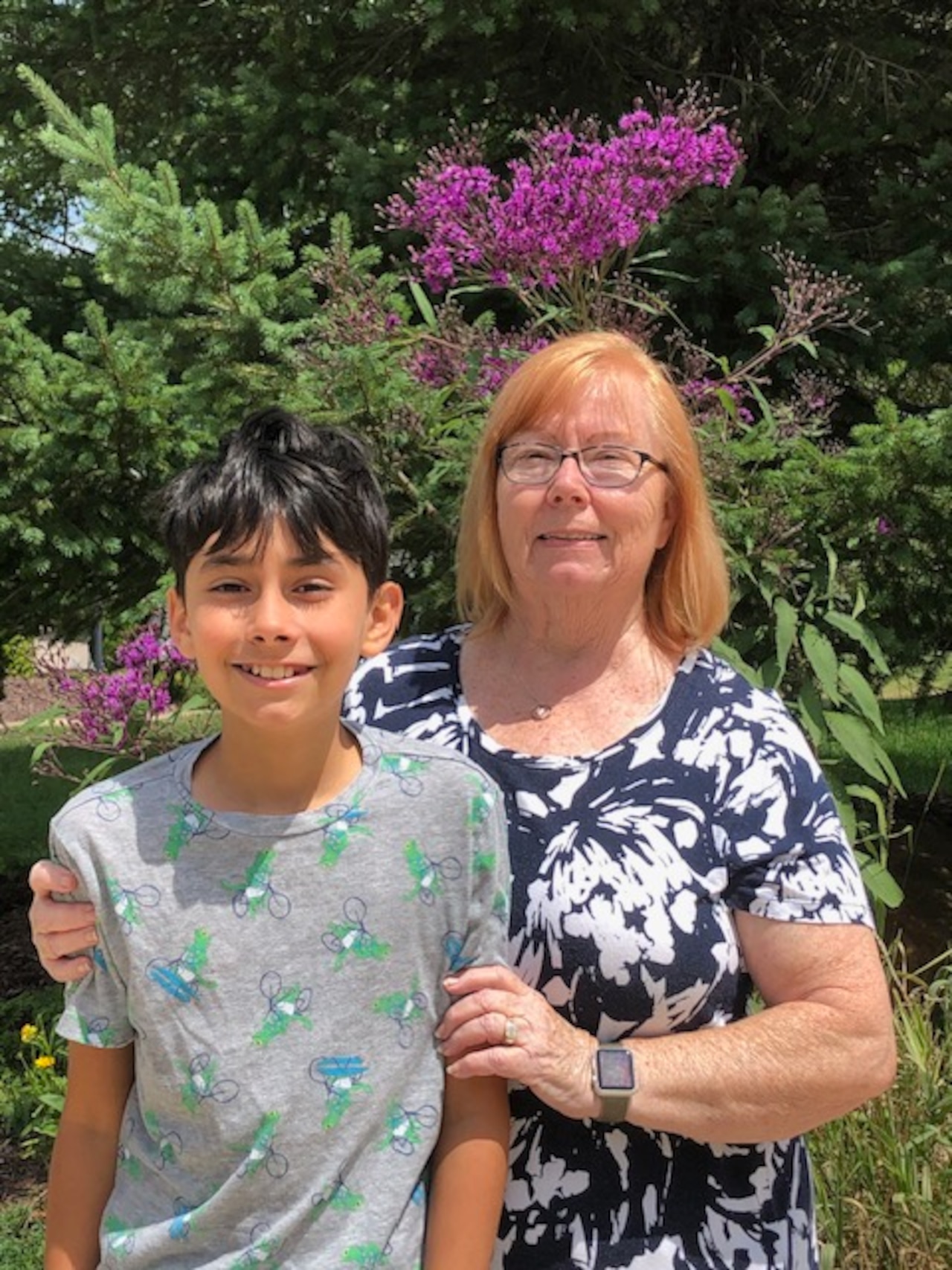 A Joe Pye weed is taller than reader Martha and her grandson Dexter in her Macedonia garden.Reader submitted photo
Read all of Susan Brownstein’s columns here.
Reader Martha from Macedonia recently wrote about a “volunteer” in her yard. (Volunteer is garden-speak for a plant that you are pretty sure you didn’t plant.)
A Joe Pye weed appeared in one of her flower beds and before long it had spread into another. “The original plant is enormous!” she said, at more than six feet tall, with “big pink flowers” that return every year. Although her husband was not as fond of it, she asks him to leave it standing until the flowers are spent. What struck her most was that she had not seen Joe Pye weed growing elsewhere in the neighborhood, yet there it was, thriving in her yard.
Martha is not alone in appreciating the flower clusters of Joe Pye weed (Eutrochium purpureum). It blooms in late summer and attracts butterflies and bees when many other plants have finished. However, a single clump can dominate a bed, which is why it is not commonly recommended for a tidy flower garden.
Martha’s email also prompted me to find out the significance of the common name for Joe Pye weed. According to the University of Illinois Extension, the plant’s common name has been used since at least the early 1800s and is thought to refer to a Mohican tribal leader. There is even a legend that a man named Joe Pye used the plant’s medicinal powers to save colonists from typhus fever, but no historical evidence has been found to confirm this tale.
Ironweed (Vernonia fasciculata) has a similar towering presence in a garden. Its vivid purple flowers stand out in midsummer on stems as tall as a person. Like Joe Pye weed, this pollinator favorite can be a spreader. Gardeners often thin seedlings each spring or give it a dedicated corner where it will not crowd out smaller neighbors.
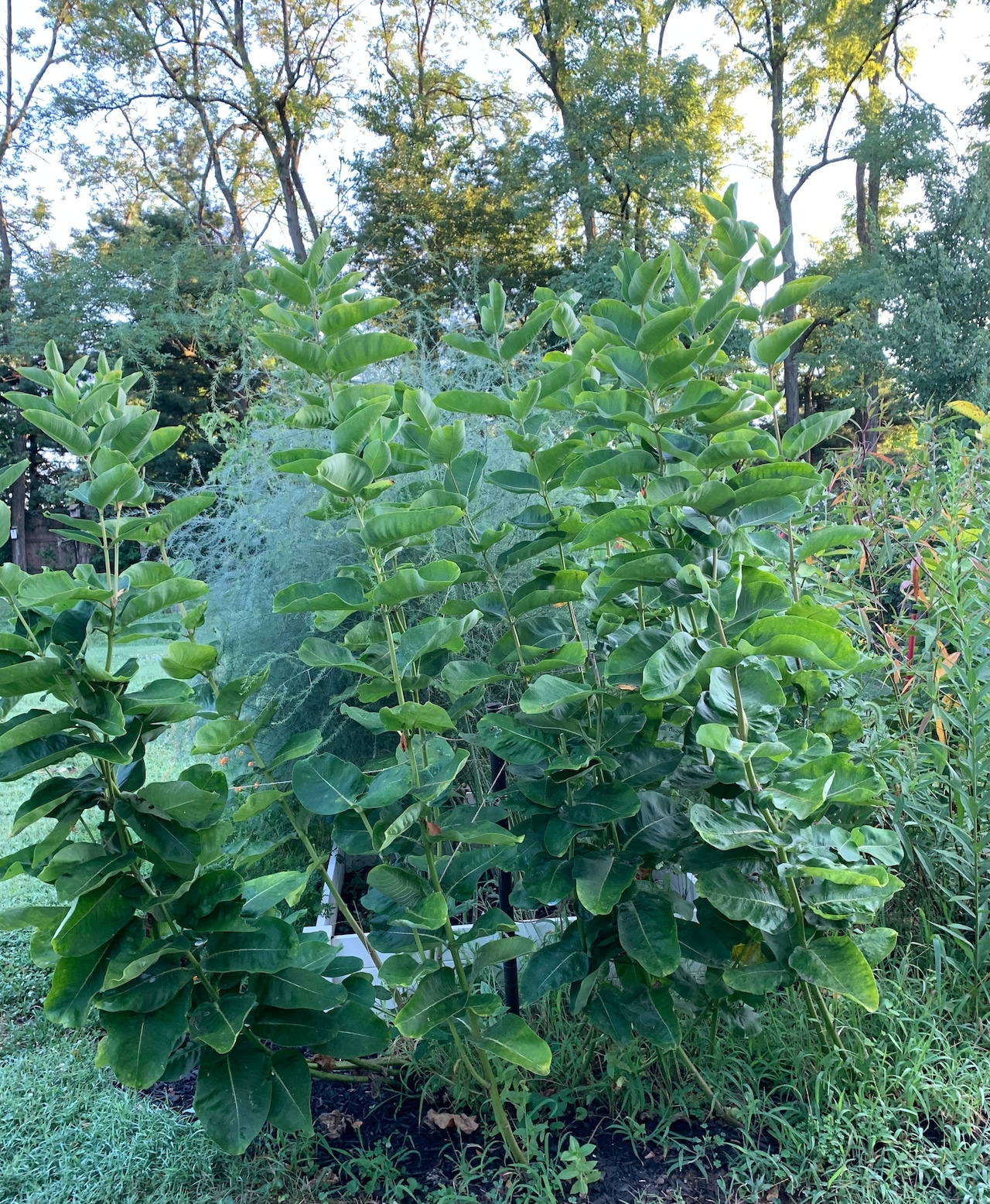 Common milkweed towers in front of asparagus fern in reader Tom’s Kentucky garden.Reader submitted photo
Common milkweed (Asclepias syriaca) may be the most controversial of the three. Reader Tom in Lexington, Kentucky, who note that his soil is “similar to that in western Greater Cleveland…having a high clay content and a good amount of nutrients,” shared his experience with common milkweed. He said that he planted common milkweed alongside rose milkweed (Asclepias incarnata) and butterfly weed (Asclepias tuberosa) to help monarch butterflies.
Unlike the other two species, the common variety quickly sent out shoots, some as far as ten feet from the original plant. He described it as producing “numerous babies” and admitted that he now plans to cut most of it down after the butterflies have migrated south for the season.
His experience illustrates both the allure and the challenge of common milkweed. It is essential for monarch reproduction, and its pink flowers are swarmed by pollinators in early summer. However, its spreading roots mean that one plant can become a colony. For those who want the benefits of milkweed without the sprawl, butterfly weed and rose milkweed are tidier choices, although they have less benefit for monarchs.
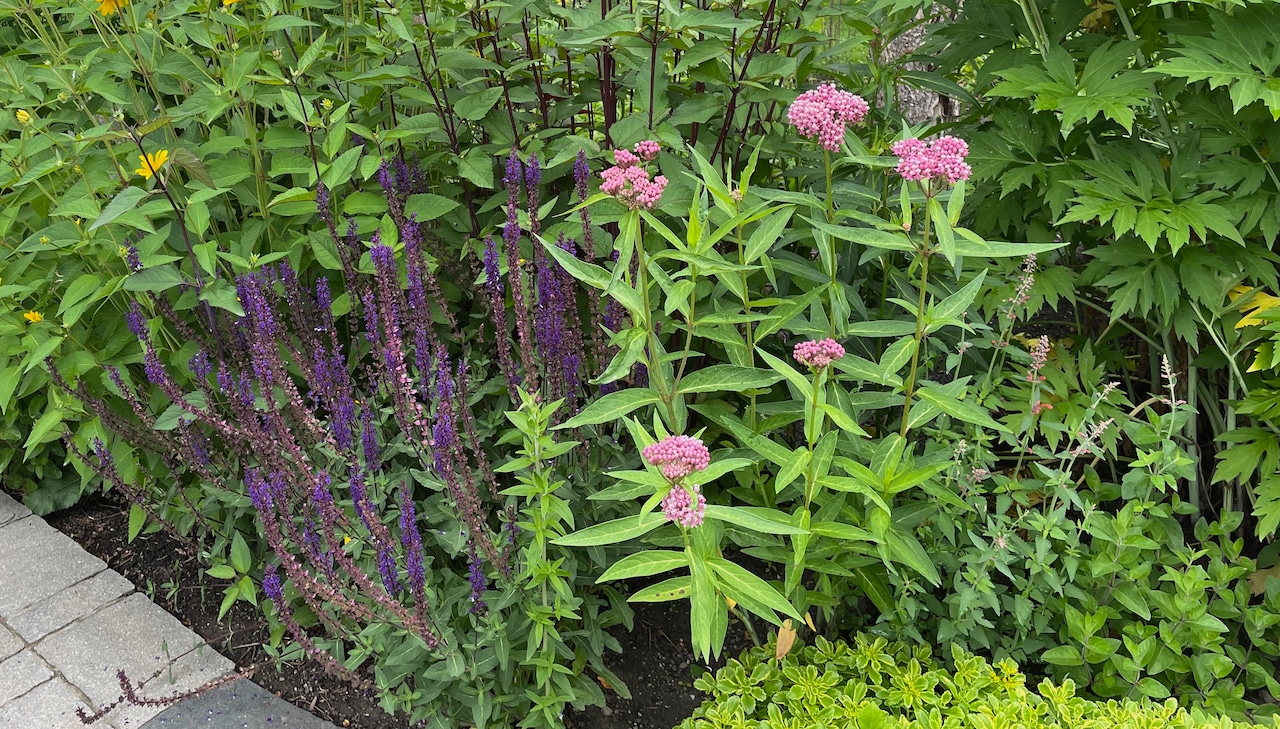 Dainty rose milkweed is more suitable than common milkweed in a traditional border garden.Susan Brownstein
Seeing imposing natives like ironweed, Joe Pye weed, and milkweed in a natural setting can help gardeners picture their role at home, and Cleveland Metroparks including North Chagrin, Rocky River, Brecksville, and Acacia Reservation are excellent places to visit. The tall stands of Joe Pye weed, ironweed, and milkweed feeding butterflies, bees, and countless other insects can make their size and profusion feel just right.
There is a lot to be said for plants that are hardy to the point of being impossible to kill, beneficial to wildlife, and beautiful in bloom. But they are strong personalities in the garden that can be too weedy for plant and human neighbors alike. In my conversations with expert gardeners in Northeast Ohio, I have heard these natives called “thugs” and worse.
But as our gardening practices are shifting from a focus on aesthetics to balancing what best supports wildlife while still appealing to humans, this attitude is changing too.
Gardeners like Martha, Tom, and myself are experimenting with how we can incorporate these so-called weeds into our yards. One thought is that their vigor can be harnessed to compete against invasive nonnative plants that we are trying to combat, like vinca or creeping euonymus.
With their height, perhaps they can also serve the same visual function in a garden as a tall shrub or small tree. Rather than just sticking these tall natives in the back of a border, where they will inevitably take over the rest of the bed and cause headaches, consider making them a focal point, much like lilac or hydrangea in a traditional garden.
So when are aggressive natives a good idea in your Northeast Ohio garden? The answer depends on your space, your tolerance for bold plants, and your goals. If you are looking to support pollinators, push back against invasive groundcovers, or create a dramatic centerpiece, these giants may be just what you need. If your space is small and orderly, it may be better to enjoy them at a Metropark. As the gardening saying goes, right plant, right place.
Thanks to readers Martha and Tom for their stories and photos. If you have gardening questions or anecdotes, email me at sbrownstein216@gmail.com.
If you purchase a product or register for an account through a link on our site, we may receive compensation. By using this site, you consent to our User Agreement and agree that your clicks, interactions, and personal information may be collected, recorded, and/or stored by us and social media and other third-party partners in accordance with our Privacy Policy.
Comments are closed.