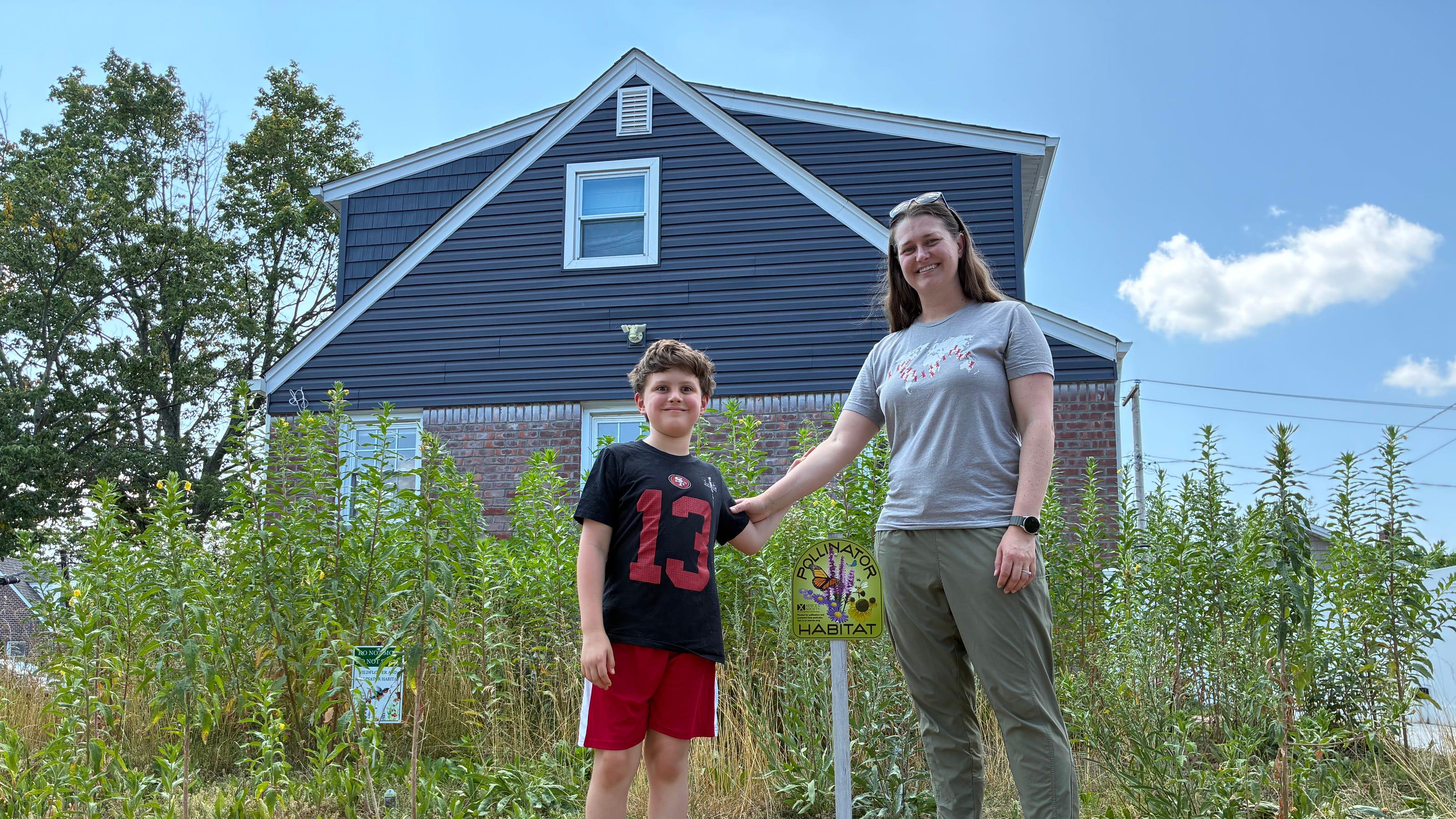
Hi r/NoLawn, Eduardo here. I’m a reporter at USA TODAY who followed as a science teacher has her first-ever court appearance today for native plants in her frontyard after she ripped out her lawn.
Her village government on Long Island says they are unsightly, but she’s seeking to ease flooding, cool temperatures and restore habitats for pollinators and other critters.
“People don’t know because they’ve grown up in areas with lawns their entire lives,” she told me. “They don’t know what the alternative could be, and that it’s something that is actually very beneficial.”
Also interested in this community’s thoughts on rewilded lawns and whether they’ve received pushback not just from neighbors, but also from local governments. Let me know in the comments!
“Aimee Kemp’s 8-year-old son, Auron, holds a spotted lantern fly, an invasive species, outside their home on Long Island, New York. Auron refuses to kill bugs, he said.”
Sounds like Auron needs educated on the definition of “exceptions.”
PopcornyColonel
My friend had turned her backyard into a hybrid of an organic vegetable garden and native plants. She’s lived in that house for 25 years and just started doing this about 5 years ago. I was at her house this past spring and was astounded at how many birds, bees, butterflies and bunnies inhabited her suburban yard. There were bird’s nests and fledglings and everything. Completely delightful.
Her husband has gone semi-native on the front lawn and to my knowledge, they have been no complaints from neighbors. It seems like a blending of a bit of lawn grass with natives tends to keep the complaining down.
Cautious_Year
NY Times and USA Today discussing grass lawn alternatives within a week?? Normalization is still probably a ways off, but this coverage feels huge. Awareness is the first step toward repealing archaic city ordinances and (mono)cultural practices.

5 Comments
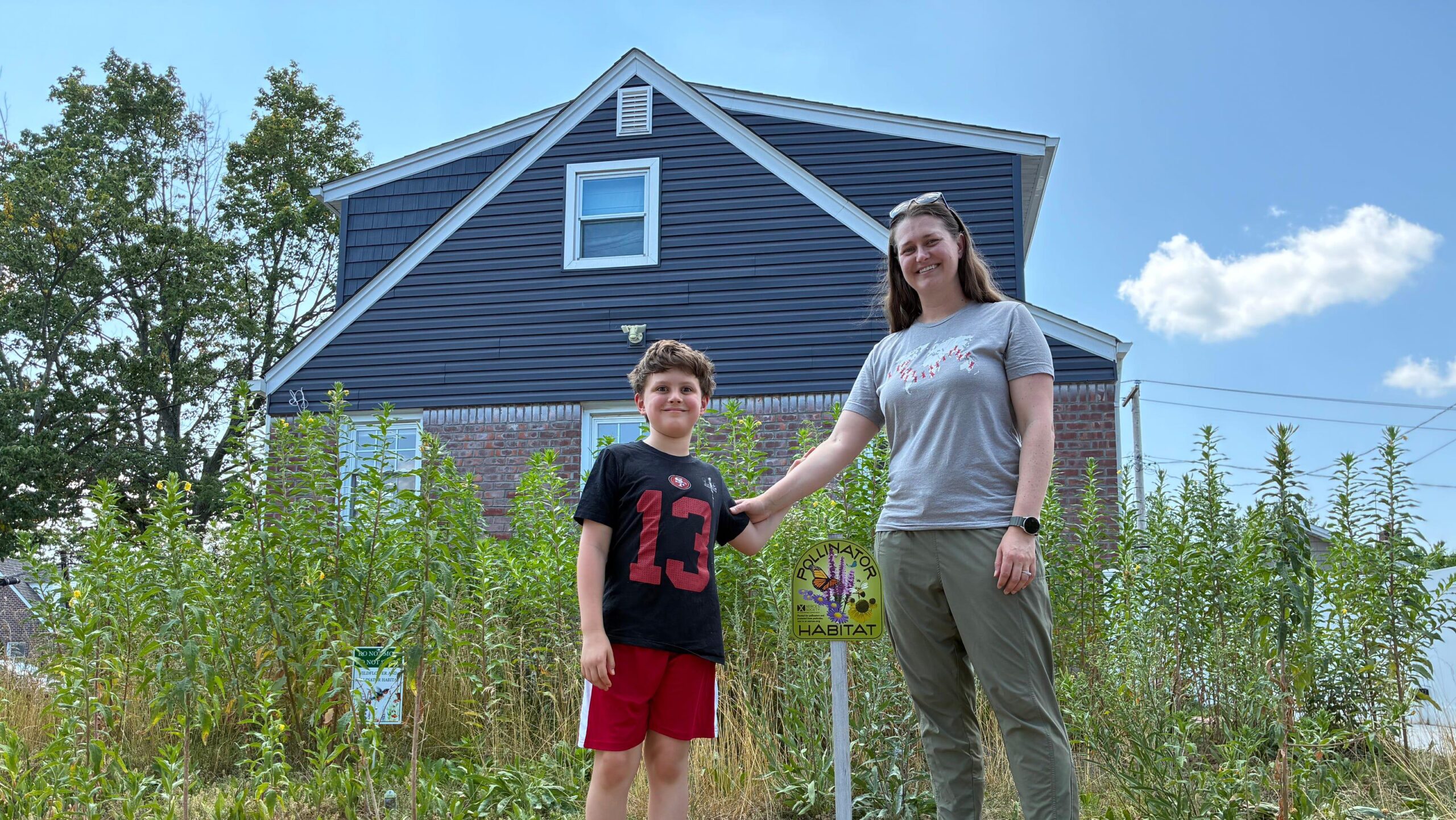
Hi r/NoLawn, Eduardo here. I’m a reporter at USA TODAY who followed as a science teacher has her first-ever court appearance today for native plants in her frontyard after she ripped out her lawn.
Her village government on Long Island says they are unsightly, but she’s seeking to ease flooding, cool temperatures and restore habitats for pollinators and other critters.
“People don’t know because they’ve grown up in areas with lawns their entire lives,” she told me. “They don’t know what the alternative could be, and that it’s something that is actually very beneficial.”
**Here’s more on the story on the history of lawns, including in America’s first suburbs, and how the push to “rewild” is growing:** [**https://www.usatoday.com/story/news/nation/2025/09/03/lawn-suburbia-rewilding-flooding-habitat/85833019007/**](https://www.usatoday.com/story/news/nation/2025/09/03/lawn-suburbia-rewilding-flooding-habitat/85833019007/)
Also interested in this community’s thoughts on rewilded lawns and whether they’ve received pushback not just from neighbors, but also from local governments. Let me know in the comments!
Here’s my article about it. https://gardenrant.com/2025/08/cues-to-care.html
“Aimee Kemp’s 8-year-old son, Auron, holds a spotted lantern fly, an invasive species, outside their home on Long Island, New York. Auron refuses to kill bugs, he said.”
Sounds like Auron needs educated on the definition of “exceptions.”
My friend had turned her backyard into a hybrid of an organic vegetable garden and native plants. She’s lived in that house for 25 years and just started doing this about 5 years ago. I was at her house this past spring and was astounded at how many birds, bees, butterflies and bunnies inhabited her suburban yard. There were bird’s nests and fledglings and everything. Completely delightful.
Her husband has gone semi-native on the front lawn and to my knowledge, they have been no complaints from neighbors. It seems like a blending of a bit of lawn grass with natives tends to keep the complaining down.
NY Times and USA Today discussing grass lawn alternatives within a week?? Normalization is still probably a ways off, but this coverage feels huge. Awareness is the first step toward repealing archaic city ordinances and (mono)cultural practices.