
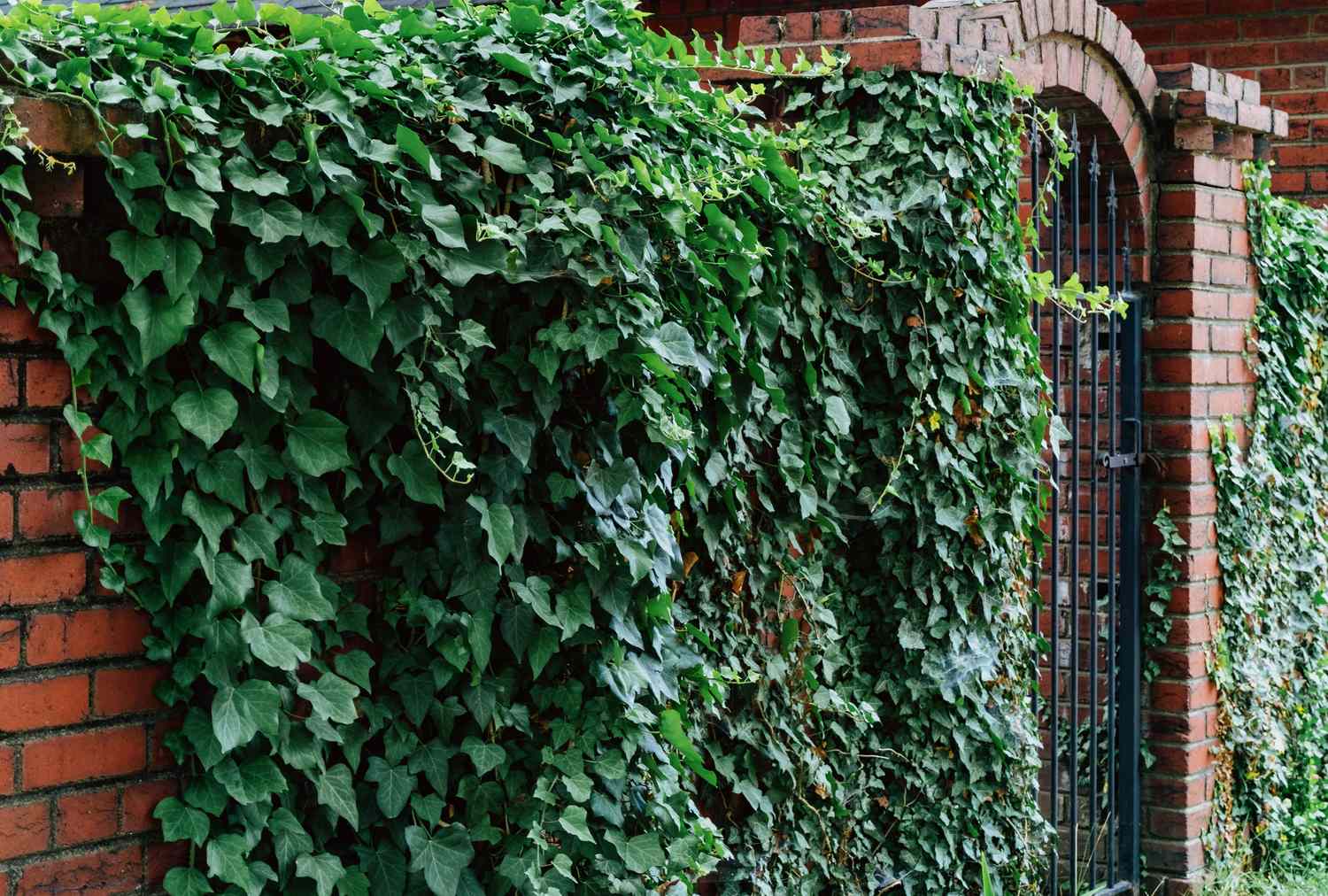
Climbing plants, add whimsy and beauty to the garden, with their dreamy creeping vines and seasonal blooms. But certain varieties can spread aggressively through seeds or runners, taking over your landscape and causing potential issues. While their growth can be less problematic if it is trailing up a fence, pergola, or trellis, the real issues arise if they are grown on your home. To protect your property, we spoke to gardening experts who shared the climbing plants you should never grow on or too close to your home. When left to spread, these varieties can cause mold or mildew growth, increase pest populations, chip off house paint, or even cause structural damage.
Purple Passionflower
Credit:
williamhc / Getty Images
Purple passionflower (Passiflora incarnata) runs wild in mild-winter deserts and is considered invasive in many regions. “It tangles in rooflines, harbors pests, and reseeds aggressively, making it hard to control near a house,” says certified master gardener Angela Judd.
Cat’s Claw Vine
Credit:
jcsmily / Getty Images
With its stunning yellow blooms and whimsical climbing vines, cat’s claw (Dolichandra unguis-cati) is a tempting plant to grow near your home, but it’s a big no-no. “Cat’s claw is one of the most destructive vines in desert gardens,” says Judd. “Its claw-like tendrils dig into stucco and masonry, and the underground tubers make it nearly impossible to remove.”
Bougainvillea
Credit:
Jenny Dettrick / Getty Images
Bougainvillea is a beautiful option for growing up a fence or freestanding trellis, but keep it away from your home. “Bougainvillea is gorgeous, but when trained against a house its woody stems and thorns can crack stucco and masonry,” says Judd.
Grape Vine
Credit:
Getty Images
According to Judd, grape vines (Vitis vinifera) are excellent on a pergola but should never be grown on your house. “The heavy canopy traps moisture, stresses eaves, and creates hiding places for roof rats,” she notes. Additionally, the weight of the vines can put stress on the foundation of your home, potentially causing cracks and other damage.
Trumpet Vine
Credit:
Getty Images
Known as one of the most aggressive climbers, Judd notes that the trumpet vine (Campsis radicans) sends runners underground, potentially damaging foundations. She adds that its aerial roots cling tightly to walls, leaving permanent marks.
Creeping Fig
Credit:
Getty Images
Creeping fig (Ficus pumila ‘Minima’) is a small-leafed ground cover that spreads by aerial root tendrils and grabs onto anything it can, including fences, houses, trees, and garden walls. While it looks pretty against a wall, landscape designer Teresa Watkins notes that it can damage house paint and encourage mildew and mold growth. As it matures, she says the foliage gets larger and will start to bear inedible fig fruit that attracts rodents.
Virginia Creeper
Virginia creeper (Parthenocissus quinquefolia) is a fast-growing native plant with woody stems with tendrils that attach to walls. “The stem tendrils damage house paint, increasing mildew and mold issues,” says Watkins. She recommends growing Virginia creeper on a trellis, arbor, or pergola instead of allowing it to attach to walls.
Chinese and Japanese Wisteria
Credit: Artur Bogacki / Getty Images
Chinese wisteria (Wisteria sinensis) and Japanese Wisteria (Wisteria floribunda) are beautiful vining plants, but it’s best to keep them away from your property. “These are very aggressive vine species that can devour an entire house or large tree and kill it within a few years,” Watkins says. Instead, she recommends growing native American wisteria (Wisteria frutescens) or “Queen’s Wreath” (Petrea volublis) but only on arbors, pergolas, or trellises.
Japanese Honeysuckle
Credit:
ANGHI / Getty Images
Japanese honeysuckle (Lonicera japonica) is an extremely aggressive, fast-growing plant that Watkins says blocks sunlight, crowds out other vegetation, and damages native ecosystems. She recommends growing native coral honeysuckle (Lonicera sempervirens) for a similar look without the damage.
English Ivy
Credit:
Getty Images
An invasive plant that is best kept out of the garden, English ivy (Hedera helix) is a fast-growing variety that can damage house paint and cause mold and mildew growth. “As it grows, the woody stems and root tendrils firmly attach to and climb walls and trees,” says Watkins. “It grows up to 90 feet long and spreads by rooting stems and seeds.”
Comments are closed.