
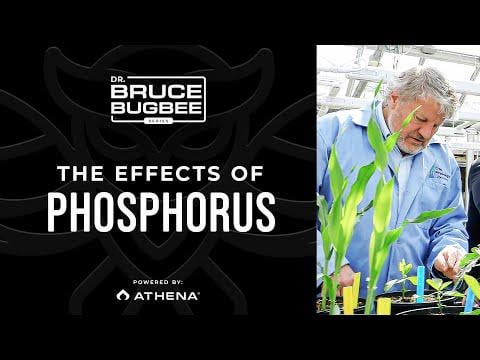
Recent came across Dr Bruce Bugbee Video on Phosphorous. He suggests, that for most of the Plants 20 ppm level of Phosphorous is enough and for Cannabis, 30 ppm would suffice. He also mentions, that the excess Phosphorous can antagonise the intake of Ca (especially during Bloom leading to BER) and Zinc. This Guy is head of Apogee Instruments, a Professor and highly respected in the World of Cannabis Research
However, I very commonly see Growers (Soil, Cocopeat, Hydroponics) insist high P is necessary during early stages for vigorous Root Growth. Are people mis-informed or am I missing something?
Adding salt to the wound, the AIs in the name of Deep Research are doing more research based on blogs and not much research based on actual research papers. Hence can't trust it either. By trying to read research papers, I am clearly digging myself into a rabbit hole
Can someone elaborate on this?
Regards
– – –
More Follow-up
– What nutrients help in aggressive root growth during initial vegetative stages (like IBA)?
– What nutrients can push the plants to produce more flowers & fruit sets? High Ca for Flowers & K for Fruit sets?
by Path-Less-Travelled
5 Comments
Ah critical thinking and giving you a headache I see. Yes, do a lot of reading and searching is the way to go through research studies. I’ve spent months searching and calculating the different nutrient ratios for the different crops that I want to grow to ensure that I’m not just dumping premade mix and call it a day. AI is not ready to give us in depth information as a lot of them are printed and private while the information that’s loudly posted are bloggers. Yara and Haifa are two great places to read up on specific plant needs (not cannabis of course). Those growers are causing our waters to turn green and algae blooms for the P dump.
Optimal P ppm depends of lighting. Usually it is around 20-40 ppm. There are no reasons to increase P in early grow or flowering in hydroponic, P always have same ppm almost on all stages. And in plants there are minimum levels (less than 15) , optimal level(20-40 ppm), and too much (more than 50 ppm). There are almost no differences in grow with 20-40 ppm, but because P is very expensive people usually use 20 -30 ppm.
Yes, people mostly misinformed about P. They read “P is very important in flowering and roots grow, so and P deficiency is very dangerous” and misunderstood that as “we should increase P in flowering “.
Can’t speak to specific usage cases, but in general P is massively and irresponsibly overused, particularly in “bloom” products. Plant roots gate uptake of phosphate to absorb the quantity they want, so applying some excess P doesn’t cause plant damage like an excess of some other ions does. But phosphorous is a relatively finite resource and sending it down drains contributes to pollution and water treatment costs. You should try to use the minimum that gives good results.
Different plants have different P needs, so it’s hard to generalize about optimal levels. But if you look at complete scientific plant nutrient solutions such as Hoagland’s or Long Ashton or Murashige & Skoog, they’re generally running N:P ratios around 4 to 7. 100ppm N and 15-25 ppm P is great for a wide variety of plants.
General agriculture nutrition studies aren’t necessarily where we need to get data for this. Plants in soil culture will recruit the soil ecosystem to find phosphorous via exuding sugars from roots to promote symbiotic rhizobacteria and mycorrhizae that can extract rock nutrients. It’s literally a sugar-for-nutrients transaction. Plants also grow roots along ion gradients towards nutrient sources. So natural plant ecosystems have a lot of ability to manage their own P availability. High levels of available phosphate cause plants to reduce or stop root exudates, which starves the soil ecosystem. This contributes to farm soil damage, but in some ways, we WANT that for hydro, because root exudates are photosynthesis energy that isn’t going to yield. So using higher P levels in hydro can be rational. But not using excess that goes down the drain or precipitates your calcium.
People are misinformed. The common meta knowledge on nutrition for hydroponic plants is wildly inaccurate. Once you go down the rabbit hole, it becomes difficult to even participate in online forums.
You’ll find more research that’ll debunk using a ‘flowering’ NPK formula for flowering in multiple disciplines. You may also find that the pH range that’s suggested over the internet is incredibly small and overly specific for almost all plants. Hydroponics is more reservoir management than it is plant growing anymore. I always shake my head when I see a post with 600 different metrics but not a single mention of plants at all, just reservoir metrics.
If everyone would use Maxi-Gro and ignore their pH until it caused problems, this forum would have a lot less nutrition issues.
Go over to a cannabis sub and start counting the amount of plants that are 4-6 weeks into flower that start to show problems. It’s no surprise as most people swap to a flowering nutrient when they flip the lights and it takes about 4-6 weeks for plant to eat through its nitrogen stores and start to show strange issues. Cal-Mag contains nitrogen, but the community swears everything is a low Calcium problem.
People are misinformed, and generally overapply phosphorous
See: [https://www.youtube.com/watch?v=KqEqBeZOjPQ](https://www.youtube.com/watch?v=KqEqBeZOjPQ)