
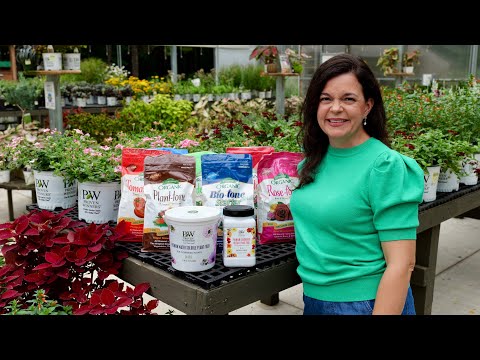
Let’s go back to school with Creekside! Today’s lesson is all about fertilizer basics, explaining why we need to fertilize our gardens in the first place. We’ll show you a great assortment of fertilizers available at Creekside Nursery, both in our Garden Center and online, with gardening tips to get you started.
Use the code GROW20 for 20% all fertilizers!
🛍️ Join our FREE Loyalty Rewards Program here https://bit.ly/4gqWXeS
🌼 Shop Creekside’s Online Store https://bit.ly/3sSRiut
📩 Sign up for our emails here! https://bit.ly/3uXq6MB
🪴 Companies We Partner With 🪴
Power Planter Garden Augers & Drills http://bit.ly/3ZZ98GY
Hoselink https://bit.ly/3Cdb74L
Proven Winners https://www.provenwinners.com/
🪴 Stay Connected with Gardening with Creekside 🪴
https://linktr.ee/Creeksidenursery
⏰ Open Wednesday-Saturday 9 am-3 pm
Creekside Nursery
181 Pine Hollow Dr
Dallas, NC, 28034
Hello friends. Welcome to Gardening with
Creekside. Today we’re going to go back to school. I know that school is beginning to come back into
session for everybody. Well, we as gardeners, we need to go to school as well. So, today we’re
having a fertilizer 101. Everything you need to know about fertilizers and why are we going to
fertilize our gardens in the first place. So, I have a great assortment of fertilizers
that we offer here at Creekide Nursery, both here at the garden center and online. And so
I think it’s very important to understand what the differences are between these types of fertilizers
because that’s one of the biggest questions that we get here at the garden center is well what do
I use? Uh and so hopefully we are going to kind of demystify fertilizers for you today and give
you that great information before we get going. If you need to grab your gardening journal,
grab that a piece of paper, grab something uh to drink and get let nice and cozy so that we can
get this information to you. All right, so before we start to talk about the specific fertilizers,
let’s talk about fertilizers in general. What is their purpose? Well, their purpose, of course,
is to feed the plants. This is going to be that natural food for your plants so that they
can grow strong and healthy and give us a beautiful show. Whether that means through foliage
or through flowers. All fertilizers have to have a um a labeling on them. It’s going to be three
numbers that are listed and basically what those are is it’s going to stand for NPK. So, we’re
going to break this down because I know it can be confusing sometimes and even myself sometimes I
have to think about it. Okay, so N the very first number and they’re always going to be in this
order. So N is going to stand for nitrogen. Okay, your nitrogen basically is going to green up the
plant. So that gives it that nice dark rich green or maybe it’s a chartreuse plant. It gives it
that beautiful chartreuse color. This is the most important ingredient for your growth, for the
plant’s growth. and it provides those lush green leaves within the entire plant. So that is your
N. That is your highest your first number on the the scale. Next, the P. The P is for phosphorus.
And so your phosphorus is going to produce healthy roots and blooms because, as we say, if you have
happy roots, you have happy shoots. So you’re going to have gorgeous flowers. This phosphorus is
going to help the plant use and store that energy that is necessary to produce those beautiful
blooms. And it is also critical for your healthy root system because we want to have strong,
healthy roots for our plants. And then finally, we have the K. Now K stands for potassium. Do you
know why we use K for potassium? That’s right. Because on the periodic table, potassium
is represented by the letter K. Instead of saying NPP, we have NPK. And so your potassium
promotes basically your allaround well-being. Think of it as like your multivvitamin. This
is going to want be the one that makes sure that your plant has the overall good health for
it. It’s going to help the plant uh be uh most protective against your pest and your diseases.
When you’re looking at those three numbers, the NPK, they’re going to range depending on the
fertilizer. Some of them maybe if you’re used to like synthetic fertilizers, you hear of 10 10 10.
Well, the ones we’re going to talk about today, especially your Espoma, they’re going to be those
slow release and they have very small numbers. So, why is that different between the fertilizers?
Well, those um those numbers, those NPK is the actual numbers themselves, the numerals is the
percent of weight of micronutrients. So that kind of gives you an idea of how strong that fertilizer
is. So say a 10 10 um is going to be much stronger than something that’s like a a 432. Okay. So that
just kind of gives you an idea. Now let’s get into the different types of fertilizers that we use
here at Creekide Nursery because we have really through our experience kind of nailed down what do
we use the most and what do most of our customers use. Now, obviously there are some fantastic
fertilizers out there on the market. So, maybe one you don’t have these available to you or you
have a favorite brand that you use, that is great. That is awesome. And so, if you don’t and you
don’t know what to do, you can always go to your local garden center and ask for their help because
your local garden center is going to be the expert in your region. So, here we go. First of all,
we’re going to talk about um the Proven Winners, the water- soluble fertilizer because this is the
one that we use primarily on all of our flowering annuals. So, the water-soluble fertilizer from
Proven Winners, it comes in a tub and you have got a scoop and then you have got two plastic bags
of a powder. Basically, what you’re going to do is one scoop, a tablespoon per gallon of water. So
you can use it however you know if you going to do a watering can of two gallons or a five galling
five gallon uh bucket you can use that. You can also use this for your indoor plants and there’s
information on the back of the can on how to use that. So what do you use these this fertilizer
on? So think of your flowering annuals. The ratio um those three numbers is 24 12 17. So it’s very
high in nitrogen. It has that chelated iron in here that is going to give you that really dark
dark beautiful lush foliage. Then of course then your phosphorus is 12 and your potassium
is 17. So the proven winters watersoluble fertilizer was specifically formulated
for their supers. Those are their most uh florific flowers plants that they have. So
think super tuna, super bells, super venas. So, this is going to give you that beautiful dark lush
foliage and all the food that those plants need to produce their beautiful flowers. I only use this
on annuals, primarily my flowering annuals. Now, if you want to use it, you if you have a container
that’s got some uh super tunias, uh annual grass, and you’ve got a colus, absolutely, those plants
are going to benefit from this as well. But just think annuals. This is not what we use on
hydrangeas. This is not what we use on roses. Annuals. So, how much do you use and when do you
use it? On the can, it says to uh do feed your annuals every third watering. Now, that would be
in a perfect ideal world. And if you can do that, kudos to you. You’re going to have a gorgeous,
stunning garden in the summer. Jenny sometimes just can’t get it together that well. So, I try to
do it as much as I can, especially in the spring, summer, and then late summer. So, if I can do it
every two weeks, honestly, that’s I’m doing really good. Another thing to think about is here in
North Carolina, we have been having lots of rain, uh, which is very unusual for the beginning
of August, but we’ve had a ton of rain. The best time to go ahead and use water-soluble
fertilizer on your annuals is after a big rain or a long season of rain. I know that may sound
kind of like counterintuitive. You’re like, “Well, Jenny, my plants are soaking wet. My
containers are saturated with water. Why am I going to add more water?” Don’t think of it as
adding more water. Think of it as adding food. You have just gone through a long rainy season. Maybe
it’s a couple of days, maybe it’s a week, maybe it’s two weeks. Especially when your cont your
your plants are in containers, all of that food, those nutrients have been leeched out of that pot.
Your plants are hungry. They need food. So, yes, go ahead and mix up a watering pale, um, a five
gallallon bucket, whatever it is that you have, and go ahead and water them. Feed them with the
Proven Winners water- soluble fertilizer. How much do you use? Just pretend like you’re watering
on a normal day. So, just an average amount, okay? especially if it’s in a container, it’s going to
drain once it has what it needs. So, flowering annuals is the um water-soluble fertilizer.
I like to think of this in very loose terms of when you go to the doctor and you’re sick.
Let’s say you’ve got, I don’t know, whatever it is that you have and that you need some immediate
relief and the doctor says, “I’m going to give you something that’s going to make you feel better
within the next 24 hours, a steroid shot.” Think of this as the steroid shot. This works goes to
work like immediately. So you’re going to see a difference in your plants within a couple of
days a week. Okay? So this is very fast acting. Kind of switch over here. Thinking of going along
with those same medical terms very loosely here, folks. All right. You go to the doctor and maybe
they give you a steroid shot, but they’re like, “You also need an antibiotic.” Long-term. You need
long-term health to get over whatever it is that is ailing you. That is where the Proven Winners
continuous release fertilizer comes in for your annuals. This is a slow release, a timereleased
fertilizer. It’s little pellets. Okay? So, it has a little shaker top so you can pop the top and it
has little holes so you can shake it or when you open it up there’s also a scoop in that as well.
This is what my mama calls shake and bake. She’s like, “I need the shake and bake stuff.” So, there
you go. The um the numbers on this are 15715. So you can see that it is a lower dose than your
water soluble. When do we use this? Again, this is for your annuals. Annuals only. I like to use
it when I plant them. Whether it’s in a container, an aqua pot, or the landscape. So what you were
going to do is there’s two ways. There’s not a right or a wrong. one, if you want to, you dig
your hole and you can sprinkle it in the hole and then put the plant in there. That’s one way you
can go ahead and plant it. Put your soil back and then take this and shake it on, you know, around
the plant. You can do that as well. Again, the plant is going to get those nutrients. Sometimes
I even when I have like a large area, a section that’s only going to be annuals, I will put down
my fertilizers first and then as I’m planting that gets worked into the soil. It just makes it a
little bit easier and a little bit of a timesaver. So, Proven Winners says that this will last up to
6 months. Honestly, because we are in the south, um I find that it lasts for 3 months. So, why this
discrepancy? Why 3 months versus 6 months? Well, this is released by heat. Your slowrelease
fertilizers, your time release fertilizers are going to be released by the temperature. So, the
higher the temperature, the more it releases. We are in the southeast. We have high temperatures.
They stay hot at night. So, this is why I find that this lasts for me for three months. So, all
we do is mid-season is I come back with my plants that are in the containers or the ground. I when
I try to do it when they’re dry, I shake it over the plants and then I will come back and I will
just kind of shake the plants and all those little pellets fall to the ground. So, these are the
two primary ones uh that I use for my annuals. Remember, annuals are the ones that will last for
one growing season. Okay? Once you replace year to year. Now, moving in to uh some other categories
for our shrubs, perennials, trees, what are we going to use? Our vegetable gardens, those kinds
of things. Well, first of all, we have to start with Biotone. So, all of these products are from
Espoma. So if this is again what Creekide uses, if you have your favorite brand, then you go for
it and you if it works for you in your garden, that is awesome. Biotone we started using a couple
of years ago and when I first started using it, I was very selective on what I used it for.
I’m not really sure why, but I did mostly like the trees and the shrubs. Biotone is called
a starter fertilizer. And so the ratio on your on the biotone is 433. So much lower. Think of this.
The lower those numbers, the less risk you have to worry about burning your plants. Because when
you get into something like a 10 10 or a 1212, the risk of burning and killing your plants is
extremely high. I have been using these products for years and never once have I had um any kind of
burn on my plants from using the Espoma um organic fertilizer. We use the Biotone starter because
this is a special blend that has microbes and the microisi in it. This is primarily for those strong
healthy roots. That’s why it’s called a starter fertilizer. I only use it when I am planting the
plants. Now, we use it on everything. I use it on the trees, the shrubs, the perennials, the annuals
in the landscape, annuals in containers, annuals in um aqua pots, hay racks, hanging baskets,
you name it. If I am planting, I’m going to use the biotone starter fertilizer because again, if
you have happy roots, you’re going to have happy shoots. And so this really allows that really
strong, healthy root system to begin. And I know for us here in North Carolina, we need all the
help we can get, especially if I am adding shrubs, perennials, trees in the spring because they’re
getting ready to go through a very long hot growing season in the summer. So biotone starter
fertilizer on the back. Of course, with any fertilizer that you are using, you want to follow
the manufacturer’s suggested um directions, right? So, whatever they tell you to do, that is what
you need to do. They will tell you exactly how much to use. So, if you’re going to plant a three
gallon, then you’re going to add 1 and 1/2 cups of this to your hole. And and this bag will give you
eight plantings. So, with our biotone, what we do is we dig our hole or if it’s in a container, um
have your little hole in your pot. You’re going to add that amount to the hole, take the plant, put
it in the hole, bring back your native soil. It’s as easy as that. From time and experience, I have
learned and just my personality, I just kind of eyeball it. Now, if your personality says that you
need to have a measuring cup out there and measure this out and add it to the hole, do it. It is
great. But I have, like I said, for me personally, I just kind of eyeball it, throw it in there
because I do know that I’m not going to burn my plants when using this. But this makes one of the
biggest differences in your plants. This is where you’re going to see massive difference. Especially
if you’ve never used Biotone with your annuals and you begin using this with your annuals, you’re
going to be shocked at the absolute difference and the health and the vigor of those plants. and
you’re not going to have to be coming back and fertilizing maybe with the water soluble as often
as you have had to before. All right, so starter fertilizer. There we go. Now, we’re going to get
into the nit and gritty of all the different kinds because honestly y’all, you can get as specific as
you want with your fertilizers. I think there’s a there’s a fertilizer for just about every kind of
plant. Whether it’s a rose, it’s a chameleia, it’s a tomato plant, it is das, you name it. there is
probably a specific fertilizer for that plant. If you want to get that specific, you absolutely can
do that. Um, however, I tend to be a very simple kind of person and I like to keep my uh just my
inventory small because I know what works. So, as I tell people, if you’re only going to buy one
fertilizer for your garden, this would probably be it. This is Plant Tone. Plant Tone is what I call
the Swiss Army knife of fertilizing in your garden because it will literally take care of everything.
The ratio on Plant Tone is 533. And this blend is good for whether it’s your flowering annuals, for
your vegetables, for your shrubs, for your trees, your perennials. This is the goto uh fertilizer
for those plants. Um, it has that kind of that longlasting because these are these are slow
release. So, where you have the water soluble, that’s going to give you that instant shot.
You’re thinking longevity with your plant tone and your other uh slowrelease fertilizers from
Espoma. Now, again, if you are just now planting say a perennial, let’s say you’re doing a
hosta, right? You’re planting your hosta, use your biotone. That is it. Nothing else. The
earliest that you would come back with your plant tone would be about six to eight weeks. You
don’t want to use biotone and plant tone at the same time. You’re kind of overdoing it.
And so the plant just needs to get adjusted first. Once those roots are established, then
you can start feeding it if you want to. How I use plant tone primarily is two times of the year.
My heavy feeding is when I am coming out of winter going into spring. So for me that means I could
start midFebruary through early April because you got a long period there. There is grace in
gardening and so we’re going to give ourselves a nice window. This is when I go through I try my
best to go through my entire gardens and feed the plants. Swiss Army knife. The vast majority of
our plants receive plant tone. So those I would I hate to say this but those general perennials
and shrubs. So my hostas, my ferns, uh my ukaras, um those quote plants that are not going to get
a spec other specific fertilizer, they get plant tone. Again, it will tell you on the back if it’s
a new planting, if it’s an established plant, whether it’s a tree, whether it’s a potted
plant, all your information is on here. So, I do a nice heavy feeding in that wintertime going
into spring. Why then? Another analogy I say, uh, think of bears when they wake up from hibernation.
What are they? They’re hungry. They need food. They’ve been asleep all winter like your plants
have been asleep. They’re going into their strong growing season. They need food. So, food equals
flowers equals growth. So, we’re going to go ahead and feed them. If you have a bed that is
filled with perennials and shrubs, if you want to specifically go around each individual um root
system, the drip the drip line of each plant, you can do that. Sometimes y’all, we’ve got vast
gardens here and I lazy or efficient, whatever you want to call it, I will take it. I have like
a little Tupperware um hard plastic cup and I’ll scoop it and I literally am like broadcasting it
out. So that way the entire bed gets the food. So there is your plant tone in the from the winter
going into spring. Now we’re the second time of the year that we use this is going in relatively
I would say within the next month or so. Think of fall. This time though you’re going to do at a
half dose rate. We’re just going to give a little bit of food to those plants. They have just come
through a long hot summer. They’re tired. They need a little bit of food to get them through the
winter. So, Esoma recommends at a half dose rate. I think that’s perfect. Just a little bit to
help give them that rejuvenation to get through the winter with that strong healthy roots. So,
thinking of that as we’re going into the fall and um we going to fertilize our plants at that half
dose rate. We actually have right now all of our fertilizers are 20% off on the website. This sale
is a short sale. So, you want to move with purpose so that way you can stock up on these. All these
fertilizers are on sale, 20% off. Use the code that is on the screen and we will ship it out
to you ASAP because we are getting prepared for a beautiful fall. All right, now let’s get into
those specifics. The two that I use the absolute most in my garden. So, we’ve got some out the
slowrelease fertilizers. Absolutely plant tone. Next, when we’re going to get a little specific,
holy tone. So, one that I love about Holy Tone, it is a 434, by the way, but it tells you on
the bag itself which shrubs love uh the holy tone because holy tone is for those acidic loving
plants. So, think of your evergreens. That’s the kind of the key. If you can’t don’t want to look
at the bag, think, okay, is it an evergreen? Um, obviously, if it’s a holly, you’re going to
use it. You’re going to use it for your aelas, your barberries, your blueberries, chameleas,
dogwoods, evergreens, gardinas. Like literally, it tells you everything on here that you’re going
to be using your holly tone for. So those acidic loving plants for me primarily, I use it on
my gardinas and my chameleas and my aelas. And then of course anything like like an evergreen um
shrubs, trees like holl. This is what I use. Also, as a side note, you will notice that some folks
with hydrangeas recommend using holy tone on your hydrangeas. Well, why do they do that? Because by
nature, um, your hydrangeas are not necessarily acidloving plants. They’re suggesting that for
your hydrangeas that their color is pH dependent. So if you want to have those blues, those purple
hydrangeas with those um ones that are, you know, pH dependent, then this is where you would use
your holly tone because that’s going to make your soil, your pH more acidic, which then turns
your hydrangeas that more blue purple. All right, so again, we do this in the spring, a nice good
heavy dose in the spring, and then in the fall, we do it at a half rate. My next one that I use
all the time, uh, and I go through bags and bags of this is rose tone. Obviously, rose tone
is primarily for our roses. That’s right. So, this has a 432 ratio on it. Also, with the roses,
in addition to the roses, I use this primarily on all of my hydrangeas. Of course, we um you know
are big fans, big supporters of the Proven Winter Color Choice shrubs. And so I like to follow
the breeders recommendation on maintenance of those plants. And so our friends at Spring Meadow
Nursery, which is the home to the Proven Winter Color Choice shrubs, they re recommend using a
slowrelease fertilizer that is specifically made for roses because your roses and your hydrangeas
have those same nutritional requirements. So if you definitely I just as a general
rule will use this on all of my hydranges um specifically I mean just so whether it’s my uh
panacles my seratas my oak leaves my max it does not matter I generally without a doubt use rose
tone on those hydrangeas strong in the spring and then again half dose rate in the fall if you’re
using this for roses it tells you on the back with your roses because it will tell you on here for
rose beds. We are going to be using this um and feed these plants. I believe it is once a month
during the growing season for Yes. When to feed? Apply monthly from beginning of growing season
to the middle of September because roses bloom on new growth. So you get your flowers from the new
growth. We want to promote lots of new growth. So that promotes those beautiful flowers. The reason
we stop in September is because why? Well, the cold temperatures are coming. And so as soon as a
frost freeze hits, then of course that’s going to stop those um that new growth from happening.
So we don’t need to use this during the winter months. So begin feeding your roses when you start
to see the new growth appear in late winter, early spring. So rose tone is a definite uh big one for
me as well. Now, talking about this is not I would say necessarily a um a fertilizer per se, but some
people really really really want blue hydrangeas. So, if you need to change your soil’s pH, you can
use um the soil acidifier. And so, all this is is the straight sulfur. And so, I say straight
sulfur, it’s 30% uh sulfur. So, this is what’s going to change your hydrangeas to that beautiful
blue color. and it’s going to tell you exactly how to do it. So, you’re going to begin in the spring.
Um, and it’s for new plants, use one and a4 cup. For established plants, use two and a half. Spread
it evenly around the drip line. The drip line is simply where those branches reach out. That is
the drip line. So, we’re going to apply that. So, if you really want to change your color of your
hydrangeas, you can use the solifi acidifier. Follow all those directions. And then my sweet
people who are the veggie farmers, the veggie growers, you’ve got that gorgeous uh vegetable
garden, herb garden going on in uh in your garden, right? So, two that we use. Again, if you want
to get just stay general, then we’re going to use garden tone. Garden tone is going to be great
on all of your edible plants. The ratio on this is 344. So, you can literally use it on anything that
you’re going to eat. And this is a slowrelease organic fertilizer, so you can feel safe using
that. The more you use these fertilizers and you put them in your soil, those micronutrients stay
in your soil. So over time, you’re just building up a stronger, healthier uh soil system for your
plants. Tomatoes sometimes can be a little flunky as far as they can be a little divas in the
garden. If you’ve ever grown a tomato, you know that they can be quite um divish. So here we have
tomato tone. So this is primarily for tomatoes but you can use it for other vegetables as well. So
the ratio on this is the 346. It is higher in your potassium because we need to have a really strong
healthy plant for tomatoes. They can be plagued by pest and by different uh issues. You got blossom
in rot. That’s where the tomato and then on the bottom of the tomato it just turns black and you
can’t eat it. So having a really strong healthy plant is going to give you those beautiful fruits
that you can enjoy. And so you’ve got the garden uh the tomato tone on here. It tells you for new
plantings, for established plants, for potted plants, um growing tips, everything you need to
know is on here. Also, as a side note, one thing, maybe you have something, maybe you have citrus
trees or maybe you have orchids or you’ve got indoor plants or whatever it is that maybe that
you have that I have not discussed. One thing that I really appreciate about Espoma on their
website, they have a plant food finder. So you can go to their website. I’ll have it for you. Have a
link. So you can go in and search alphabetically by your plant. Let’s say you’ve got a fuja, right?
So you’ve got a beautiful evergreen tree. Well, sometimes it can be get a little even I don’t know
does it just need plant tone or does it need holy tone? So you can go and you can look up thua and
it will tell you the recommended fertilizer. Now, don’t get too bogged down. Don’t get too
overwhelmed. If you only buy one fertilizer to feed your entire garden with the entire
season, what are we reaching for? That’s right, my friends. Plant tone. Swiss Army knife right
here. So, if that overwhelms you and you’re like, I just can’t do it. It’s too much information.
Forget everything. Buy your plant tone. Feed them nice and strong in the spring and then
in the fall, give them a half dose. I promise you’re going to have gorgeous, healthy plants in
your growing season and you are going to be so um happy with the results because we want strong
plants. We want strong root system. We want strong um foliage up top, of course, the beautiful blooms
because strong plants are healthy plants and healthy plants can handle those times of stress
easier just like our body. If your body is strong and healthy and has really good food, when you
come in contact with a cold or a bacteria or a virus, your own immune system can fight that off.
Same thing with the plants. If you’ve got a very strong plant and it gets bitten by an aphid or a
Japanese beetle or it comes into contact with some kind of powdery mildew or think of something like
that, it’s got a strong immune system that it can fight that off and it’s not harmfully affected
by that whatever it is that is attacking it. This is why fertilizing is so important. Again,
it’s not the most glamorous part of gardening, but when you see a beautiful garden, it is the
result that they’re using fertilizers of some sort because food equals flowers. Food equals a strong,
healthy plant. I really do hope that this has been helpful. This is one of those uh videos again that
may not be the most exciting video to talk about, but it is one that is going to produce a beautiful
garden um year to year to year. So this is one of those foundational things that we need to learn
about as gardeners and understanding that NPK and what that means and each of the roles that those
three um macronutrients in plays in the role of our garden is extremely important. So if you have
found this fun, informative, um inspirational, we would love if you would like and subscribe
to Garden with Creekide. That way you don’t miss these five videos that we do each and every week
for you. Y’all have an amazing day. Do not forget they’re 20% off for a very short amount of time.
So go to the website, use your code, and get these babies in your hand. Y’all have a great day.
We’ll see you in the next video. Bye, friends.
46 Comments
💁🏽♀️ Brandolyn from Columbus, GA. I needed this edu video. Thanks 🪴 Good morning
Thank you so much for this video, Jenny! So comprehensive and clearly presented and something I needed and will refer to…saved!
Thank you for the information. I love your videos
Good Morning from Summerville, SC! I bought a limelight hydrangea and a bag of HollyTone fertilizer. Did I buy the wrong fertilizer? I haven’t put it in the ground yet. It has some small blooms on it. Label says 6-8ft for growth. Thank you for your advice!!
Great information. Thanks for making it easy to understand.
Thank you so much for this video. I took notes and will appreciate it for years to come.
Oh how sweet! At about 22:40 you had a hummingbird flitting around behind you ❤
Good morning Jenny, my candy corn spirea stays green what do I need to do to get the yellow orange and red color?is it my fertilizer?
Great presentation. Thanks for posting the video. After using fertilizers for years, except for two exceptions, I rely on the Espoma products you reviewed as well as the Proven Winners water soluble fertilizer.
You are right – Plant Tone is the swiss army knife of fertilizers. I sprinkle it into any hole I dig before the plant, shrub or tree goes into it. It yields a healthy plant with consistent performance. I also sprinkle it around the top of the soil of any tree or shrub that starts setting up next year’s buds late in the year and I also sprinkle some more around each plant in the spring as it is reawakening.
I never had good luck growing supertunias until I started using the Proven Winners water soluble fertilizer. Those two products were clearly made for each other. I think the key is the iron in that fertilizer. Iron helps plants absorb and metabolize the other nutrients. If you ever have any plant which looks exhausted or is not responding to fertilizer, try giving it a shot of iron. It is in this fertilizer, but is also available as a separate product from Espoma and Bonide. I also find that the Proven Winners water soluble fertilizer helps other plants which are flower factories like Salvia Amistad, which produce thousands of flowers for months on end. They respond well to this fertilizer as well. Feed a salvia with it if the lower leaves start turning yellow or if it looks exhausted.
Two other suggestions I have 1) If you have a plant, shrub or tree which is still alive after being exposed to a shock, i.e. late frost, a disease or being munched on pretty heavily by a deer or rabbit, I feed the plant Neptune’s Harvest fish fertilizer 2-4-1 and it helps the plant to recover. My young Wilson Mimosa was hit with a late frost this spring, killing the main trunk. I cut the the trunk down to the base and fed the fish fertilizer to the tree. You should see the tree now. My young Genie Magnolia was hit with a bad case of powdery mildew this year, after spraying it with a 3:1 water/peroxide solution to instantly kill the mildew, I fed it this fish fertilizer. Within a few weeks, the tree replaced all of it’s leaves (all were diseased and crispy) with an entirely new set of leaves.
I also grow vegetables, especially sweet peppers. I like using the Proven Winners water soluble fertilzer on the young plants as the iron prepares each plant for good performance. Once I start getting blooms, I switch to the Greenway Biotech water soluble Pepper and Herb 11-11-40 fertilizer. All of my plants are healthy, robust and loaded with peppers. Mix in or sprinkle calcium or gypsum into the soil if you have an issue with blossom end rot.
Really informative video. Thanks sor all the reminders. Seems like I can’t hear this information enough. I’ve been using only Espoma and PW products for the last 5 years and always with great results!
Could you also talk about bone meal & lime. I think you should add Bulb-tone to your espoma products.
I just pour it in the hole like you do
Great, educational video! I hate I missed the fertilizer discount when I placed my heuchera order, but so excited to get my plants.
If putting soil acidifier to lower ph how long does it take to work ?
Good afternoon, Jenny! We received a really good thunderstorm this morning ⛈️ . Here in Raeford, NC. I am so thankful for the fertilizer class. Take care!! I love your sweater! Can you share where you got it?? So pretty seeing the humming bird behind you!!
Great. Ty
Very helpful and much appreciated. Thank you
I have a 5 year old chuck Hayes gardenia in a container to protect it from winter. It has never looked good with yellow leaves and signs of chlorosis. Gave it iron all last summer and it helped, but I still planned to toss it this year. I put holly tone on this spring as usual, but still it didn’t boom well. Then I started using half strength proven winners water soluble fertilizer every week as an experiment. It looks fantastic, and is covered in blooms. It’s never looked this good. It gets to live another year 😊
I always learn so much from you! I use Bio-Tone and Rose Tone for my 50 varieties of Hydrangeas… please check out my woodland garden and let me know what you think https://youtu.be/7mYcjjLERTA?si=RYxZQA5aFGJMtbM3
Good morning good morning thank you for sharing and teaching us how to treat and care and plant and appreciate all that you do 🌲🌲🍀💚💙💜🌸🪻💮🪷🌷🌿🌾💟
Thank you! Such a great and informative video.❤
I have a great story about the PW Water Soluble fertilizer. I bought some last year after purchasing my first PW annuals and only used it on them because it was a little pricier than my other go-to. This year I started out using my other go-to and wasn't seeing the results I wanted so I went ahead and purchased more of the PW Water Soluble. What a difference it made with all of my annuals! This year I also started using the BioTone when planted and the Land & Sea Compost. I top dressed most everything with it in late winter/early spring. It definitely makes a difference. I really enjoyed this video! Would love to see one explaining how you apply your fungicide and pesticide as well.
What pink plant is in the background?
Thank you for doing this! So well explained and ill be saving this video to refer to cause i certainly cant remember it all😮
Thank you 🙌
SUCH A GREAT VIDEO! Thank you so much for these sound bites to help us remember! Saving to my playlists in case I have an ADD day down the road and can't remember them! 🙂
Thanks Jenny! 🌻
Thank you, thank you, Ty!!! I understand now what I am doing wrong.
I am a tiny proven winner grower retailer. I encourage my customers to use Espoma Startup by telling them that the microrihza acts like insulin does in the human body. It helps transports nutrients to the plant like insulin moves sugar into your cells. It does a great job of reducing transplant shock. It gives your plants a good Kickstart.
You did a great job, it needed to be done sooner.
Thank you for this video. I needed this video.
Hi 👋 Jenny
Great video, Jenny, with such important information. Love Bio-tone. You can have a plant that you got, and it seems almost dead, but if you use it in your planting, that plant will come out so amazing. Thank you for this wonderful video.
Thank you for your great information
Great video! I’m a big fan of espoma. Looking forward to fertilizing in the next month or so.
Good Afternoon Jenny, thank you so much for your information about this fertilizers, I appreciate you!! God Bless
Great video. We need this reminder just in case we get to busy with the day to realize time is passing us by. Thanks for sharing and pat on the back for keeping us in line 👍👏😁❤️⭐️🙏🌸🌼🪴
What a great informational video. Thank you Anita
Fantastic! Helped me enormously 👍
Can you use Biotone when repotting houseplants?
Plant specific fertilizers are a myth or marketing ploy. If there was a specific N-P-K ratio for tomatoes or roses, all brands would use this ratio. But almost all tomato or rose fertilizers have different ratios. Most plants want a 3-1-2 ratio such as the PW water soluble fertilizer you opened with.
Thank you for all that good information
Great video! Fertilizer is so important and this was good information for beginners and seasoned gardeners too.
Such a helpful video. Thank you😊
Thank you so much for this video!
Ty for this info!!
Great Video