
When Dan Sheridan worked at Bistro on the Brandywine in Chadds Ford, he planted a few tomatoes near the door. There wasn’t room for much more, but his thumb began turning green.
It wasn’t until he opened The Post in Forty Acres in 2024 that he got down and dirty.
The Delaware Avenue property has a patio for planters and room for plots. “We have everything from herbs—like your basic rosemary, tons of different basil plants—to three or four types of heirloom tomatoes,” says Sheridan, who grew plants from seed in a second-floor grow room.
Others share Sheridan’s mission to put the freshest food possible on the table. While many restaurateurs can’t supply all the produce the kitchen needs, the gardens provide advantages for the eateries and their guests. Here, we peek at a few.
The secret garden: The Post
Most guests wouldn’t know The Post’s garden exists; it’s hidden behind a building used for special events, such as yoga or meditation classes. But guests on the patio see Sheridan or his sous chef zip out the door and return with nasturtiums—edible flowers—and fresh basil. “People love it,” he says.
This year, Sheridan and his chefs are experimenting with unusual vegetables, such as the mild-flavored lemon squash, a variant of the yellow crookneck squash. “We got the seeds and said, ‘That sounds cool,’” he says. The plot also includes fig and pear trees.
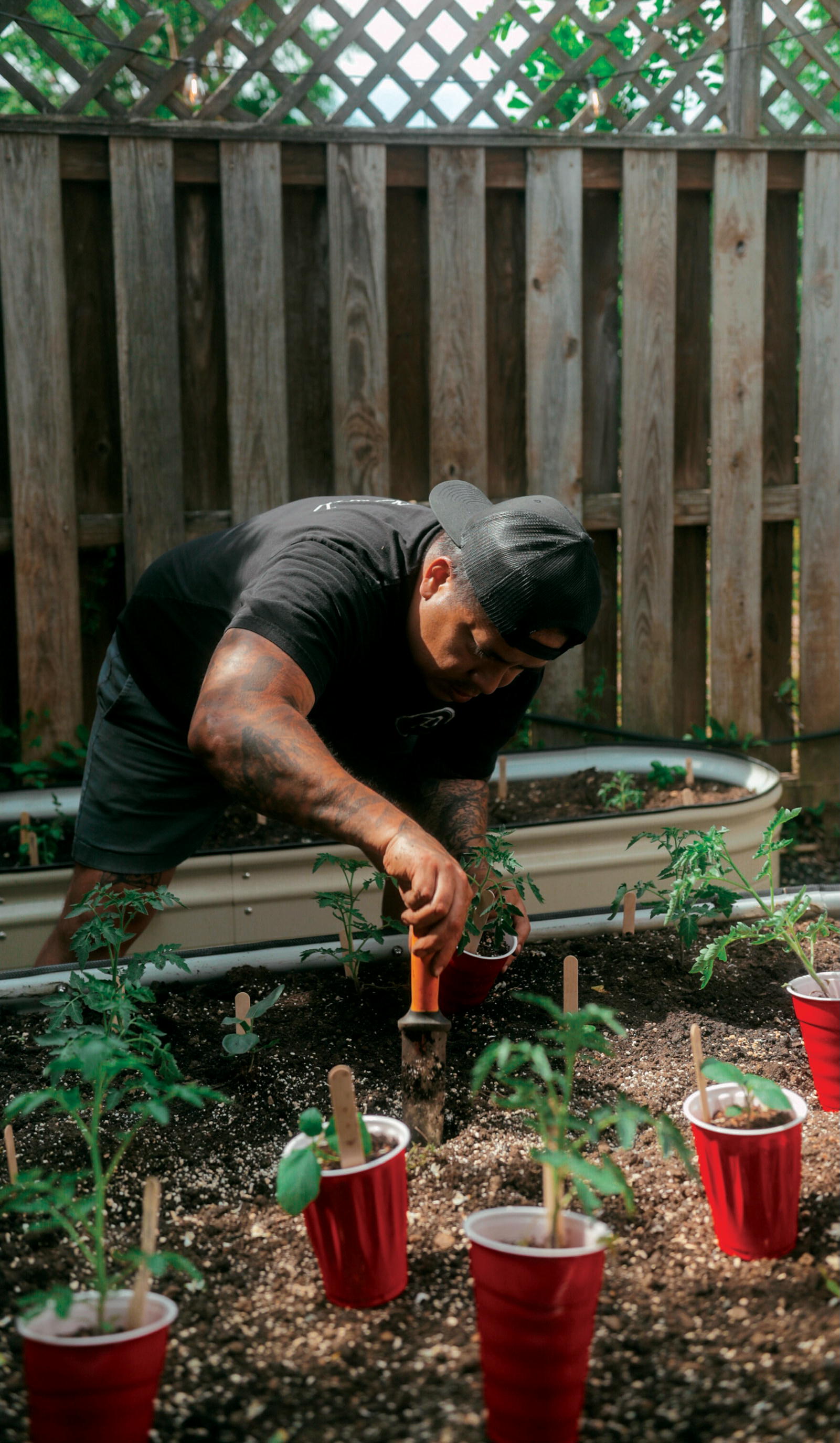 Opening The Post in Wilmington’s Forty Acres neighborhood allowed chef Dan Sheridan to create a garden outside the kitchen door. Here, he transplants tomato plants that he started in the restaurant’s growing room. Photo by Andre Wright.
The team selected produce with a concentrated flavor, so a little goes a long way. Many items appear in happy hour bites, typically under $10 each. “It’s nice and simple, with maybe one technique applied to the preparation,” he explains.
The garden has undergone a significant expansion over the past year. “Chefs are obsessive by nature,” notes Sheridan, whose social media is full of gardening videos. 1715 Delaware Ave., Wilmington; 655-1880.
Joe Van Horn never lets space go to waste. For instance, you’ll find his seasonal decorations tucked above his restaurant’s ceiling tiles. He considered adding rooftop dining to the one-story building—until he saw the $1 million price tag.
When the landlord put on a new roof, Van Horn’s contractor suggested a rooftop garden. It was no easy feat. Since there is no fire escape, the team used a pulley system to bring dirt to the roof. Plants include various tomatoes, such as cherry and Brandywine, as well as herbs that the kitchen and bar require, including mint for mojitos as well as basil. The plants are in 5-gallon buckets to keep them from tipping. (Fortunately, the buckets are plentiful in the restaurant industry.)
To avoid lugging water up attic-like stairs, Van Horn uses an irrigation system. “I turn a valve on in the restaurant, and I’m done,” he says. Sometimes, he forgets to turn it off, and sprinkles fall on the patio guests. When they learn why, they’re forgiving, he says. 821N. Market St., Wilmington; 482-3333.
Old New Castle residents and visitors love Zollie’s for its food as well as the lush containers that adorn the front door and patio. But the containers also have a practical purpose: Chef Marc-Antony Williams grows plants for the kitchen.
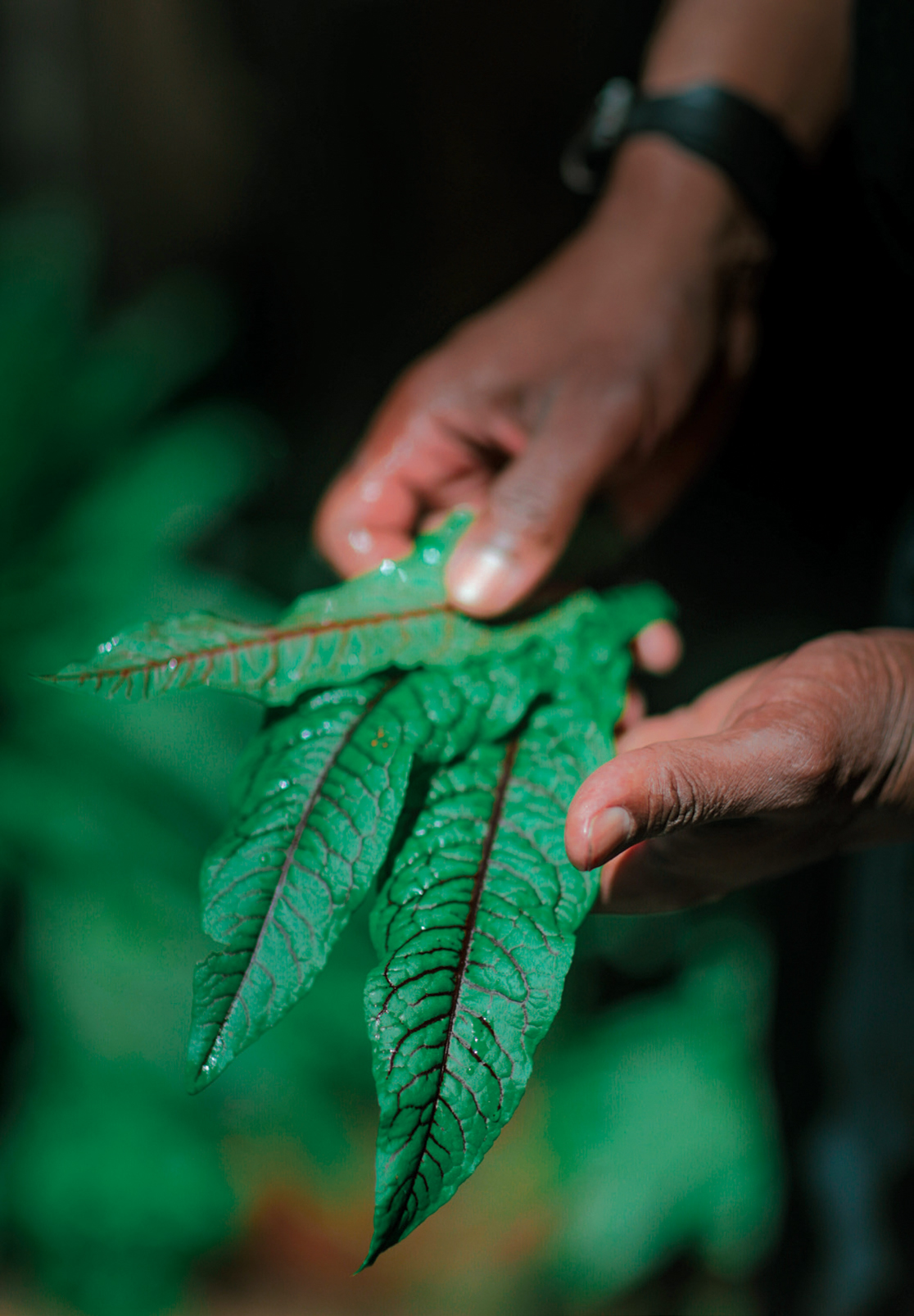 Marc-Antony Williams uses baskets, raised beds, and other planters to grow herbs and produce for Zollie’s Jazz Cucina in New Castle. He says customers relish seeing him clip herbs, such as red-veined sorrel, for their meals. Photo by Andre Wright.
Initially, he planted tomatoes and squash, which the wildlife enjoyed more than his guests did. “The squirrels in New Castle are insane,” he says. “They would take one bite out of each squash when it was ready to pick.” So Williams switched to herbs and lettuce. “They don’t mess with them at all,” he says. “They’re like, ‘OK, we’re not rabbits.’” He also added raised beds, and instead of flowers, his hanging pots have Vietnamese coriander, chives, lemon balm, and opal basil.
For the guests, there’s something appealing about watching chefs harvest their food. “The customers always think it’s fun and interesting to see chefs go out, clip what they need, and go back into the kitchen,” Williams says. 414 Delaware Ave., New Castle; 570-7419.
Walking the walk: 1906
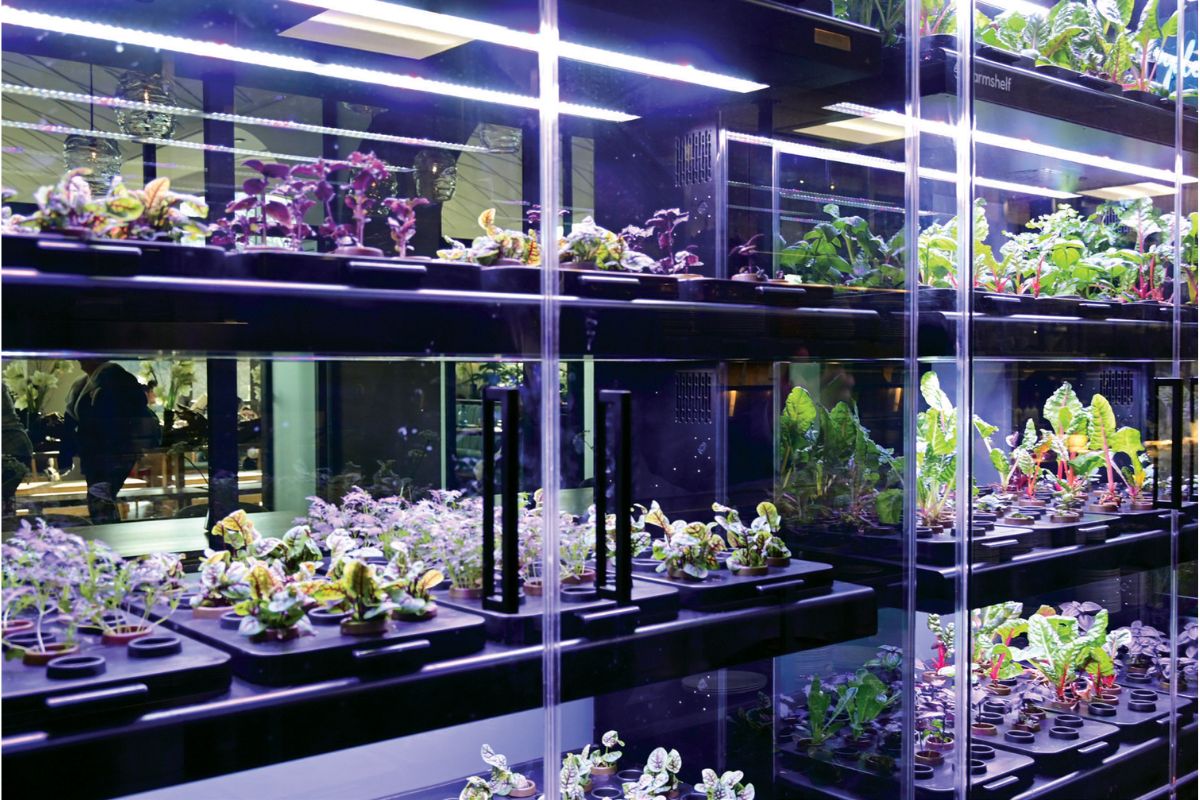
When designers crafted the new space for Longwood Gardens’ fine-dining restaurant, they made a point to integrate the gardens. There are herb beds and pots outside and hydroponic growing cases inside. From the soft sage pillows to the banquettes, the décor celebrates shades of green, and most would agree it’s a breathtaking dining room.
However, the commitment to local flora is most evident in the Idea Garden. Located about 100 feet from the kitchen, the plot on the conservatory’s west side has a dedicated section for produce. Once a week, the kitchen and horticulture teams walk the rows to determine which plants are ready for the menu. “A lot of restaurants can’t find produce grown to their specification, and we have that option,” notes executive chef George Murkowicz.
Items with a limited growing season are used for tasting menus. But others appear on the main menu. For instance, this past June, flower salad lettuces came from the garden. Heirloom tomatoes will appear on the main menu until the plants cease producing. Nothing goes to waste. The kitchen steeps flower and kale stems, along with other scraps, to make herby pesto-like sauces.
Watching the produce grow appeals to the chefs. “Everybody feels more connected to it,” Murkowicz says. “There’s more intention behind it. When they see the gardeners drop off three golf carts full of lettuce that they can turn into beautiful salads, their faces light up.”
It’s equally rewarding for the horticulturists, who taste the chefs’ creations on Fridays. “I’ve always appreciated the culinary value of the things we’re growing, but a lot of that can be lost on the general public,” says Alex Correia, senior horticulturist. “So, to have a group of people who say, ‘We are so lucky to have this,’ and to receive that level of appreciation is pretty special and gives us a sense of purpose.” 1001 Longwood Road, Kennett Square, Pennsylvania; (610) 388-1000.
Related: New Bardea Concepts Bring Elevated Dining Options to Wilmington