
With rising isolation and depression among older adults in the UK, community gardens like Abbey Physic are becoming powerful spaces for connection, purpose, and happiness.
 Photograph by Eva Badola
Every morning, Marion Corp gets out of bed, slips into her finest clothes, and heads out to Abbey Physic Community Garden. It’s here she meets familiar faces and new ones. “A casual hello, a few laughs and conversations are all I need to get through the day,” said the 83-year-old.
The UK’s ageing population is growing rapidly, with the number of people aged 90 and over having risen by 54 per cent in the past two decades. In 2023, over 4.2 million people aged 65 and over were living alone in England. Often facing illness, loss of mobility, and the passing of partners and loved ones, many older adults struggle to socialise. Cut off from society, they often feel isolated, which can further increase depressive feelings, low moods, and anxiety. The isolation is even more pronounced in rural areas due to limited transport options.
However, Abbey Physic Garden, a volunteer-run community garden in the town of Faversham in southeast England, is a rare haven for older people to socialise. In this half-acre walled space, they come together to strengthen their mental health and wellbeing.
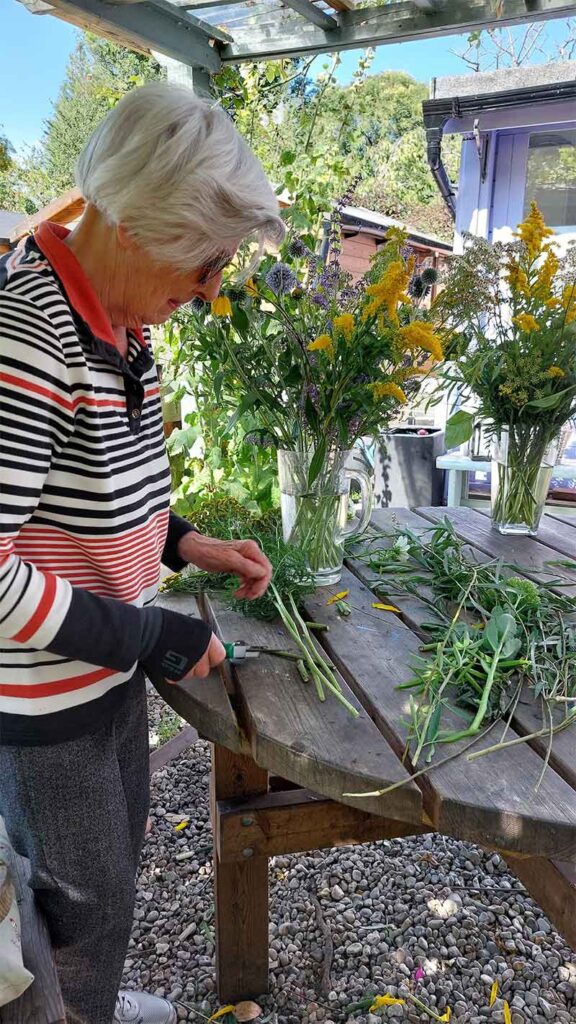 A woman arranging flowers at Abbey Physic Garden. Photograph by Eva Badola
Connecting through the Garden
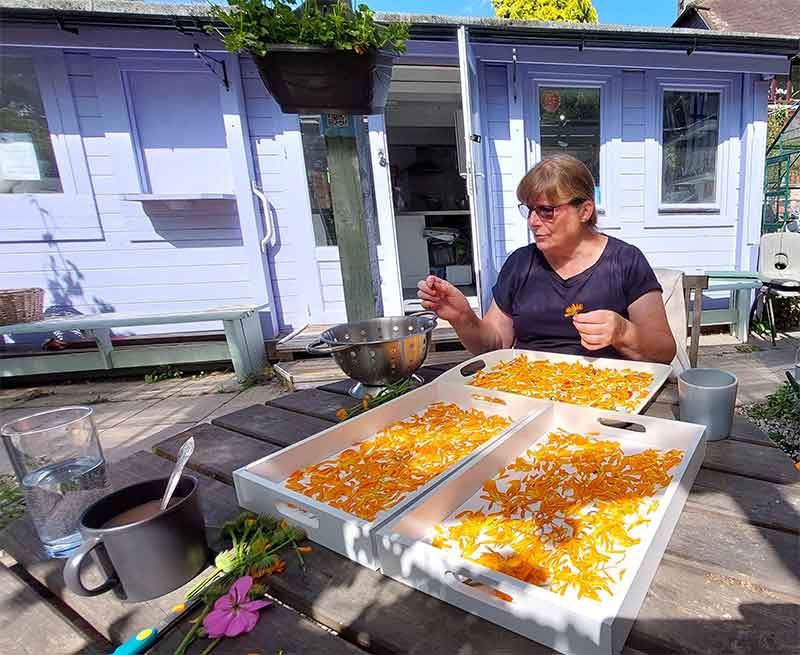
On entering Abbey Physic Garden, a woman was sun-drying orange flower petals plucked from the vibrant garden before her. Suzanne Campbell, manager at Abbey Physic, explained how visitors often immerse themselves in crafting arts from garden material, weaving willow baskets, or doing pottery. “Creativity brings a sense of growth. Anything created by hand can help regain emotional control and connection with self by boosting self-esteem,” said Campbell. In fact, a recent survey found that 31% of British people felt content and 50% happy after engaging in creative tasks.
As the sun grew stronger, more visitors started walking through a crescent-shaped wooden structure leading to the Moon Garden. Stepping inside, a calmness washed over me. White Bellis flowers and green sorrel herbs were creating a soothing background. Benches tucked among bushes offered quiet spots to read or rest. Elderly visitors walked along the garden’s path with their grandchildren or dogs.
Nature-based activities such as walks are proven to stimulate the senses, enrich experiences, and build stronger self-connection, especially for those living with dementia. This neurological condition reduces cognitive and mental functions, primarily affecting people over the age of 65. With an ageing population, it’s estimated that one in 11 people over 65 currently lives with dementia in the UK. As the condition worsens, individuals’ judgment, awareness, and communication decline, often leading to deeper isolation. However, regular social contact can protect against the potential risks of dementia. One study indicated that social participation in midlife and late life can lower dementia risk by 30 to 50%.
“The idea is to create a safe space for people with different abilities, including dementia groups,” said Tom Jewell, a volunteer at Abbey Physic. The community run weekly sessions to help people cope with depression, stress, and anxiety. “Older generations often feel left out. The sessions let them share their problems and get expert guidance,” he added.
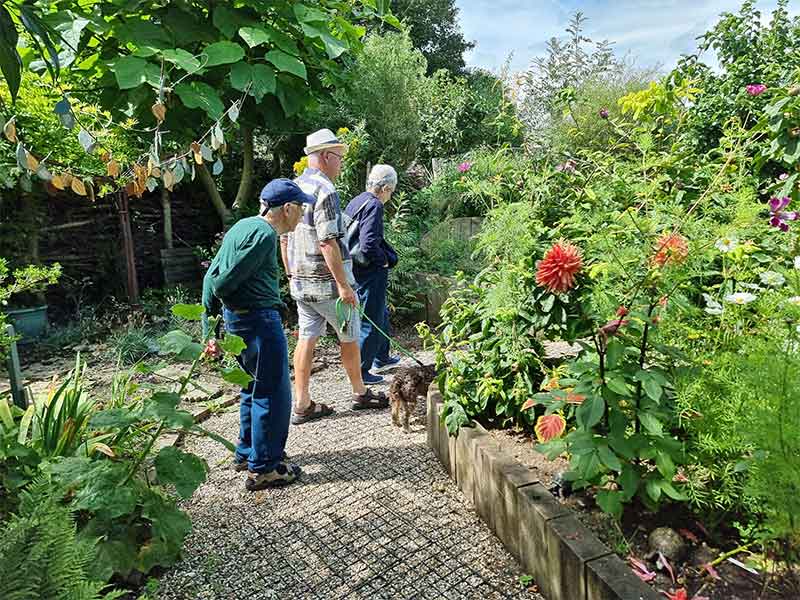 Visitors entering the Moon Garden. Photograph by Eva Badola
Finding a Purpose
Beyond the Moon Garden, the horticulture section of the garden comes alive with red apples on trees, green vegetables under a mesh canopy, and tomatoes ripening in the polyhouse. Elderly volunteers work steadily, pulling weeds, turning soil, and watering seedlings.
At Abbey Physic, harvesting fruits and vegetables serves like therapy. Volunteers dig up beetroots, pluck mulberries, and snip herbs like thyme and Welsh onion. “Growing something you care for brings pride and accomplishment,” said Louise Gray, Assistant Garden Manager. “Many volunteers have enrolled in a certificate course in Practical Horticulture offered by the Abbey. Through it, they gain skills as well as direction and a purpose,” she added.
Experiencing diverse textures, scents, and colours also stimulates the senses, enhancing the vitality of ageing brains. Labelled plants in the garden help volunteers recall and recognise each one, improving their memory. “With age, many face forgetfulness, so we find ways to keep their minds active,” said Ian Hardie, a staff member at Abbey Physic. He showed the ‘Memory Tree,’ where volunteers hang personal photos and notes to reconnect with their past memories.
Hardie leads the Men’s Shed Project at Abbey Physic, which was inspired by the Men’s Shed Movement from Australia that gradually spread across the UK as isolation grew among men. A BBC Loneliness Experiment across 237 countries found men feeling lonelier than women. Many retired and widowed men who have lost daily routines and social networks have joined Men’s Shed. They learn practical skills like crafting planters and restoring garden benches.
“Here, men work at their own pace, bonding over shared interests,” said Hardie.
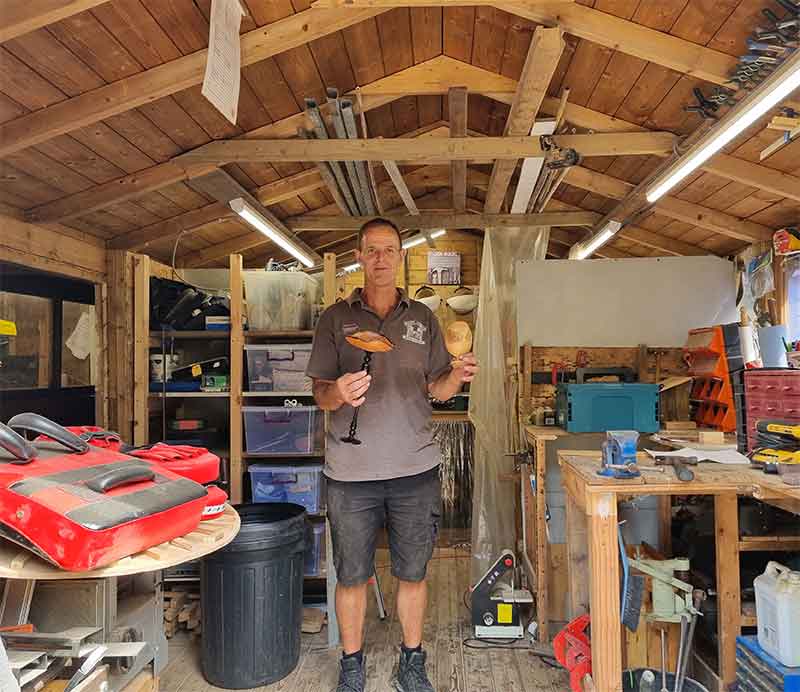 Ian Hardie displays woodwork crafted by volunteers at the Men’s Shed. Photograph by Eva Badola
A Kitchen for Happiness
As lunchtime approached, the aroma of fresh tomato soup paired with homemade bread filled the air. Abbey Physic runs a community kitchen serving meals made mostly from garden-grown ingredients. Here, volunteers cook and sell these affordable meals to sustain the garden’s upkeep.
“Some volunteers came here through social prescribing,” said David, a dedicated volunteer for the past 19 years. In this approach, General Practitioners (GPs) or social workers in the UK refer patients to community activities like gardening or mindful cooking. Green social prescribing has been proven to improve people’s life satisfaction and happiness levels.
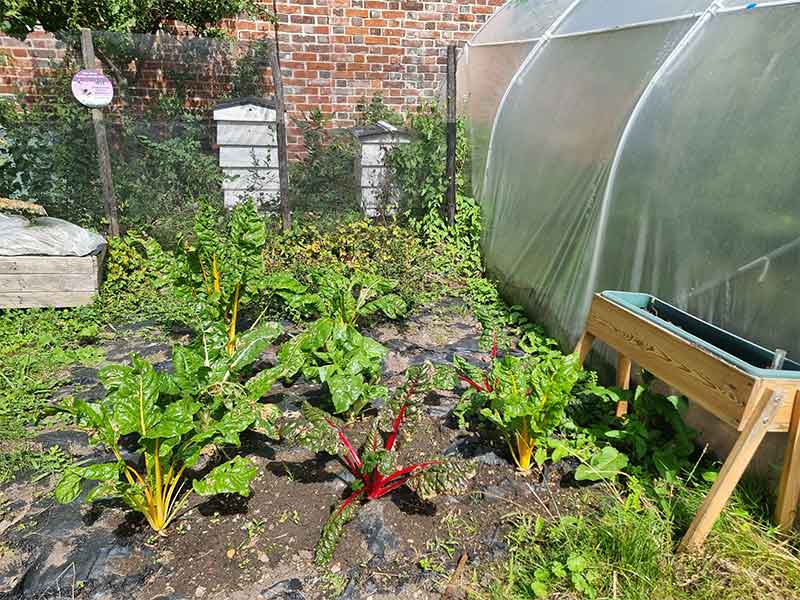 Vegetables thriving in and around the polyhouse. Photograph by Eva Badola
To combat boredom and low moods, Abbey Physic offers a Mindful Kitchen course. Volunteers learn to plan meals, shop on a budget, and use ingredients wisely. These skills help reduce their food expenses, especially considering the rising food prices in the UK. Learning to cook efficiently also empowers older adults to reduce their dependency on others.
Remarkably, 78% of the community kitchen members in Abbey Physic have reported significant improvements in their eating habits. Healthier food choices, in turn, have long been linked to greater happiness.
As the day ended, I sat down sipping coffee in Abbey Physic Cafe, filled with friendly talks as visitors and volunteers gathered to share warmth and companionship.
Subscribe to Our Newsletter
Get the latest CounterCurrents updates delivered straight to your inbox.
Eva Badola is a UK-based independent journalist and writer, with a published book and several articles on nature, science, culture and social issues. She has a growing interest in the health and wellness sector.