
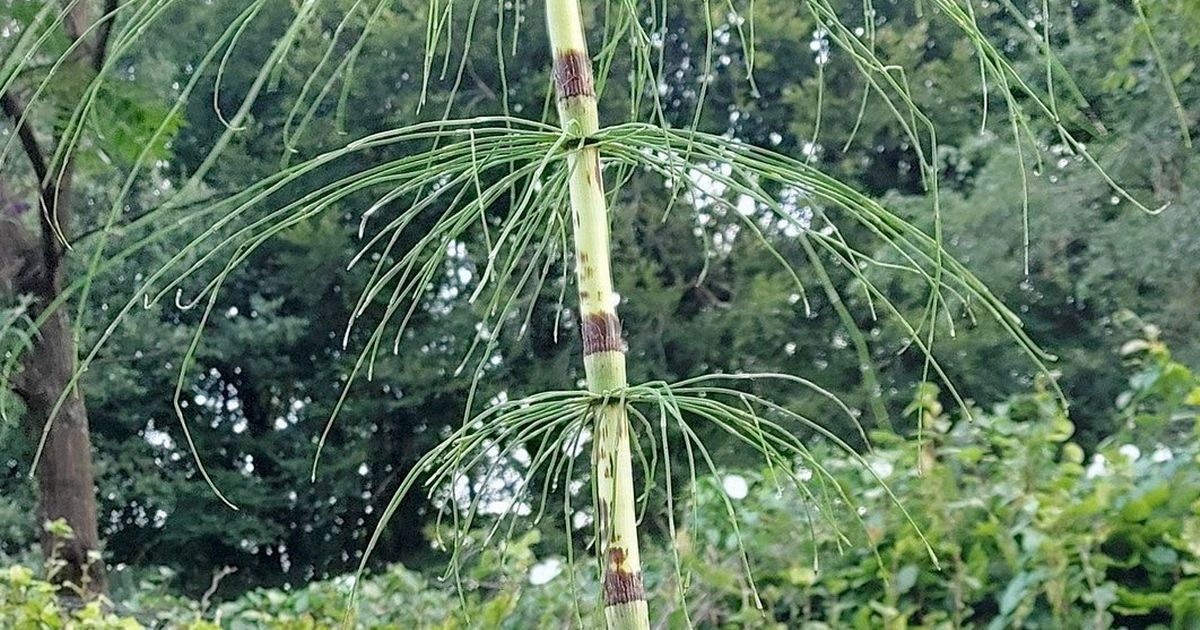
The weed is notoriously difficult to eradicate and has become an increasingly common issue on housing developments across the UK
13:49, 08 Jul 2025Updated 15:07, 08 Jul 2025
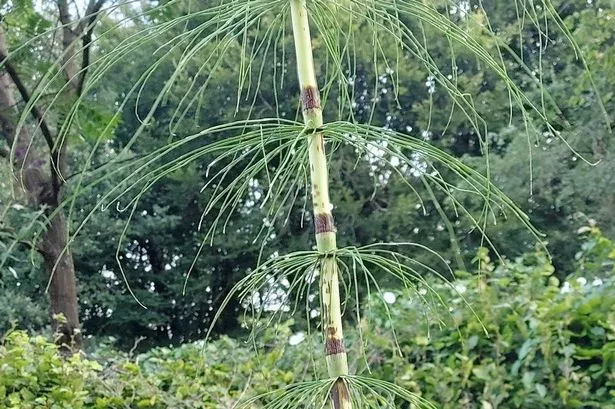 A horsetail plant, which can grow to around 3ft tall and is capable of causing a lot of damage if left unchecked(Image: Japanese Knotweed Ltd)
Homeowners and developers have been warned to watch out for the appearance of a prehistoric plant that can cause more damage to infrastructure than the infamous Japanese knotweed.
Horsetail (Equisetum) reproduces by spores and is the only surviving representative of a family of plants that once grew up to 30 metres (100ft) tall millions of years ago, at the time when coal was formed. Today’s horsetail typically grows to a much shorter height of around 2ft-3ft.
Pest control experts say horsetail is emerging as a serious threat and has become an increasing issue on housing development sites across the UK. Its root system makes it notoriously difficult to eradicate.
Although indigenous to the UK and therefore not on the Government’s list of invasive alien species, this so-called ‘living fossil’ is still considered a menace when near human habitation because of its ability to spread aggressively and push through concrete and tarmac.
READ MORE:
KleerKut said: “While horsetail is a native plant species and therefore not legislated, many have found it to be the cause of more damage to infrastructure than Japanese knotweed.
“It is well known for breaking through tarmac, block-paved areas, car parks and destroying landscaped areas. Horsetail can result in thousands of pounds worth of repairs being required.
“As many gardeners will testify, trying to pull this persistent weed simply results in breaking the stems above ground and this gives no meaningful control.
“The plant has a waxy coating which means that it is highly resistant to most herbicides, requiring a specialist to ensure effective eradication.”
Gardeners who spot horsetail appearing in or around their homes are urged to manage it carefully. The Royal Horticultural Society offers advice on how to remove horsetail if it becomes a nuisance in your garden.
These include pulling it up, forking it out and smothering it with compostable material. It only recommends resorting to powerful weedkillers if other methods fail.
Environment Controls, which says it was called in to remove horsetail from an old army barracks before houses are built on the land, says fragments of the plant left in the soil can regenerate, and it is resistant to many standard herbicides.
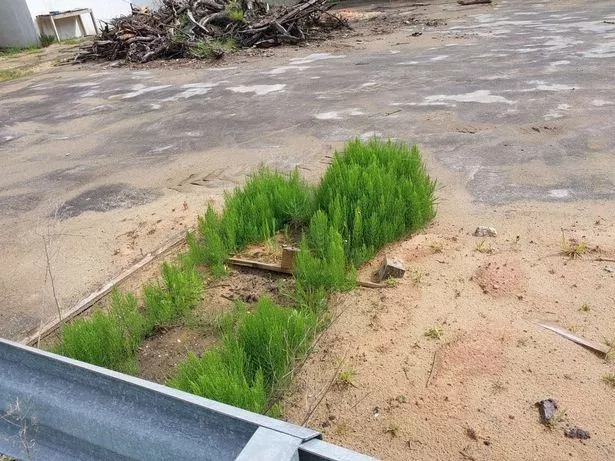 Clumps of horsetail growing through cracks in the concrete on an old army barracks site planned for development(Image: Japanese Knotweed Ltd)
The invasive species specialist said: “Horsetail is becoming an increasingly common issue on development sites across the UK.
“Its aggressive growth and resilience make it a significant concern for developers, especially on brownfield and previously disturbed land.
“Left unmanaged, horsetail can quickly spread and establish dense colonies and creating persistent problems for construction projects. Failing to identify and manage invasive plants like horsetail before construction can lead to several complications.”
These include structural damage caused by horsetail’s extensive system of underground rhizomes, which can push through hard surfaces, potentially damaging foundations, pavements, and drainage systems.
The discovery of horsetail during or after the start of building work can halt construction and require costly removal. The presence of any known problem plants can also deter buyers, complicate lending, and reduce the value of completed properties.
Join our dedicated BirminghamLive WhatsApp community for the latest updates sent straight to your phone as they happen.
We have an array of newsletters. If the cost of living is a concern, you can sign up for our Money Saving Newsletter, which is sent out daily via email with all the updates you need including DWP and HMRC changes, benefits, payments, banks, bills and shopping discounts. Get the top stories in your inbox to browse through at a time that suits you.