
The yard and things in it give us ample opportunity to hurt ourselves.
Rocks and other trip hazards, lawn mowers, weed-whackers, poison ivy, and hoes left sitting blade side up are a few that come to mind.
Add fireworks to the list this weekend.
One hazard you probably haven’t thought of is the garden hose.
Yes, that innocuous ring of rubber has the potential to harm, too … and not just as one more thing to trip over.
Hoses can hurt people, plants, and the lawn in at least four fairly common ways in summer:
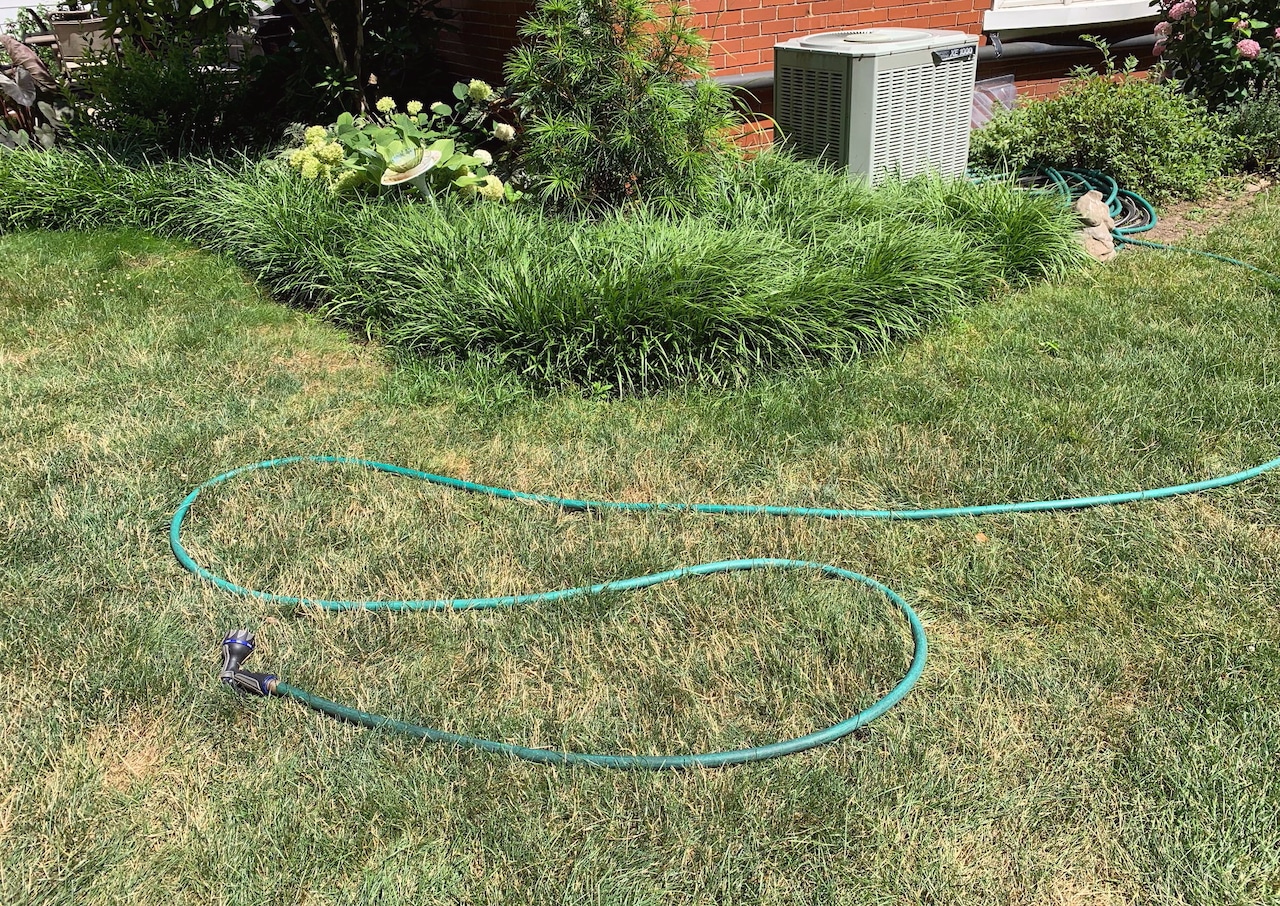
1.) As a surprisingly effective lawn-burner. If you let the hose lie on the lawn for very long on a hot, sunny summer day, it doesn’t take long for the rubber (and any water inside) to heat up to grass-killing temperatures.
The result is you’ll find long, looping, brown, snake-like highways in the otherwise green grass that matches the outline of where the hose was lying.
This is also the case with slip-and-slides and any other heat-absorbing plastics you might lay out on the lawn for even a short period.
The grass may grow back in a few weeks if the hose-burning wasn’t too prolonged. If it was, then you’ll have to reseed the dead sections – or risk weeds if they beat the surrounding living grass to the fill-in punch.
2.) As a skin or plant burner. Water sitting in any hose that’s exposed to the sun can heat enough to burn your skin – or at least give you an uncomfortable burst if you’re not paying attention.
If you water the flower pots or garden with that hot water, you’ll burn the leaves.
The solution is to let water run out of the hose until the temperature of it has cooled.
3.) As a power blaster. Even if your hose water isn’t hot, it’s possible to damage or shred tender foliage if you water it while the hose attachment is dialed to one of those concentrated settings.
Before hosing, double-check that the attachment is set to a gentle rain.
Keep in mind that if you’re not the only one using the hose, someone else might have used it last to power-wash the grill.
p.s. It’s always a good idea anyway to water the soil and not directly onto the plants. The longer leaves stay damp in warm weather, the more prone they are to the many leaf diseases that thrive in warm, humid conditions.
4.) As a plant-killing whip. Be careful when moving the hose around that you don’t pull it into garden beds, where it’s easy to dislodge or snap off plants.
You might be able to tamp young, dislodged, hose-whipped plants back into the soil, but if you severely bend or snap a stem, the plant (or at least that part of it) is likely doomed.
If you purchase a product or register for an account through a link on our site, we may receive compensation. By using this site, you consent to our User Agreement and agree that your clicks, interactions, and personal information may be collected, recorded, and/or stored by us and social media and other third-party partners in accordance with our Privacy Policy.