
Tl,dr: New calathea, asking several questions to avoid killing her like I killed my previous one.
I recently killed my first calathea 😥 Idk what did it, I think there was some kind of rot/mold on the leaves, idk if it was not enough sun, too little water, too much water, no idea.
I do want to give the species a second try, cos I absolutely love how they look + I have 3 cats so each cat-safe plant is a treasure.
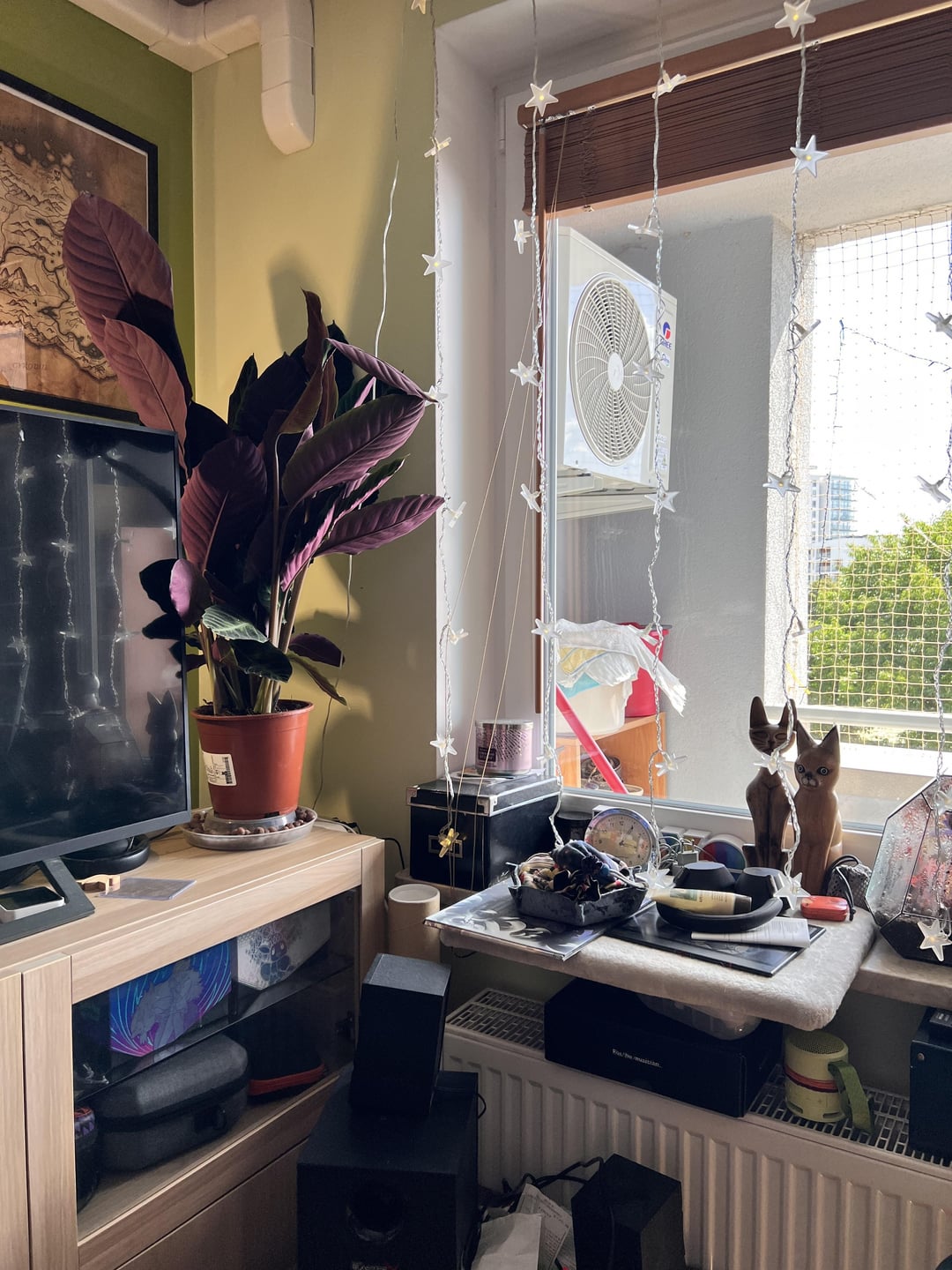
I just brought this baby home from ikea. Is this a good spot for her? This is a western window, the balcony is built-in, so it’s not, like, extremely sunny, but still does get some direct (through window) sunlight.
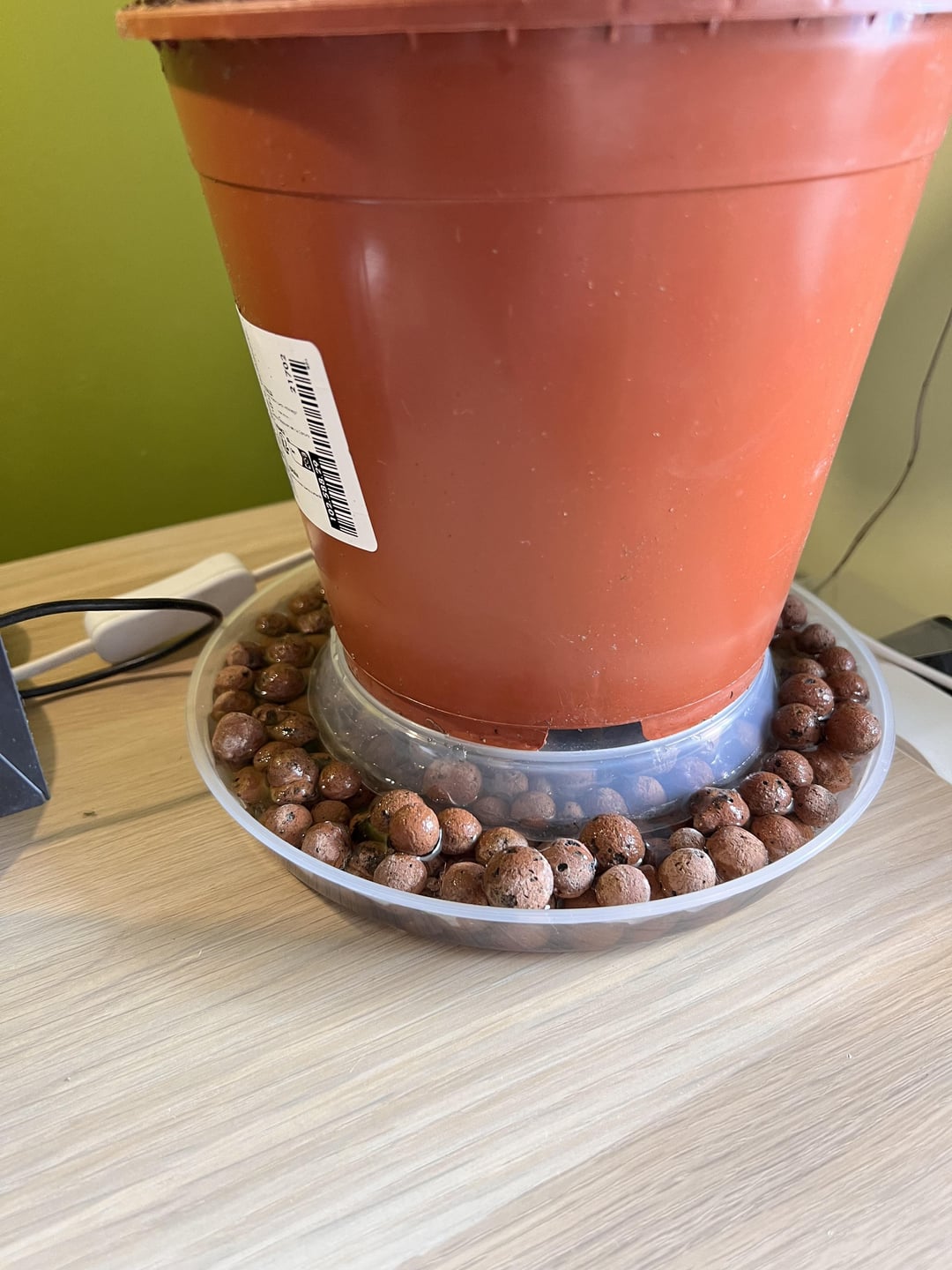
I have this setup made for her for air humidity + I’m gonna be watering her with distilled water. How often should I water her? Just whenever the soil feels dry? Or some other frequency? Should I repot her in some time or can she stay in what ikea sells her in? My last one was never repotted (also from ikea, exactly the same setup) :/
by SpringApricot_
2 Comments
I would repot it into a good soil + perlite mix.
Repotting also gives you the opportunity to inspect the roots for rot or pests.
My last two house plants from a decent enough garden centre had some weird shit going on that i wouldn’t have noticed if i hadn’t repotted. One (maranta) was buried wayyy over the crown of the plant which would have caused rotting and death eventually, and also below the soil several stems were tied together with a very tight small elastic band to make it stand upright ☹️
The other (calathea) had it’s roots confined to a small fabric bag within the soil, it looked like it would have decayed away eventually, but that’s besides the point, i tore that shit up and freed the rootball.
If you don’t create your own soil mix: Sybasoil Calathea is a solid one. Some sellers use good soil, but I always repot. While I often give them an adjustment period (which is also an isolation period in case they carried pests, away from other plants), I never saw a real measurable difference between adjusting and an immediate repotting.
Don’t mist (creates only short term ~30min spikes that actually often hurt the plant). They just like consistency -> no strong humidity or temperature changing drafts. New leaves adapt to the environment they grow in, so they can handle ~55-65% humidity just fine, without extra misting or a humidity tray.
The plant will get rid of the store grown leaves faster than newly grown ones because it “knows” that they are not as well adapted as the new ones it will grow. Most calatheas can come back from a complete “deadheading” – even if you cut off everything above the soil, they are fine as long as the roots are fine. So most of the time the only real death sentence is complete dehydration or overwatering. They can handle dry periods much better than overwatering/waterlogged soil, which will lead to root rot fast. So it is better to water less at the beginning, even if the soil dries out a bit, and get a feel for how often you have to water or how dry the soil gets. I usually put my inner plastic pots inside some nice ceramic pots.
I usually bottom water. Soak the pot in water, water height no higher than 50% of the pot (I try to do 1/3 of the soil height). Let the soil soak fully, maybe it takes ~30min, even the top should get moist by itself. Sometimes if you water from the top the soil can hold a bit more water than it should hold on to (as it did not soak the water up itself) or you don’t water enough or not everywhere, so there might be some dry spots left inside the soil. While all of this can be avoided by topwatering carefully, it’s not even an issue to thing about when bottom watering. If you bottom water soak the pot long enough, it’s evenly moist everywhere. Don’t throw excess water out, you can fill it back into the canister and reuse it next time for the next bottom watering period.
Clean the leaves of the plants at least once a month. Oftentimes you can just use a dustcloth to dust them off gently. If you use a wet cloth with tapwater, make sure you fully dry the leaves afterwards or you might develop mineral stains. If you have distilled water, you can spray-wash the whole plant in the shower with it to clean it too, and if you don’t do it too often it’s ok to let it air-dry afterwards. But air-drying it too often (that’s why you shouldn’t mist) might actually make the leaves lose more moisture than you give the plant, so it can lead to dry tips or otherwise dry leaves.
For light: You can download a free light meter app to measure light, it will be “accurate enough” to know if it’s way too much or too little. Tilt the phone until you measure peak light from the position of the plant, maybe 5 times over an average day (keep in mind that summer/winter differes a lot). 200FC is often the lowest they should get for 8-14h, and often above 600FC on average many start to lose some of their colors, it depends on the plant and type of light. Average as in: 600FC if they would receive that for 8-14h every day. I would not give any calathea more than 1’000FC ever, don’t let direct sunlight hit the plant directly (the only exception is very early morning light, but even then you’re taking risks).
Most plants shed water during the night (they do “reverse photosynthesis” reaction) and eat some of the sugars/energy created during the day and break it back down. So in the morning they often have some “dewdrops” on them. That’s fine, if you give it enough ventilation they will also be gone quite fast. But if you see dark brown or black droplets it’s often a sign of pests. Mold or something fuzzy (like spiderwebs or cotton) is also a sign for pests. Brown-orange or black spots on it or even more often white dots that like to gather on the underside of the leaves can also be tiny pests. So just inspect it every now and then (maybe buy a looking glass, just in case you get some dots and have to figure out what exactly it is in order to fight it).