
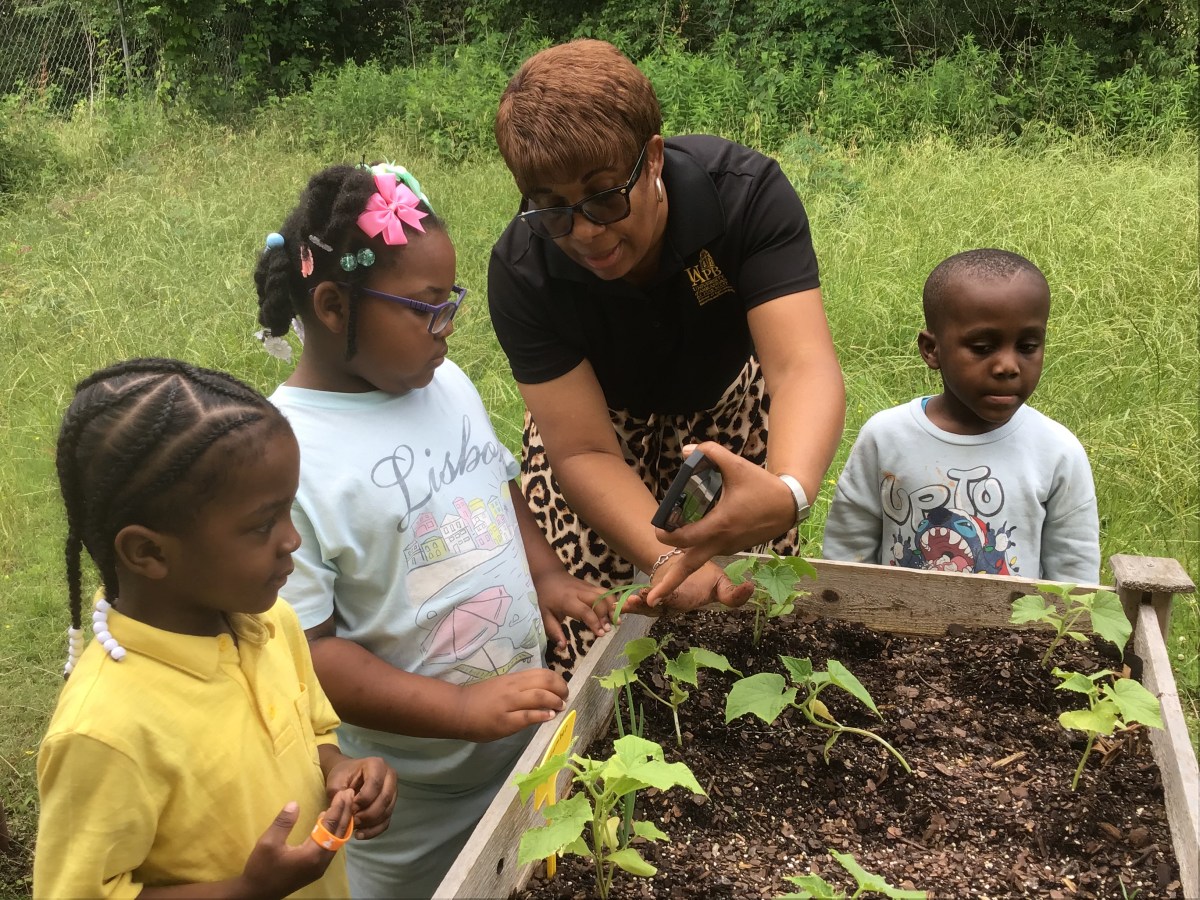
Faculty and students from the University of Arkansas at Pine Bluff Department of Human Sciences have been giving local children the gift of gardening. Dr. Karleah Harris, associate professor, and her undergraduate students recently teamed up with teachers and students at Forrest Park/Greenville Preschool to plant eggplants, cucumbers, bell peppers and onions as part of a hands-on lesson about healthy eating.
“Engaging preschoolers in gardening is important because it gives them hands-on learning experiences that connect classroom concepts to nature and the real world,” Dr. Harris said. “It helps young children understand where their food comes from, introduces them to sustainable practices such as growing and harvesting fruits and vegetables, and encourages curiosity about environmental science. These early hands-on learning experiences will provide a great foundation for healthy habits, environmental awareness and a deeper connection to the natural world.”
Dr. Harris said school gardens are a valuable educational tool because gardening helps children develop essential skills and competencies. Thanks to the hands-on experience of maintaining a garden, students build critical thinking and problem-solving abilities and learn to make predictions, draw conclusions and effectively communicate their observations. It also fosters patience and teamwork. Furthermore, children gain practical life skills such as growing their own food, making healthy eating choices and encouraging their families to adopt healthier habits.
For Dr. Harris, a standout moment of the garden project occurred when she saw students discovering berries growing on the blackberry plants.
“They were amazed and excited, thinking the berries were ready to harvest simply because they looked beautiful and colorful,” she said. “Many of them had never seen young, unripe blackberries before and didn’t realize they needed more time to mature. When I explained this and showed them a photo of a fully ripe blackberry, they were surprised but eager to learn more about blackberries.”
This moment became an important discovery for the students because it helped them understand plant life cycles, develop observation skills and practice patience, she said. It was a powerful reminder of how hands-on gardening experiences can spark curiosity and meaningful learning.
Another one of Dr. Harris’ favorite moments occurred when the students confused an onion bulb plant with weeds such as nutsedge or crabgrass.
“They were ready to pull the onion plant out of the raised garden bed, not realizing it was a vegetable we had planted,” she said. “This moment became a valuable teaching opportunity. After learning how to identify the difference between the plants, the students were excited to apply their newfound knowledge. Therefore, experiences like this show how gardening helps children develop observation skills, plant identification knowledge and a deeper connection to the natural world.”
Dr. Harris said projects like this one highlight UAPB’s ability to engage with the community in a meaningful way, sharing knowledge and skills, fostering collaboration and serving as a valuable resource.
“By working closely with families, stakeholders and local partners, UAPB helps educate the next generation from an early age, supports efforts to address food deserts and food insecurity and contributes to building a strong science, technology, engineering, arts and mathematics (STEAM) workforce. This engagement strengthens community connections and promotes the overall well-being and growth of students and their families.”
This initiative is supported by the U.S. Department of Agriculture’s National Institute of Food and Agriculture project [Award Number: 2021-38821-34712].
Pursuant to 7 CFR Section 15.3, the University of Arkansas at Pine Bluff and the School of Agriculture, Fisheries and Human Sciences, 1890 Research and Extension Programs, offers all its Extension and Research programs and services (including employment) without regard to race, color, sex, national origin, religion, age, disability, marital or veteran status, genetic information, sexual preference, pregnancy, or any other legally protected status, and is an equal opportunity institution.