
While the summer months are a great chance for gardeners to get outside, the warm weather can make it hard to maintain grass. The higher temperatures and lower rainfall, combined with increased use, can cause potential damage to our grass, so it’s important that gardeners know how to take care of their lawn.
According to forecasters from the Met Office, temperatures will be “above normal for the time of year” across the UK between Tuesday, June 17 and Thursday, June 26. Most areas are also expected to stay dry which means gardeners will have to be mindful of the health of their grass. Fortunately, experts from MyBuilder.com have shared one piece of advice for gardeners to keep their lawn in tip-top shape.
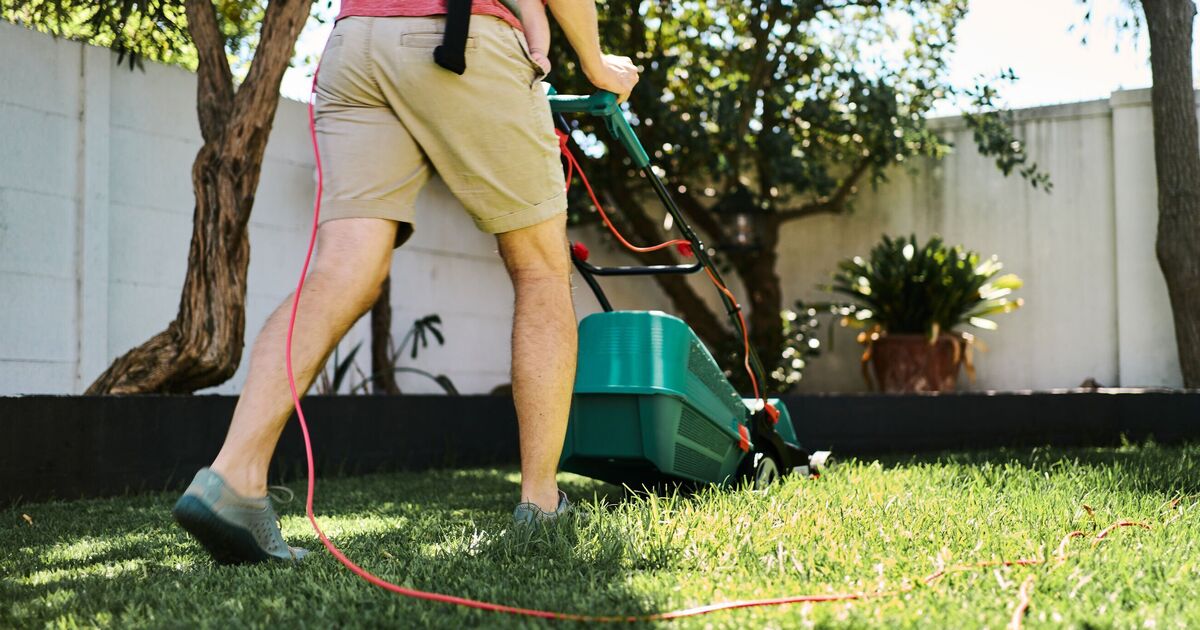
In addition to leaving the grass a little bit longer than usual, the experts recommend leaving the grass collector off your lawn mower while cutting. This will allow the cut grass to feed important nutrients back into the soil.
The cut grass, which is rich in nitrogen, potassium, and phosphorus, acts as a natural fertiliser as the clippings decompose. This reduces the need for synthetic fertilisers, which are expensive and harmful to the environment.
However, it’s important that the cuttings are fine enough to avoid a build-up on your lawn. Gardeners are advised to mow at least once a week to optimise grasscycling.
The experts also recommend leaving your grass slightly longer than usual during the summer months. They explained: “Longer grass will shade the soil from the hot sun and protect the blade further down. However, if your grass is already badly damaged, mow it shorter.”
It’s also important that gardeners don’t overwater their grass during the summer. While most people think lots of water will help their lawn, it can actually have a detrimental effect.
The experts said: “Many people think that tipping excess water, such as paddling pool water, on the grass is helping it thrive. However, you are actually risking overwatering and waterlogging your grass which could potentially destroy the area.
“Instead, use the water to water any other plants or to pour into different corners of your garden, distributing the water in various places.”
Expert gardener James Lewis also said there are a number of myths around how to protect grass from heat damage. He explained: “So many people are certain that laying down any sort of mat or rug under paddling pools or other common garden objects will save your grass – but that’s totally untrue.
“Mats, tiles, foam squares, sand – none of these things will change the fact that placing an object onto grass will stop the plant accessing the very elements it needs to survive – oxygen, and sunlight.
“The good news is that grass is extremely resilient, and with certain steps you can protect it or repair it after damage, and normally it recovers extremely well.”