
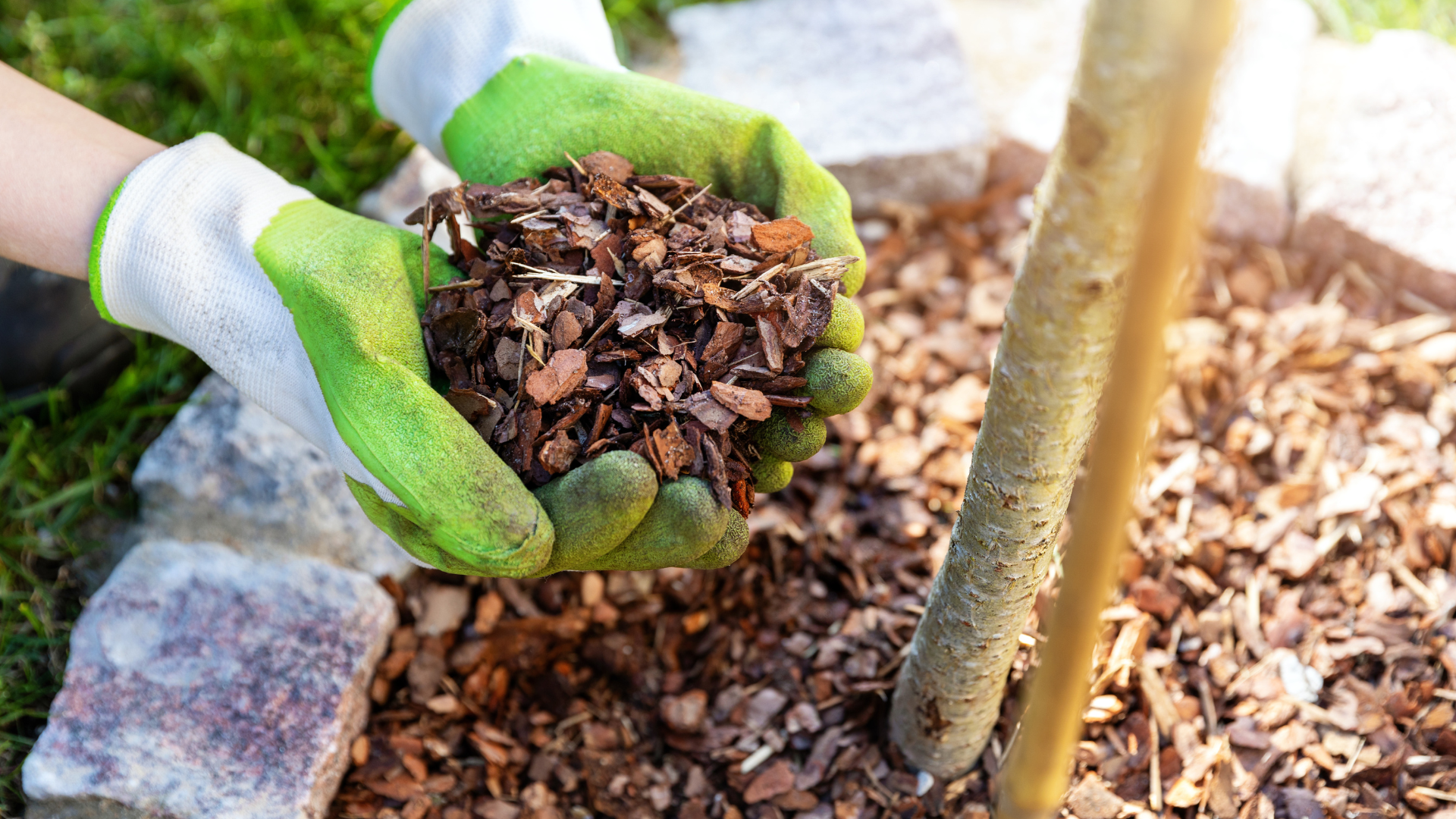
SALT LAKE CITY — If you’re looking for ways to conserve water and even control some weeds in your garden, mulch can help.
What is mulch, and what does it do?
David Rice with the Weber Basin Water Conservancy District broadly defined mulch as anything that creates a layer and covers the soil. It could be rocks, plastic, fabric or bark.
“In our climate, we don’t see it a lot, but pine needles could be a mulch. Grass clippings, if you cut your grass and that’s all you’ve got, put it on the ground.”
Mulch helps moderate the soil temperature, reduce evaporation from the soil, and prevent weeds from growing in the soil.
Rice suggested putting three to four inches on the ground.
“Spread it out. If you leave it in big piles, you’re going to have a kind of stinky mess,” he said. “… It’s going to dry, and then that’s going to create this nice layer … and then as that breaks down, that’s going to create additional soil nutrients.”
What about fabric?
While fabric can do the job, Rice said he often discourages people from using it.
“In planted beds where we have organic mulch, we often discourage the use of fabric because what’s happening is now you have an artificial … layer in there that’s not allowing nutrients from the organic mulch to be broken down and mixed with the soil later.”
Additionally, Rice said that weed seeds will start getting in and growing on top of the fabric at a certain point.
KSL Greenhouse Host Taun Beddes joined the conversation, saying the fabric interferes with soil oxygen penetration, which is why organic mulch is best used without the fabric.
However, there could be an exception to this suggestion if you’re applying a rock mulch.
“In that case, we’ve said, ‘OK, you could use some fabric under that rock. You’re going to have less organics, less stuff going in there.’ And in rock applications, honestly, you’re probably having less density of plant material,” Rice said.
Are they safe?
“Anything coming from a commercial source, especially if it’s bagged, is going to be safe for use around the house,” Beddes said. “Now, getting a gut full of wood chips is never good for you, but there’s no inherent poison to those mulches.”
Beddes said there have been some problems when people sprayed a pesticide on their lawn, mowed it a week later, and then put the mulch down while the pesticide is still adhering to the grass blades, resulting in damaged plants.
Concerned about cost?
If you are interested in getting some mulch but are worried about the cost, there are some affordable options.
“Some of the landfills and other Green Waste facilities, even tree trimming companies, they’ll shred all that stuff up, and you can have them dump it in your yard and spread it,” Rice said.
Although it won’t give you the same look as something like premium bark mulch does, it still acts as a layer on the ground. If you want a more aesthetic appeal, Rice said you could add a thin layer of higher-quality mulch just on top.
“We encourage people to do that all the time because that layer of mulch is going to do a lot of good.”
Read more from the KSL Greenhouse show:
KSL Greenhouse is live on Saturdays from 8 a.m. to 11 a.m. Follow the show on Facebook, Instagram, and YouTube.
We want to hear from you.
Have a story idea or tip? Send it to the KSL NewsRadio team here.