
“Gardens are the living representation of the passage of time, where growth and decay dance in harmony.” —Marian Coffin
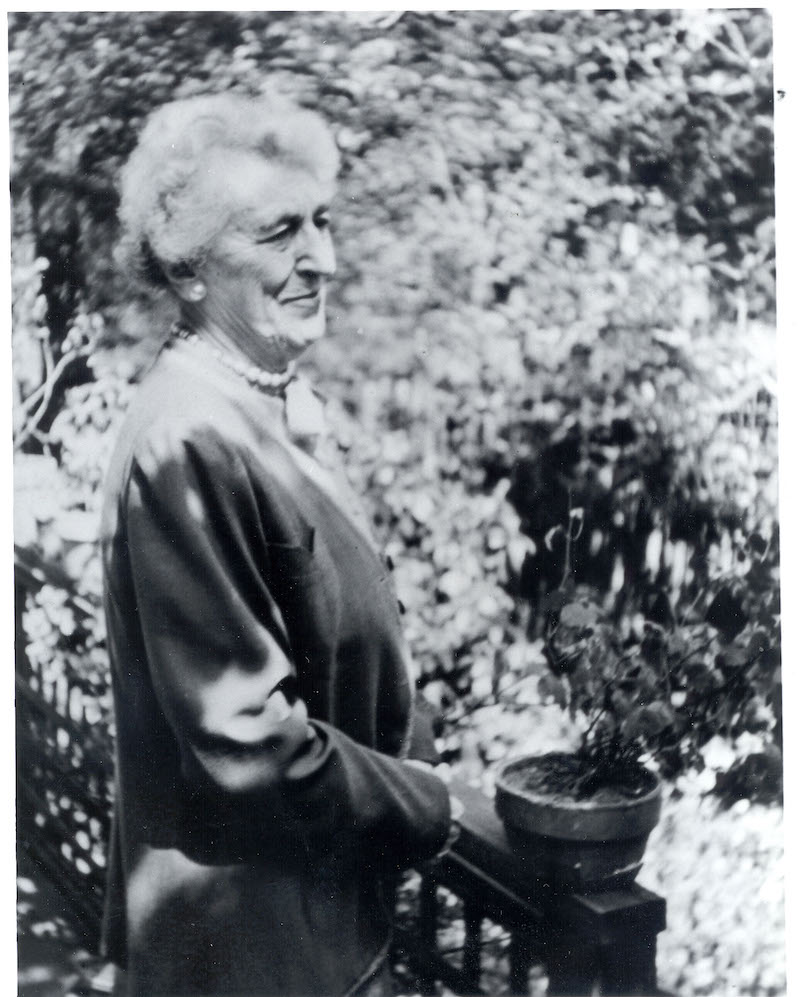
Marian Coffin grew up straddling two worlds. In 1888, at the age of 7, the New York native lost her father, leaving her penniless. But because the tragedy forced her and her mother to move in with wealthy extended family, Coffin forged many connections with aristocrats of the East Coast elite. She became an anomaly: a low-income member of the upper class.
Coffin found herself drawn to the arts, but — by her own assessment — she had scarce talent in the traditional mediums: painting, music and sculpture. So when a friend suggested she explore landscape architecture, something clicked. Coffin had long felt inspired by the beauty of the Finger Lakes near her childhood home, and she immediately applied to a competitive program — then the only one open to women — at the Massachusetts Institute of Technology. The university initially denied her enrollment (she’d had no formal education up until this point), but Coffin was not deterred. She underwent rigorous tutoring until, at age 25, MIT accepted her application. Coffin became one of only a handful of female students in the program.
“We were pioneers,” she once said of those early days. “And we were determined to show what enthusiasm and hard work could accomplish.”
While Coffin completed all of her course requirements, MIT did not grant her a degree — women were considered “special students” and weren’t eligible. And, after leaving Massachusetts, she struggled to break into existing landscape architecture firms. So Coffin started her own, intentionally hiring women with similar aspirations and paying them a fair wage. She quickly developed her own style — formal, naturalistic and heavily influenced by European trends — and became known for her attention to detail.
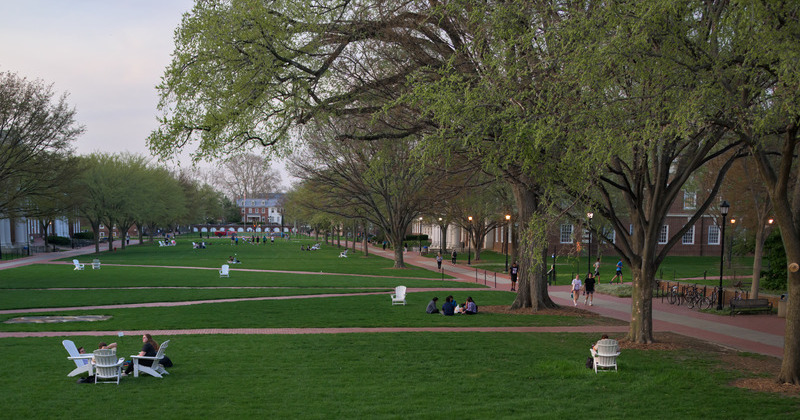
Leveraging the upper-class contacts she’d made through her upbringing, Coffin attracted high-profile clients, including lifelong friend and pen pal Henry Francis du Pont — the pair wrote long letters back and forth about the thrill of collecting every variety of daffodil. Du Pont commissioned Coffin to design the Italian Renaissance-inspired garden at his Winterthur estate*, now a world-renowned museum and the co-sponsor of two UD graduate programs. For H. Rodney Sharp, then a University trustee, Coffin designed the sweeping grounds of his Gibraltar manor, a Wilmington property spanning 80 acres that now doubles as a learning laboratory for UD students and interns. Known as the Marian Coffin Gardens, the space is open to the public.