
The owner of a home worth £1.4million has infuriated neighbours after winning permission to ‘squeeze’ a new house into its garden within a conservation area.
The approval came despite complaints from locals in Winchester, Hampshire, who said the proposed new property would spoil the ‘harmonious nature’ of their affluent road, which is lined with Georgian buildings dating back to the 1800s.
Peter Sykes lodged plans two years ago to build the four-bedroom home on a patch of land to the west side of the property, which falls inside a conservation area.
During a planning meeting, Mr Sykes has now been labelled as a ‘slum landlord’ by neighbours in Winchester, who claimed they had already been subjected to ‘hell’.
They said that while building an extension, Mr Sykes damaged a wall which was built in 1855 and had demonstrated a ‘complete inability’ to undertake a housing-related project.
Winchester City Council has now approved Mr Sykes’ plans – commending him for his handling of the application and the design.
Mr Sykes lodged plans to build the four-bed house at the side garden of his property in March 2023.
The £1.44million home is the St Cross district of the cathedral city that was one of the first conservation areas in the country.

Liam Kilpatrick (left) and Peter Moir (right), pictured outside Winchester Guildhall in Hampshire, have been among opponents of a proposed new four-bedroom property
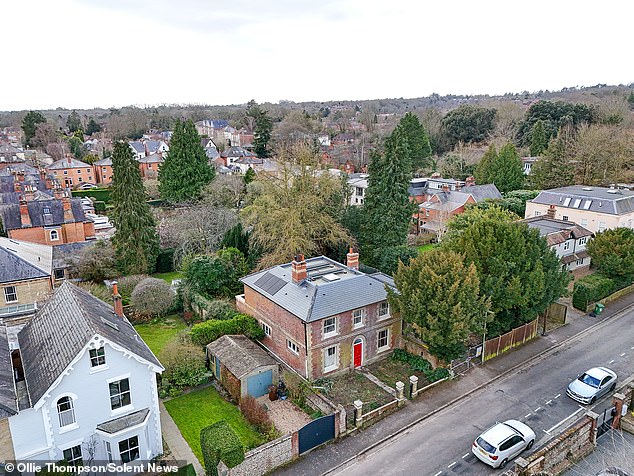
Councillors have granted permission for a homeowner to ‘squeeze’ a new house into the garden of his £1.4million property in Winchester’s St Cross conservation area
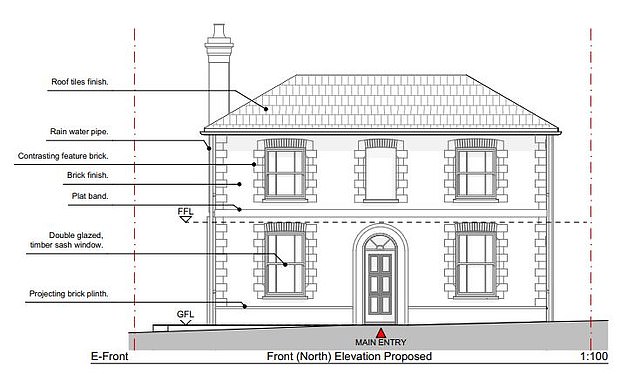
Peter Sykes lodged plans two years ago to build the four-bedroom home on a patch of land to the west side of the property, which falls inside a conservation area
The application stated the proposed home’s design would ‘remain sympathetic’ to the local area so that ‘new and existing houses are also joined together by the landscape around it’.
Plemon Studio, the architects designing the plans, said the new house would ‘harmonise well’ with existing buildings on the road where homes cost an average of £1.442million.
More than 20 neighbours lodged objections to the plans, with one resident living near the property saying that ‘messing around’ with the proportions of the house would ‘detract from the historic streetscape’.
Another resident said the size of the proposed property was ‘out of character with the locality’ and described it as a ‘cramped development of an inappropriate size and design given the size of the plot’.
And a different local described the mooted new home as ‘a completely inappropriate development for this area’, calling it a ‘cynical money-making exercise’.
Samantha White said: ‘Going ahead with the proposed additional building squeezed on the current site will strongly change the nature and character of this lovely, quiet street. What is the point of a conservation area if it is not conserved!’
Peter Moir said the property would ‘undoubtably impact negatively on the harmonious nature’ of the road.
Residents criticised Mr Sykes for an ongoing extension being carried at his property that was approved five years ago.
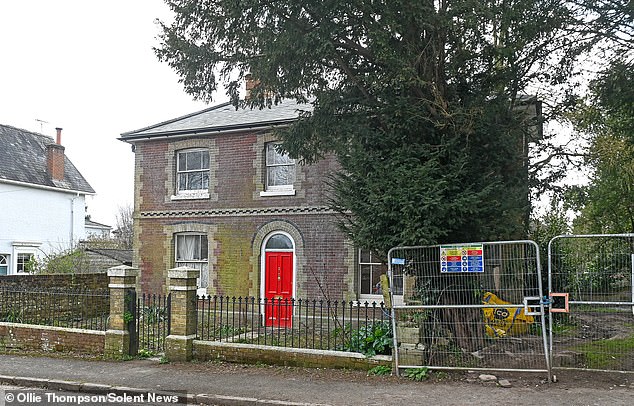
The £1.44million home is the St Cross district of the cathedral city that was one of the first conservation areas in the country
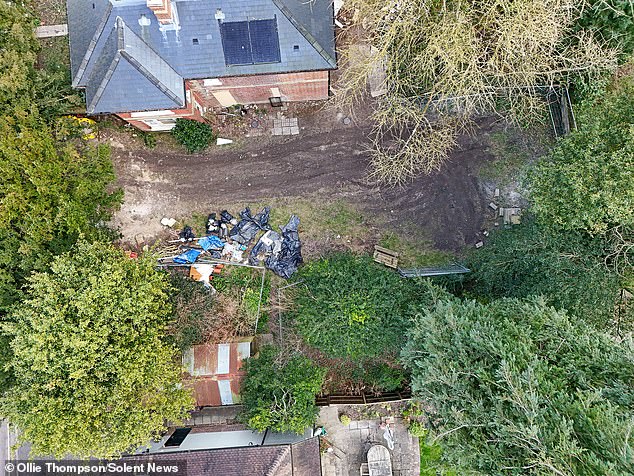
The application stated the proposed home’s design would ‘remain sympathetic’ to the local area so that ‘new and existing houses are also joined together by the landscape around it’
Liam Kilpatrick said the works being done there had been ‘very poorly executed’ and were still yet to be finished.
He said: ‘Damage has been done to existing features namely the front of the property where a brick pillar from 1855 has been knocked over and just left in ruin.
‘This affects the street view and shows a total disregard for conservation and all who live here.
‘To do yet another property whilst having demonstrated a complete inability to considerately undertake an existing project is unacceptable.’
Other neighbours said Mr Sykes had ‘neglected’ his house for years and subjected neighbours to ‘a significant amount of noise, dirt and dust’.
It is understood that Mr Sykes lives permanently at a property in Andover, Hampshire, and has previously rented out his Winchester home.
The council debated the application to build a new home at a meeting in the city centre.
Speaking on behalf of neighbours, Mr Kilpatrick told councillors: ‘For nearly three years, everyone on Grafton Road has been subjected to a continuous and never-ending building site from the existing property.
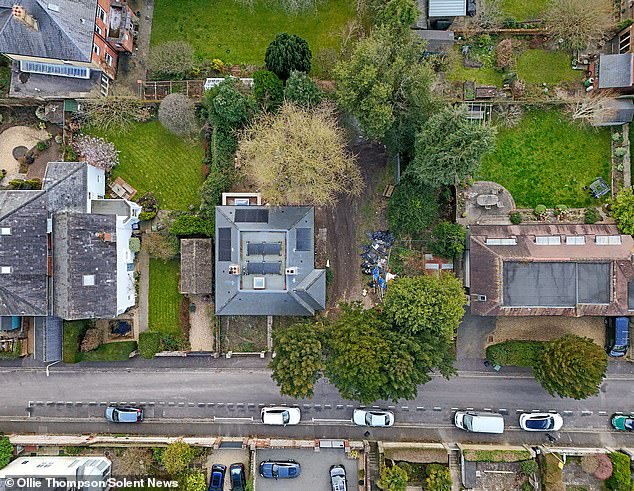
More than 20 neighbours objected to the plans, with one resident saying that ‘messing around’ with the proportions of the house would ‘detract from the historic streetscape’

Residents have criticised Mr Sykes for an ongoing extension being carried at his property that was approved five years ago
‘The project should have taken no more than six months. It is nowhere near complete and continues to make our lives hell.
‘They site is covered in rubbish, never cleaned up or left in any state that respects the neighbourhood.’
He criticised the designs put forward by Mr Sykes and said the plans to build an ‘enormous basement’ would require 100 skips’ worth of excavated material to be removed.
Mr Kilpatrick urged the council to reject the application and described Mr Sykes as ‘a slum landlord’.
Councillor Brian Laming said he had ‘concerns’ over the development due to it being in a conservation area and said he is ‘extremely worried about the size of this building’.
But others favoured Mr Sykes’ proposals, with one member saying that ‘this development is making good use of the space’.
Another told the meeting that Winchester needed more four-bedroom homes to ‘free up’ smaller houses.
Councillor Jane Rutter, who chaired the meeting, commended Mr Sykes’ application and said it was good to see a design which respected and referenced the designs of the neighbouring houses.
The council voted in favour of the application after imposing conditions.
Officers had previously recommended the plans be approved because they considered that it ‘will not have a significant adverse impact upon the character and appearance of the site and wider area’.