
May marks the end of the “high season” for flowers in Charleston. The following perennials bloom reliably in May and should survive for 10 or more years, with one exception noted below.
I’ve written frequently about one of my all-time favorite flowers, agapanthus, also known as lily of the Nile. In my yard, it provides large, blue flower heads starting the latter half of May into June and wide, evergreen leaves the rest of the year.

Up close, Agapanthus flowers have a deep blue stripe down the middle of each flower in the flower head.
Anthony Keinath/Provided
Although agapanthus has a well-deserved reputation as being drought tolerant, surviving dry periods is not the same as the ability to bloom when stressed. During dry periods before flowering, like April 2025, agapanthus planted in sandy or well-drained soil will benefit from watering and from fertilizing before blooming and again in September. Plants in loamy or clay soil need fertilizing only once per year. I prefer fall feeding, but fertilizer should be applied in September so new growth can harden before frost.
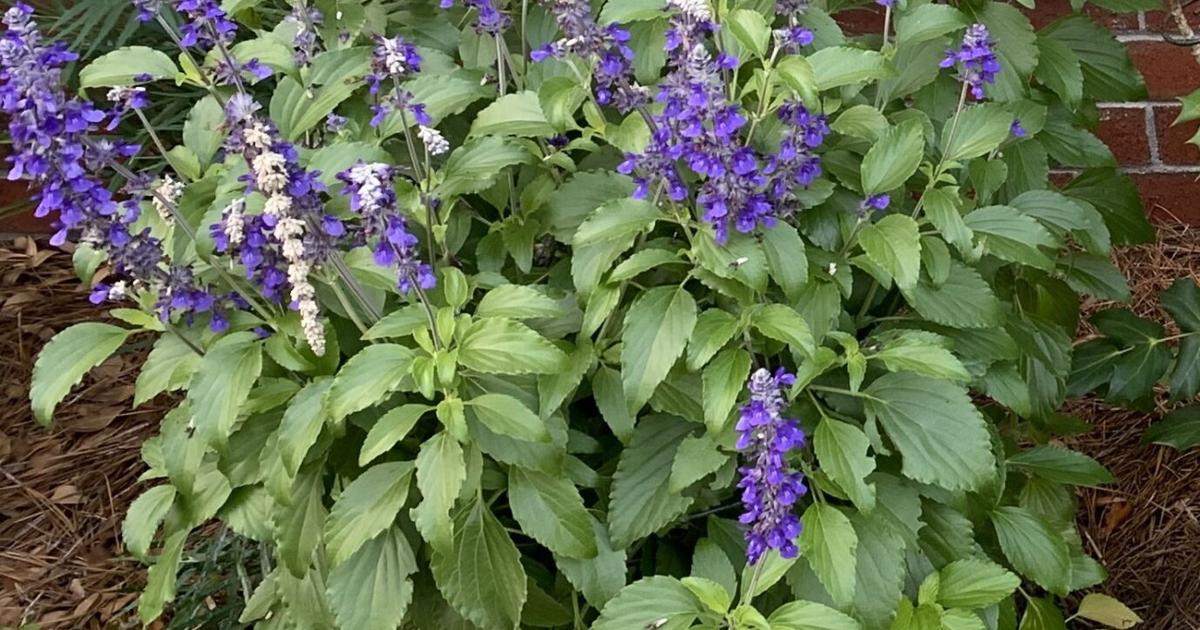
Two hybrid salvias, “Mystic Spires” and “Amistad,” are reliable perennials that, like agapanthus, will bloom for many years. They start blooming in May and often bloom until November or the first frost.
Mystic Spires has long flower stalks with many small, deep blue flowers. Amistad has large, slender, true purple (not violet) flowers on stalks. Mystic Spires grow in a dense clump, while Amistad forms in a loose clump with a tendency to spread a bit.
Although they are more tolerant of moist soil than some salvias, these cultivars still perform best in well-drained soil in raised beds. Mystic Spires typically live three to four years before the roots give out. Other useful characteristics of these two salvias include blooming in part sun and being unpalatable to deer because of their strong odor and, I assume, taste.
Red hot poker (Kniphofia) also blooms starting in May. Their narrow, grass-like leaves and tall flower stalks add texture and height to perennial beds and mixed borders. Old-fashioned red hot pokers look like flames, as the individual flowers change from scarlet to yellow from the top to the bottom of the flower heads as the flowers age.