
**Why you need pollinators for your greenhouse:**\
We all know why pollen is good for having healthy plants so im not gonna waste your time with that.\
While having an enclosed system makes temperature and humidity control super easy, getting pollen inside can be impossible if you don’t have a giant window or door that you leave open – which for obvious reasons can completely defeat the purpose of the greenhouse all together. So how do we fix this problem? Pollinators ofc! Bees, butterflies, moths, etc. (Along with ample flowers) could give that extra boost to your plants that you didn’t know you needed.
**What pollinators should you get:**\
Social vs Solitary bees:\
Your common and cute Bumble or Honey bee is definitely the first thought that comes to mind, but actually these social bees aren’t that great for pollination. If your goal isn’t to make honey or wax then you might want to stay away from social bees as they can be more aggressive and less efficient then solitary bees.\
\
Solitary Bees on the other hand make up 90% of all bees and are 2-3x better at pollination than the Honey bee. Along with the fact they are easier to take care of and less aggressive, solitary Bees are definitely the go too option. These bees just don’t get a lot of attention because they can be kind of antisocial… and ugly.\
\
Moth vs Butterfly:\
Moths are nocturnal meaning they won’t be that good at pollinating your daytime plants, along with the fact they aren’t as easy to take take of makes moths a not so good choice.\
\
Butterflies being better for daytime plants, very slightly better at pollination, and the fact they’re prettier overall makes butterflies the optimal choice (and they wont eat ur clothes).
**Keeping them alive and well:**\
Overall: These pollinators have 2 things in common, warmth, and nectar. You need to make sure your greenhouse is an average of 75°F (they thrive in temperatures ranging from 50 to 100) and you have ***plenty*** of flowers for them to feed on.
Both bees and butterflies love bright fragrant flowers some good options would be:\
• Lavender (Lavandula)\
• Butterfly Bush (Buddleja)\
• Coneflower (Echinacea)\
• Bee Balm (Monarda)\
• Marigold (Tagetes)\
• Zinnia (Zinnia elegans)\
• Phlox (Phlox paniculata)\
• Honeysuckle (Lonicera)\
• Coreopsis (Coreopsis)\
\
Bees:\
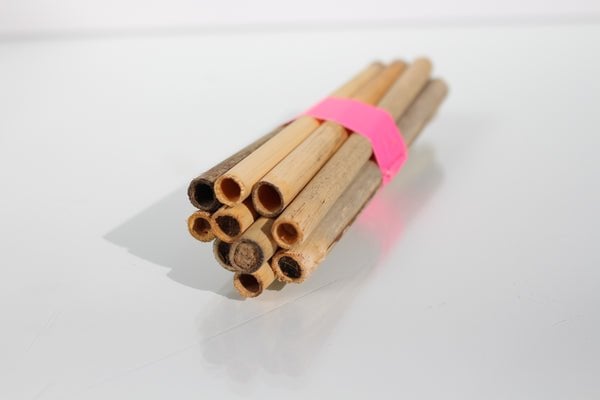
Since solitary Bees don’t live for very long they will either find holes in trees or burry themselves in the ground. You can order (or make) a bee hotel for cheap. And even order a variety pack of different bee species bees from here https://masonbeesforsale.com/collections/bees/products/package-bees
\
\
Butterflies:\
They love warm temps and need about 80° in order to fly.\
The larva stage will be the most challenging as those babies can eat a metric-fuck-ton of plant mater. Some even eat up to 10x their weight.
Same as bees you can buy or build a butterfly house for cheap.
by intoxicatingBlackAle
6 Comments
Have you done any of this yourself? You keep solitary bees in your greenhouse?
I have a feeling most greenhouses aren’t big enough to sustain a population of pollinators for long, and most greenhouse applications don’t require pollination, but it’s an interesting idea.
What exactly are you growing in the greenhouse to need pollinators?? For those of us that grow ornamentals to sell or just for pleasure, unless you are collecting the seed from those ornamentals pollination is useless. Pollinating a bloom is only useful for producing either fruit and/or seed. The blooms are going to open whether pollinated or not. Most growers don’t collect seed from their ornamentals because a) the resulting variety/color can’t be controlled; b) the labor and general headache involved make it far cheaper to purchase seed from a reputable supplier, plus the color or variety is guaranteed to be correct; c) many ornamentals as well as many fruit varieties that have been released in recent years have a patent on them. It is illegal to collect seed from them without paying a royalty.
Now, back to the pollinators. Moths are indeed great pollinators but as a greenhouse grower I speak from experience. Moths go through several growth stages, one of those being the caterpillar stage. What do caterpillars primarily eat? You guessed it! They eat plant material/leaves. In a tightly packed environment like a greenhouse, caterpillars can become quite destructive in a very short period of time. I don’t mean a leaf here or there but they will literally strip the plants bare and in many cases will eat the stem in half. So by the time they reach the moth stage you won’t have any blooms for them to pollinate. The same thing goes for the butterfly caterpillar. Think I’m exaggerating? I can assure you I have seen it happen before. So moths are NOT a welcome sight inside a greenhouse. Pollination is essential if you are growing fruits. But again, using a pollinator that also eats or has a stage of growth that eats the plant being pollinated is not an option in the greenhouse. Plus most greenhouse grown fruits are self pollinating plants. Air moving around the greenhouse or spraying water over top of the plants is enough to cause the bloom to be fertilized, thus producing the desired fruit.
Bees are extremely hard to maintain in a greenhouse. They generally don’t like to be in the greenhouse. The nights can be a bit cool for them and the days, especially in spring and summer will get too hot for them. If you keep your greenhouses at 75 degrees all the time, even at night, you had best hope you are growing plants that have the ability to produce gemstones as fruit. If you live anywhere but a warm climate your heating bill will be out of sight. It was 3 degrees F here last night. My houses were at 53 degrees. That’s a bit cooler than I usually like to keep them but more than warm enough at temps that cold. And at 53 the heating system was putting out as many btu’s as it possibly could. Also, you cannot keep the greenhouses closed up all year to keep the bees inside. You have to open up vents on warm winter days and all late spring/summer days and run exhaust fans. The really hot days will have all the bees scurrying for the exits. Also, many greenhouses are like mine, they are open to retail customers. Having bees stocked in the greenhouse is risky. Even if they are docile bees some people are afraid of them no matter what. Not only that, in the unlikely event that someone were to be stung, if they are allergic and they have a bad reaction, once it is discovered that you introduced the bees inside the house, guess what? You have one hell of a big problem on your hands. As a greenhouse owner you have to consider these things, no matter how unlikely it may be.
Another thing with bees is the fact that greenhouses deal with lots of other insects that are major pests. It’s almost impossible to avoid applying pesticides at some point or another in a greenhouse. Even many organic pesticides can be harmful to bees or other pollinators. And to be quite frank about it, many of the organic treatments for pests just aren’t effective at all. I use several organic approved treatments that are effective, although at least one of those is also toxic to bees on contact. But on occasion I have no choice but to resort to a conventional chemical for pest control.
Bumblebees don’t make good pollinators? Maybe not for certain things but I grow dahlias and roses outside in a flower garden in the summer months. The main pollinator that I see flying around is the bumblebee. They will plaster themselves in the middle of the bloom and be covered with pollen. When they fly away all parts of the bloom are coated with pollen from the bumblebees. So at least in those situations they seem to do a good job to me.
I wanted to answer this post as a greenhouse owner and expert on greenhouse operations. You see lots of things posted on here that sound good in principle but in reality aren’t possible. I’m not criticizing the OP just for the sake of criticism. I want anyone reading this though to see the viewpoint of a commercial greenhouse owner who has experienced a lot of different things in the greenhouse business. And I’m not a big industrial sized greenhouse operation. It’s a small family business operated by my mother and myself and originally started by my grandfather back in 1949. My mom and dad and my uncle were the next generation to take over and now I am the third. Anyway, I hope this has been some useful information for everyone. Feel free to comment on anything I have said or ask any questions.
Take care everyone.
Speaking as someone who grows mainly succulents and cacti in my indoor space (and would love to get my own greenhouse but would need to move beforehand), I wouldn’t ever want to purposefully introduce pollinators into my greenhouse. Most people who grow cacti and succulents try to avoid hybrids as they tend not to be nearly as valuable as true species. Just another perspective.
This is a whole lot more work than taking a paintbrush and cross pollinating. Or bringing a fan in or cross breeze. Any way you slice it if you are bringing in pollinators you are also allowing conditions for pest species. Or you are an open system and same rule applies. Certain most people growing in greenhouses are not growing species that require the mechanical pollinators. Maybe figs. Good luck finding fig wasps, they just show up.
I for one quite enjoyed your post. I feel like most people here are posting the challenges involved without seeing the upsides.