
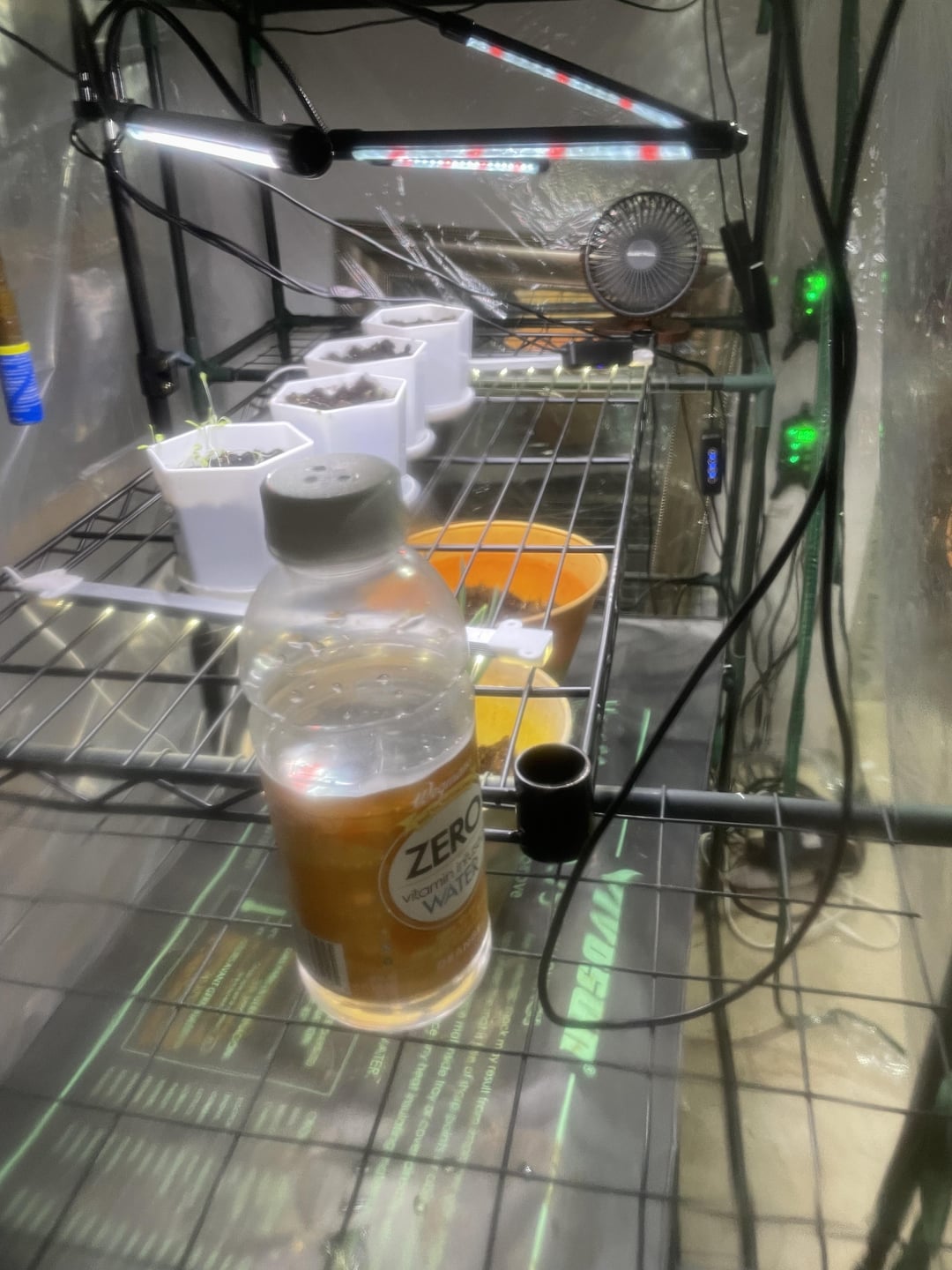
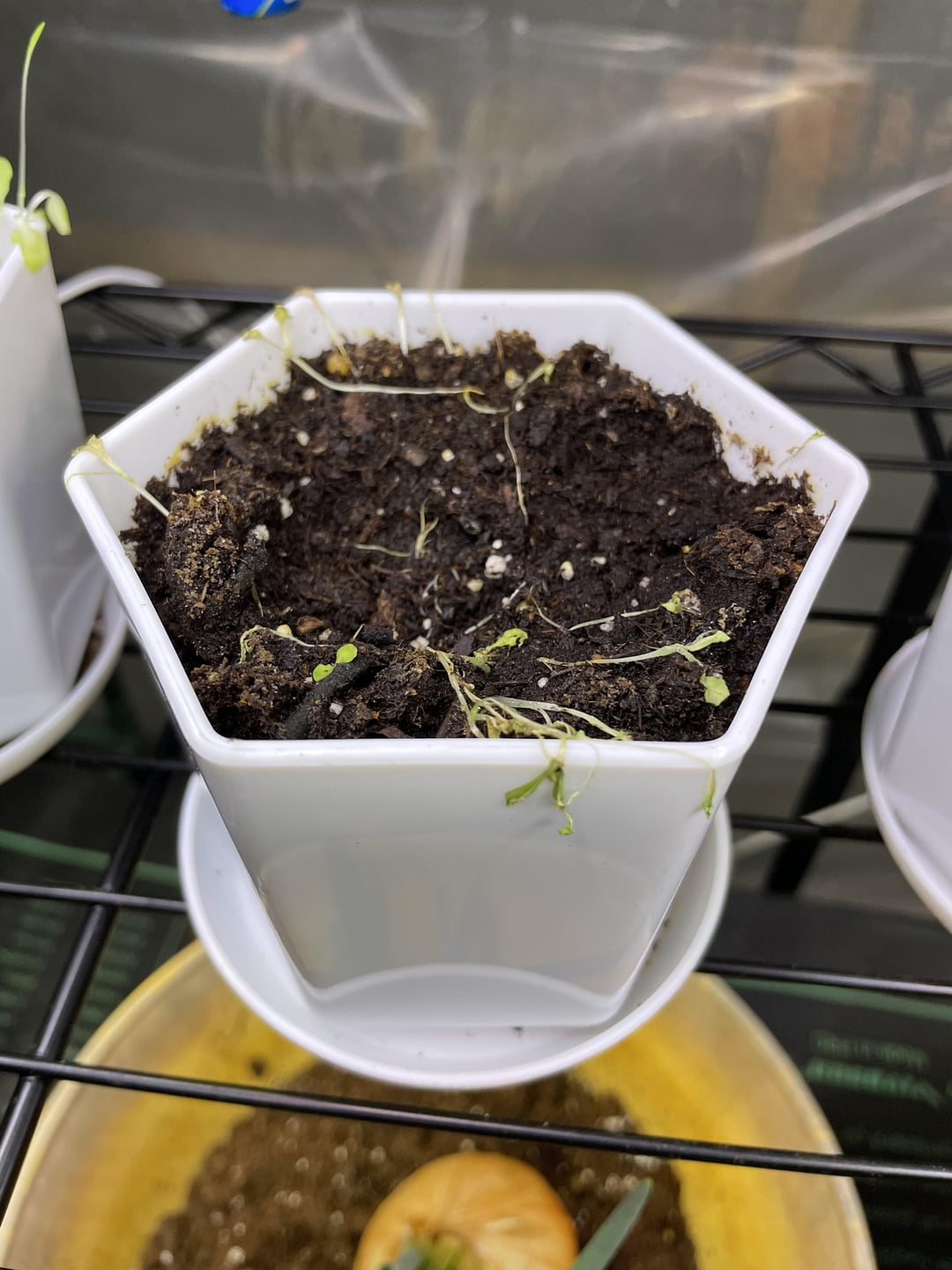
Please help! This is my third go around at “basement gardening”, I have a greenhouse in my basement with a bunch of grow lights two heat mats and a fan. I continue to get the seeds to this point and then they die out. What is causing my plants to keep dying. Please help.
by AgentlemanFromnj
4 Comments
My guess would be too low light intensity. Basing this on the “stretch” in the plants. Would be helpful to know what you’re planting though.
More lights for sure
How do you have a greenhouse in your basement? Where does the sun penetrate?
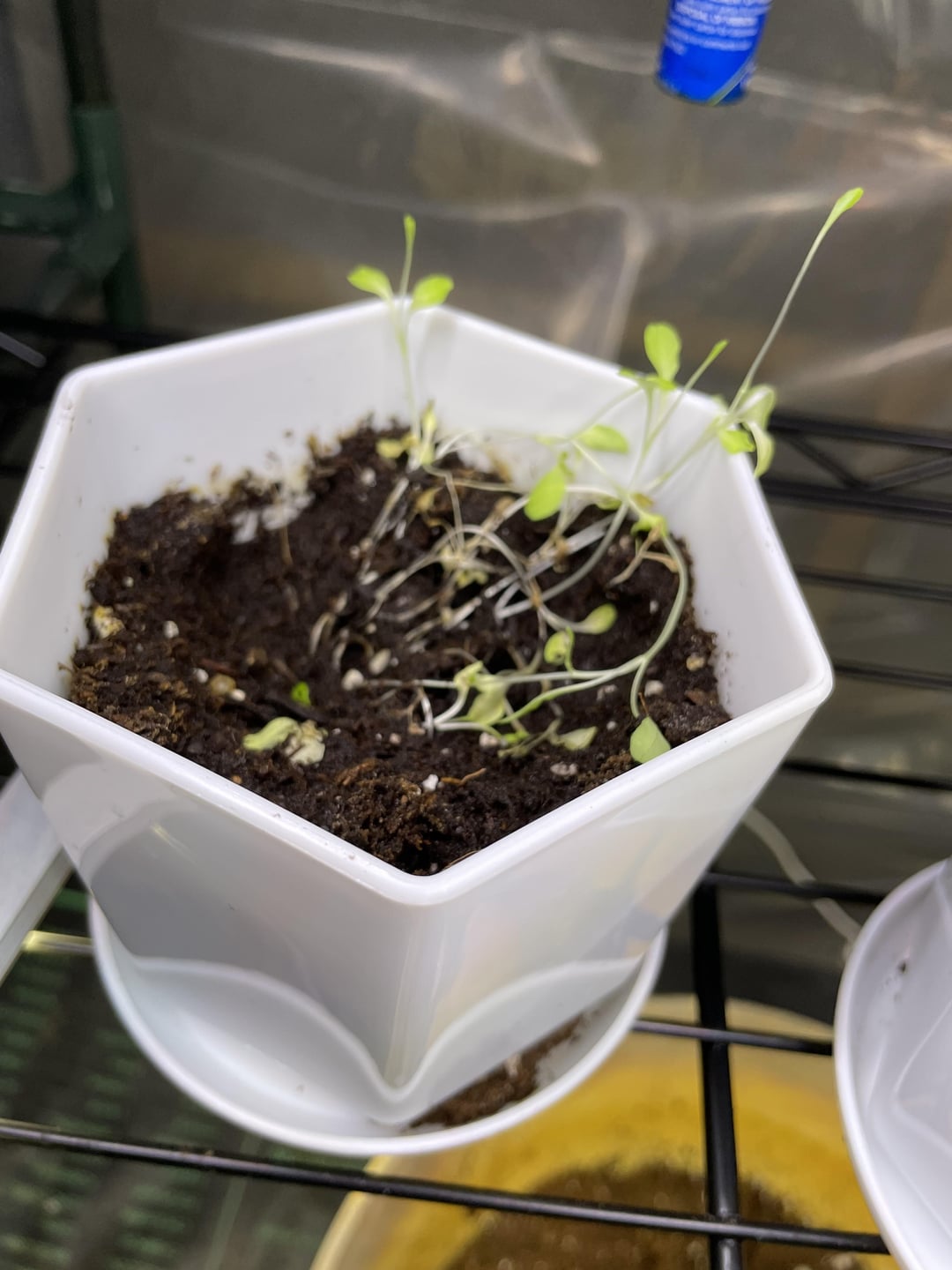
From the stringiness/legginess of the plants and the fact that they are leaning hard to the side towards the nearest light, the first issue is likely insufficient lighting, and possibly lighting of a less than ideal spectrum for foliage growth.
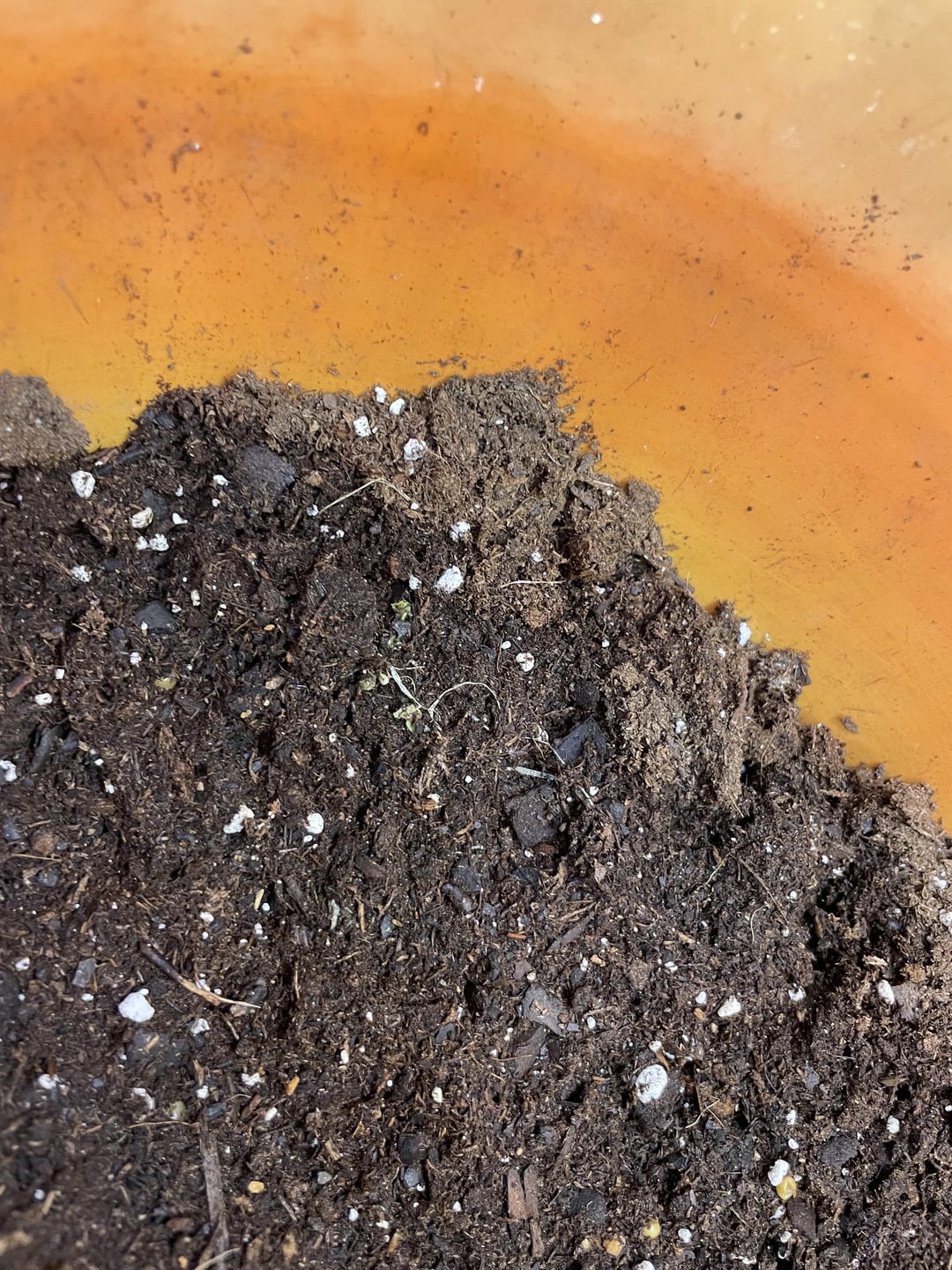
Secondly, it looks as though the seedlings are dehydrated, you don’t have enough humidity in the greenhouse, and the first photo in the orange container supports that. The small area of light brown dried soil above the soil line on the edge tells me that the air is dry enough that it is leaching the moisture from the soil faster than it can wick up from the container. This may be aggravated by excessive use of the fan in the background. Seedlings don’t need the air to be circulated while they’re sprouting and growing, in fact they often do well in a covered container to help them get established.
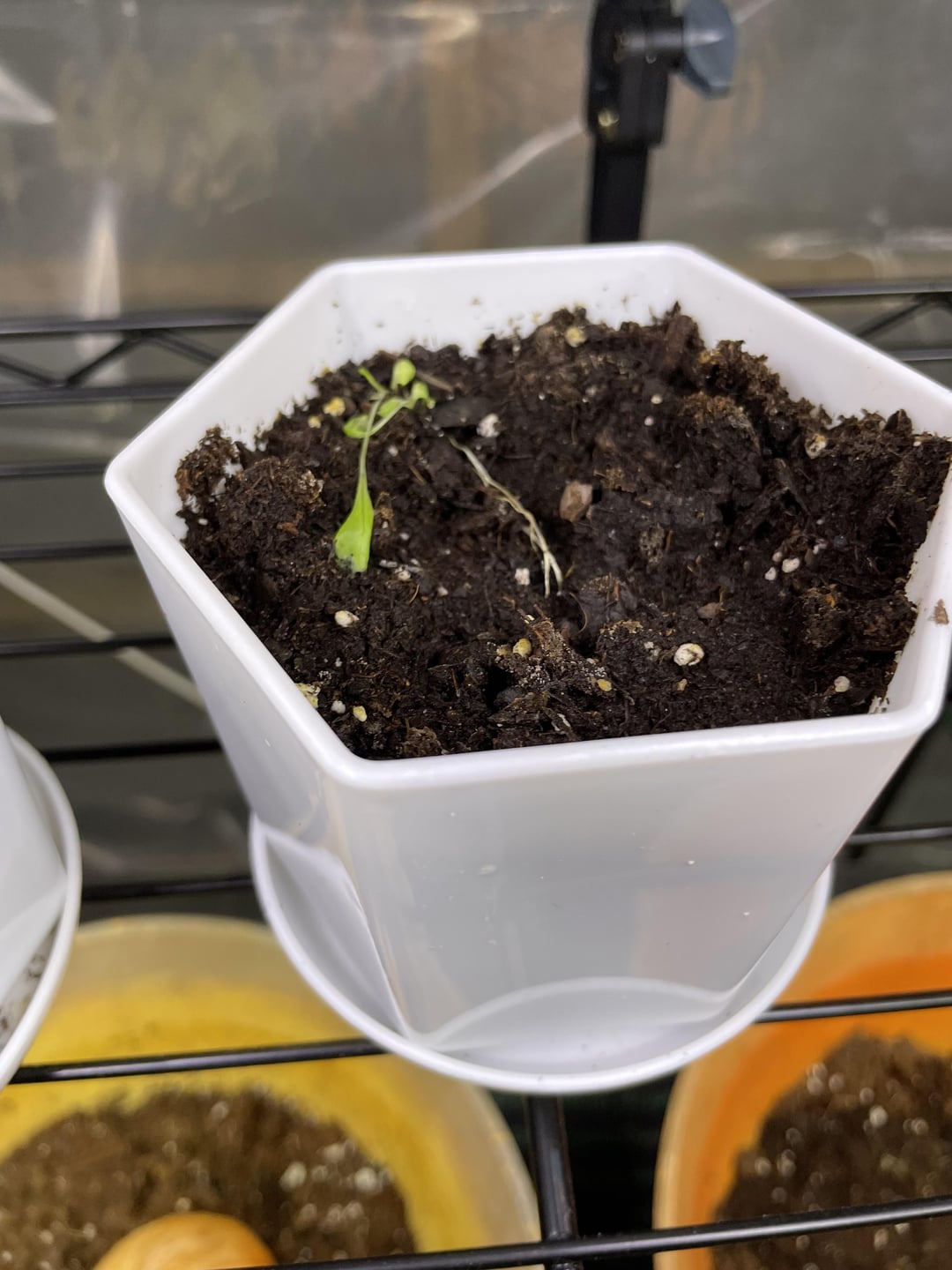
The fourth and especially the fifth photo show me that you have some issues with over-watering and excess water retention in the soil, resulting in poor drainage. The soil you have provided appears to be very heavy in organic materials. While heavy organic material and high moisture content can be beneficial for certain plants that evolved to live near or in water features such as bogs, swamps, wetlands, etc it is not an ideal growing environment for many other plants or seedlings in particular. The combination of heavy organic matter and excess moisture promotes the growth of a wide variety of pathogens, microorganisms, fungi and other decomposers that can harm or outright kill seedlings. In your fifth photo, at about 10:00 on the pot you can actually see the yellow stripe of a developing leg of a physarum polycephalum plasmodial slime mold. 🧫 (That yellow looking goo right on the edge of the soil, growing slightly up the pot.)
The heavy waterlogged soil also limits the growth of roots and significantly reduces amount of oxygen available to the plants’ existing roots, which can suffocate the plant and lead to a quick death for seedlings.
These are just the obvious things I can to deduce from your photos, there may be other issues.
—
Okay, so what can you do about this?
💡Lighting- Add lighting or make better use of the existing lighting so that your plants aren’t straining towards the light. They should have a light source directly above them, which will promote a strong upright growth posture for the plant, which will keep it healthy throughout it’s life. If your plants start to grow leggy again, if they’re look like they’re stretching like the plants shown in your photo, then they are in desperate need of more light. Direct LED light is fine for seedlings, but if you decide to use an incandescent bulb to help them you will need to have something translucent in between them and the light to limit infrared heat from the bulb and diffuse the light.
💧💨Humidity- Don’t use the fan while the seedlings are growing. Maintain humidity for the seedlings by either putting them into a smaller container where they can maintain high humidity, or put a cool mist humidifier in the greenhouse to raise humidity periodically. After the plants have started producing their secondary leaves and are starting to look like actual plants, you can turn the fan back on to oscillate at low speed to help air circulation and stimulate the plants to strengthen their stems.
🚱🌊Drainage/Over watering- you need to have much better drainage in your soil. You can use a similar heavy organic soil, but you need to integrate a significant amount of non-organic material that does not hold water. The easiest material to do this is going to be sand, or very fine grave and/or perlite. For the soil that you have in the your photos I would thoroughly mix in at least 1/3 of it’s volume of sand, fine gravel, perlite, etc.
This will allow the plants a good rooting media, will allow proper drainage of the soil and maintain the roots access to oxygen.
If you are attempting to simply start a bunch of seedlings to then later manually transplant into pots, you can even start seedlings in a pan of about 2″/50mm of wet sand. The seedlings initially have all of the food they need to sprout contained in their seed, and once you have an obviously growing and upright viable plant you can use a butter knife or a very small spoon to very carefully and gently lift the plant up out of the sand from below to place into another container of soil. You should never grasp or hold the stem of a seedling, as the stem is extremely delicate to crushing damage. If you need to stabilize the plant for some reason, you want to gently hold one of the cotyledon(seed leaf) leaves to help you place the seedling. 🌱
Hope that helps, good luck! 👍