
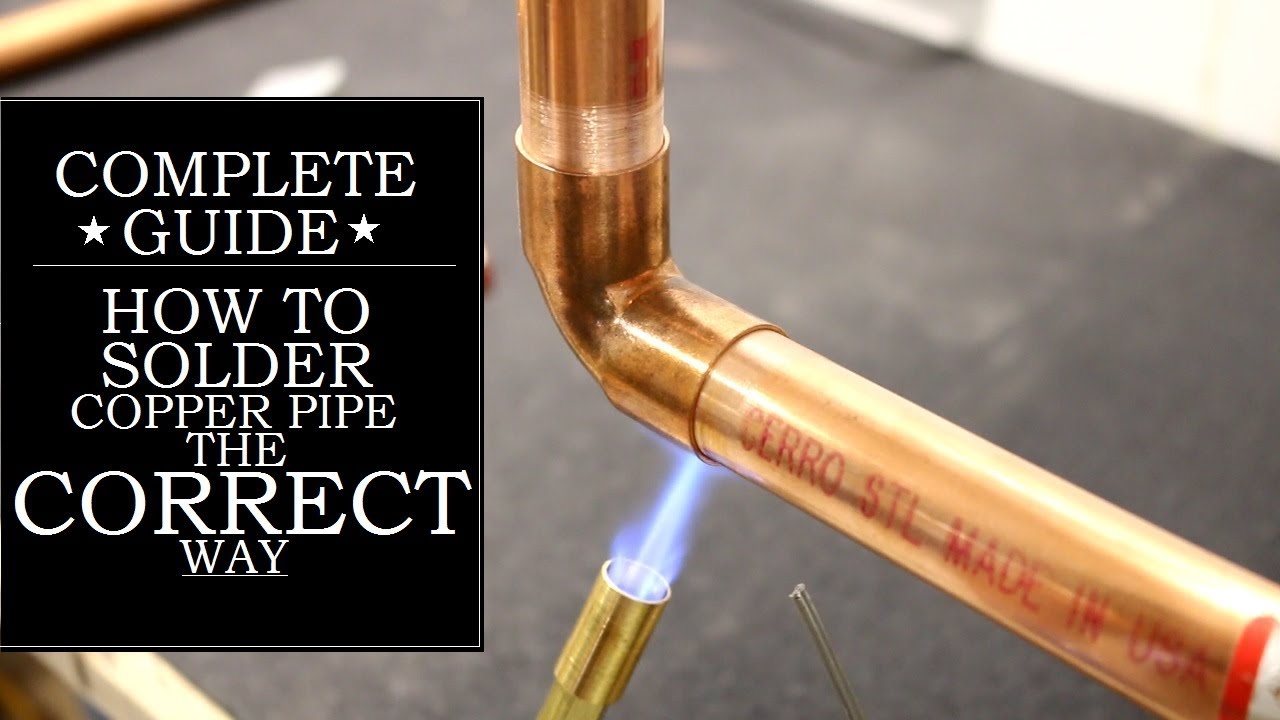
This video will explain to you in details how to solder copper the CORRECT way so you can do it yourself and not have to pay an expensive plumber and save TONS OF $$$$!
Here are the tools and materials I used in this video:
Pencil Torch: https://amzn.to/2U3OTaa
Fitting Wire Brush 1/2″: https://amzn.to/2BOlNVc
Fitting Wire Brush 3/4″: https://amzn.to/2U33enp
Propane gas(Blue bottle): https://amzn.to/2BOhnh7
Propene gas(Yellow bottle): https://amzn.to/2BPcdBl
Lead-free flux(water soluble): https://amzn.to/2XjaYn9
Flux brushes: https://amzn.to/2T8ROBc
Lead-free solder: https://amzn.to/2EoqSFb
Pencil reamer: https://amzn.to/2tBuhKW
All-in-one deburring tool: https://amzn.to/3B9dLUv
DISCLAIMER: Got2Learn is NOT responsible for any damage done to a property of which the plumbing wasn’t done by a professional, I do not recommend doing your own plumbing if you are unsure about what you are doing, always hire a LICENSED contractor when doing any type of plumbing so you can be covered by insurances if something does happen, these videos are for entertainment purposes only!
36 Comments
Help support the channel here: http://www.patreon.com/got2learn
Good
EASY AND TO THE POINT. THANKS YOU!
Awesome thanksn
Classic. Detailed. Complete. To-the-point. No big FACE in the camera. Kudos!
what about deburring inside and out? it's not shown.
Fantastic vid, everything you need no filler.
Great video! Thank you.
how would you repair pin-holes in copper tubing (I am trying to repair a heat exchanger in a tankless water heater)
Clear and well explained
Good work guys
I don't have much experience at all with sweating copper! But I'm trying to get! More practice in this! But I do have experience with lighting a torch like With cutting torches! And personally I wouldn't use a bic lighter! Use a Zippo! Because Bic lighters can explode! But I enjoyed the video!
Short and sweet! Thanks for sharing.
Your instructions are the best! I started with your shark bite tutorials and now I’m getting into solder copper videos. Quick question, I want to solder some pipes from a vice to be later installed to an existing line in the wall. Is there a particular wait time for the solder to be cooled and ready to connect to the existing line? Or should I just wait for the solder to become dull and it’s ready to go?
Thanks. I’m finally tackling this problem I’ve been putting off. Only had one pinhole leak. I took it apart though cuz I forgot that reapplication of flux trick😊
Over the years, I have done quite a bit of successful copper pipe replacement in my house. Your tip to heat the opposite side and the bottom was an Ah-Ha moment for me!
An old HVAC guy showed me that to get rid of any residual water in the pipe, drill a small hole in the bottom of the pipe a couple of inches from the joint. Solder the joint, then just before you leave, solder up the hole.
Great job!
I tried this and as soon as I applied heat, the pipes caught fire and burned black smoke. I think one end is called a "shark bite" or something like th…
Hahaha no I didn't! I just soldered/ repaired a spigot back together that I broke off . Thanks to your clear and concise video. Carry on and thanks again
Don’t ever use a lighter to light a torch never
great tip.
Can you do a video on explaining center to center C-C copper pipe measurements . Also measuring center to end C-E copper pipe measurements. Thanks!
Great Video!! Natural teacher!!
Great video! Thank you.
Excellent!
I know that my project was pretty simple because everything was new, but after watching this, I sweated 32 connections in 3/4” copper with no leaks!
I only had two that I had to re-flux and re-heat, and I only got one blister from touching a hot pipe.
Thanks for a killer tutorial!!!!!
Simply the best vid out there if you are an experienced handyman and just need a reminder how to do it. Many thanks! But, don't forget to deburr if you cut your pipe!!!!
Thanks man I had to refresh my memory, great video
Damn, bro… I have always sucked at soldering and I just couldn’t ever figure out why… But I swear, I followed all these steps and ended up with the best looking solder I have ever seen! Can’t thank you enough! 👍🏼
Thanks homie
Heat doesn't rise.. hot air rises..
This has to be THEE most helpful, informative video I've watched on the subject matter! Great video!!!
Very well explained and easy to follow. Good job!
He said gravity 😂
I've been watching guys do this all day here on Youtube and didn't understand how exactly they were able to complete their projects with what they were doing. It seemed very strange to me, like their work should be leaking but all this science and explanation of this process allows me to understand why they did what they did and how they were successful.
Thanks for all the insight!
Question on torch tips..soldering 1" copper pipe…when to use #4 'standard" low temp torch tip vs. #4 high temp torch tip with cylindrical end?
Great video, thank you. I want to clear up one common misconception: heat rises. Your advice to start heating the bottom of the joint so the solder doesn’t drip off is correct, but… Heat (energy) doesn’t rise, hot air rises relative to cooler air because it is less dense and therefore more buoyant, but heat conduction through copper is independent of orientation. There is a very slight effect from the warm air at the bottom rising up and potentially heating the copper above it, but this effect is inconsequential in this application.