
Check out my amazon storefront for tools I commonly use in my shop: https://www.amazon.com/shop/woodcraftbysuman
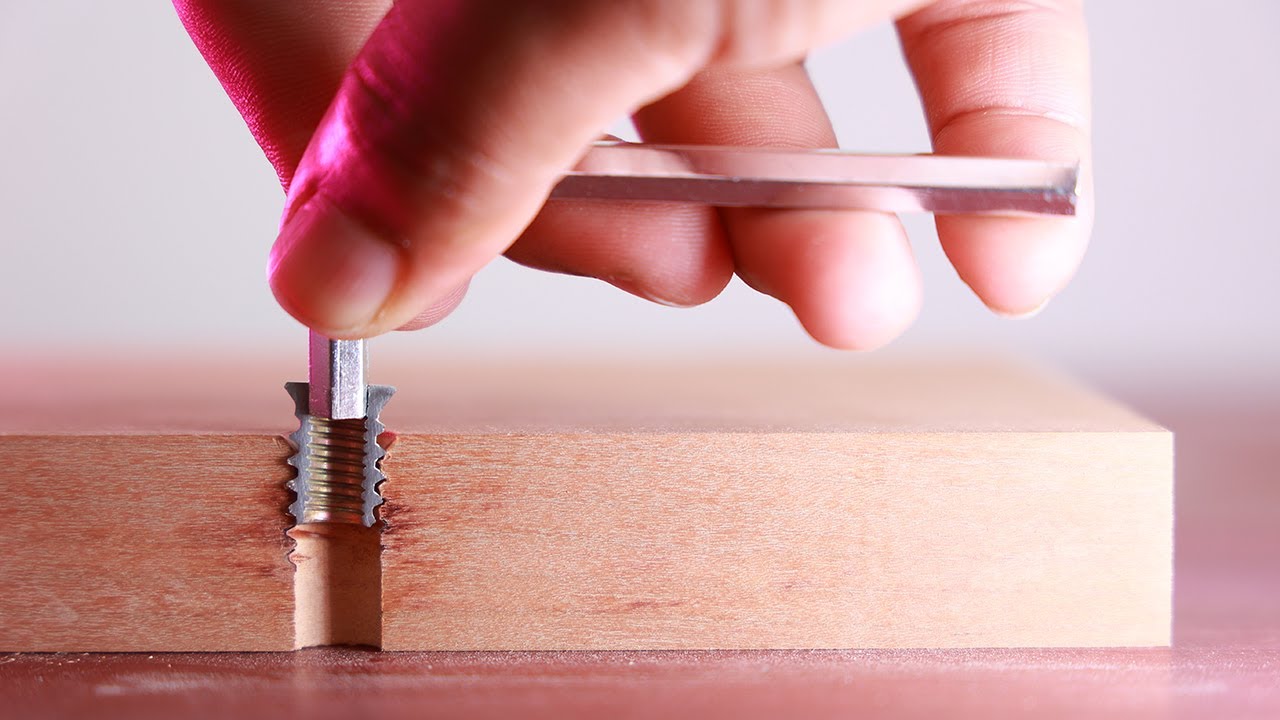
Metal tap used in this video: https://amzn.to/3j1yg01
(Its cheaper now at $3.33)
_________________________________________________________
Below are links of products I use and recommend wholeheartedly. If you’re in the market for any of these products, please consider using the (affiliate) links below.
My favorite [small] woodworking tools:
General Saw – Japanese Gyokucho Pull Saw – https://amzn.to/3x30bhW
Dovetail Saw – Japanese Dozuki Pull Saw – https://amzn.to/3v5imlL
Japanese Plane- Kanna (65mm)- https://amzn.to/3irvyi0
Japanese Plane – Kanna (40mm) – https://amzn.to/3w3WPLA
Chisel hammer – Japanese Chisel Hammer- https://amzn.to/3z8TzjT
Mallet – Wood Is Good Mallet – https://amzn.to/34ViZUq
Square Ruler – Starrett Combination Square (steel head) – https://amzn.to/3imGX2N
Marking Ruler – Incra Precision T-Rule – https://amzn.to/3cnrQ59
Caliper – iGaging 6″ Caliper – https://amzn.to/3pxRyJM
Mechanical Pencil – Rotring 600 – https://amzn.to/3x6jJ53
47 Comments
Oh Will. Clickbait title. Unsubscribed.
This small screw insert has the funniest name in Swedish, "rampamuff".
looks like the wood thread had significantly more thread engagement with the bolt. I would like to see the test with the same length of thread between the two, looks like about 1/2 inch
Interesting result.. Although if you lubricated the bolt, would the threaded inserts have made the 100 cycles? Metal on metal is never a good idea. I will keep using the inserts simply because they look more professional to the customer.
Very surprising
I tap the wood for my shop jigs, mostly because I am cheap, and it is good enough. I will start adding CA glue to the threads. Thanks.
Try using the insert on the opposite side of the wood. Sink it in and plug the hole. The bolt with a washer holds tighter than a bulldog's death grip
To be honest, I had never really considered building items with the intent of disassembly and reassembly. I'm sure this information will come in handy at some point. The only metal inserts I had used before are the larger, industrial type that hammer into place. These were used to provide customization to trailers for tie down or bolt down locations for motorcycles.
At least now I have a better understanding of why you were destroying so many things on Instagram. lol
Okay, Now I think you should do two more test cases, to wit: 1) thread the hole for the threaded insert before putting it in, and 2) drill through the piece and put the threaded insert in the bottom.
This test is slightly misleading… Cherry is among the hardest of woods, period. Not even worth milling it once it has sat for a few years, as the band saw blades will need sharpened every cut or two. If you tested other wood varieties you would see a pretty divergent result when saying "wood threads". Especially in the durability of the crispness of the threads.
A couple of comments mentioned "T" nuts. I have used T nuts for years. Almost impossible to break a connection. They put the steel threads at the opposite side of the fastener so the bolt "squeezes" the material from back to front. They can be countersink to conceal, however the bolt can extend past the surface unless cut to length less than the material thickness. They use common size drills to install.
Fascinating! Thanks for the tests, dude!
I guess we should leave those inserts for soft woods and perhaps MDF.
Oh, BTW, there are some taps that are drill bits as well, so you can make the hole and thread them at once. They work amazingly for wood!
Stay safe there with your family! 🖖😊
Good video. FYI, stainless still can be a downgrade if corrosion resistance is not needed.
I'm curious if the wood taped threads could be repaired with some wood glue and clamps
Very interesting. I generally work with substandard materials (as compared to quality hard woods) and I'll stick with threaded inserts there; but, when I work with hardwoods in the future I will remember this test.
I've used threaded inserts for years, I have them in 3 sizes. They work fine for me, but when/if I run out I'll give your idea a try.
The inserts should perform better than that! I wonder if the holes were a bit oversize, causing the outer rim of the threads to bear the stress…Just a thought!
You just blew my mind. We use inserts on every single build for our threaded feet. 😮
I just finished building a full size arcade machine out of 3/4" MDF using inserts. I can't see how I would have done it without inserts and still kept it mobile. I think for MDF or softer materials inserts are really the only way to go as I bet threading the MDF would have crumbled easily. For wood though I might go without the inserts in the future. Interesting test results that I didn't expect.
Technically the wrong test. Did you notice your wood threads destroy your project when they pull out in a case of overload and the inserts sacrifice themselves to keep in mostly intact?
Was the length of the metal inserts and the screw lengths the same?
correct drillbit size for 1/4 20 tap is a #7 drillbit
try epoxy
the only thing lacking is trying different styles of insert. thread pitch as well as thread depth can make a big difference. especially with a self tapping insert.
Now this is great stuff! Subbed!
Great video, thanks! What happens when you tap the hole for the insert, giving it wooden threads for a tighter stronger fit? Best of both worlds, other than time?
Awesome video and experimenting. Thank you.
These inserts are made for particleboard and work really well. I use them in jigs all the time and have been using them in jigs for years. I also do a lot of 3D printed parts and used to tap the holes. I now use these fittings all the time and I can tell you for a fact they work well. I will always drill and tap where possible myself as it is neater and simpler but a lot of the modern boards are terrible quality in the first place.
Great video though and shows that the old woodworkers that used wooden threads knew a fair bit about the stuff they were working with.
That was a very interesting experiment. Thanks
Good video
Awesome video! Thanks for sharing!
What about plywood or other sheet material? I tend to think the inserts would have an edge there.
Nice work. Two more test suggestions:
End grain application. Plenty of knock down furniture uses a butt joint.
Somewhat oversize the wood thread hole and add CA and baking soda in layers and then retap to bolt size. I think this will be the strongest but only needed for the rare high stress joints or to repair stripped out inserts that came with the furniture.
Great. Idea!
How about which kind of glue works best to improve these same two ways of fastening?
So would anyone here recommend using the wood thread, to lock in c-channel under a table (which keeps a table flat)?
Skipping metal insert placement would save me time and money!
Project Farm will be proud of you, lol. Good tests. One of the recommendations for further related test, try this with particle or mdf boards (like IKEA). Though I doubt you can even tap the board, just insert test maybe?
Because that’s the best way I know of to attach turned legs
A good practical demonstration.
I would note though that at 8.32 it is clear that you have far more thread in the direct wood method than with the inserts. The thread in the wood of the insert is the important factor not the bolt thread in the insert. Longer inserts would have reversed the findings. The alternative spiral toothed thread inserts with CA glue would also be better. Better still would be a hammer in insert from the bottom or simply put the inserts you have used in the bottom of the wood, of course this is not possible in a blind hole. But the big secret is never over tighten screws. Being a big strong hero macho man ruins things. I often cringe watching some youtubers with screws and driver drills, screwdrivers and spanners.
I use 6mm inserts in my workbench to temporarily attach jigs. The inserts are under the bench top layer on a 3 layer bench the other 2 layers having 20mm access holes, not on the top.
I agree that the use of CA glue is ideal for improving the strength of threads and has more than stick together uses.
I would of liked to see you use the rampa threaded inserts along with their bolts. Those are the only ones I use bc the rest of crap and these ones I haven’t had any problems with. Please try those kind and maybe do a short second video with those added to all the other ones
Try this test with a T-nut
Good stuff!
Awesome video
Very interesting topic! Would be interesting to see these tests with presswood instead of hard wood 🤔 subscribed!
Very good test!
Something else to factor in: I used wood tap threads for a couple of small jigs and found wood swelling / contraction to be an issue long term for wooden threads getting frequent use.
I’d like to see the difference between inserts made from zinc and ones machined from steel. The wood threads on the steel inserts are sharper and deeper than the zinc inserts’ wood threads. Does it make a strength difference?
SPOT OM! GREAT INFO …………………………………….