
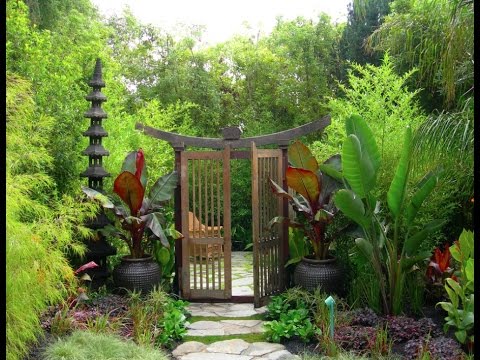
Japanese gardens combine the basic elements of plants, water, and rocks with simple, clean lines to create a tranquil retreat. Learn how to make your own Zen garden.
Make an Entrance
Use a simple bamboo fence to block views of the world outside your Japanese garden. Make the entrance to your garden clear with a gate and attractive arbor.
Create Mystery
A key element in Japanese garden style is creating vignettes that can’t be viewed all at once. Here a winding path leads your eye past the stone pagoda and beckons exploration of what’s around the next corner.
Most Japanese gardens rely on subtle differences in color and texture. Here conifers provide soothing shades of green for year-round interest. Some echo the pyramidal form of the pagoda while others frame the feature with their low, spreading branches.
Encourage Moss
Moss makes the perfect groundcover in moist shady areas of the Japanese garden. Because moss doesn’t tolerate foot traffic well, place stone steppers among the moss to allow passage without damage to the cushiony surface.
Make a Private Pavilion
Create an intimate space in your Japanese garden with a teahouse or pavilion made of bamboo or wood. Use such a structure for entertaining or for viewing the serene landscape.
Try a Pagoda Pillar
Stone lanterns shaped as pagodas are staples of Japanese gardens. They can echo the roofline of a teahouse or covered gate entries in addition to providing a charming glow in the evening garden.
Add Textural Contrast
Shaded sections of the Japanese garden rely on subtle color contrast and bold textural differences to create interest. Here chartreuse and green hostas surround the base of a tree while variegated hakone grass softens the edge of the bed.
Create Structure from Plants
Trees in a Japanese garden often are pruned into shapes that reveal their architectural form. This Japanese maple shows its zigzag branching pattern. Arching branches reach over the contrasting groundcover and reflect in a nearby pool of water.
Protect Yourself from Evil Spirits
Legend has it that a zigzag bridge such as this one will protect you from evil spirits in the Japanese garden. The myth says that evil spirits can only travel in a straight line, so the bridge traps them, allowing you to escape to safety.
Provide an Island Getaway
A small island in the middle of this pond creates the illusion of a secluded Japanese garden retreat, even though the arch of the bridge is too steep to safely walk over. With a larger space and longer span on the bridge, you could access the island.
Time for Reflection
This small reflecting pool has a decidedly Japanese garden flavor. From the glass Japanese fishing float on its surface to the bamboo fountain, Japanese bloodgrass, stone pagoda lantern, and moss-covered rocks surrounding the pond, all elements blend in Asian style.
Feed the Fish
Colorful koi and goldfish bring hours of enjoyment to the Japanese garden. Train your fish to come on command for feeding time. Goldfish are hardier than koi, but both types may need to be overwintered indoors in cold climates.
Go with the Flow
The sound of moving water from waterfalls adds to the soothing nature of Japanese gardens. This stream is punctuated by two waterfalls and ponds. Papyrus, ornamental grasses, and groundcovers bring life to the stream edge.
Deter Deer Naturally
This clever bamboo device is designed to frighten deer away from the Japanese garden. The upper bamboo tube drips water into the larger, lower tube. When the tube fills, the weight of the water causes it to clunk against a bamboo mat resting on a stone. The sudden sound startles deer and reportedly scares them away.
Braced with Bamboo
Bamboo has many uses in Japanese gardens: It’s grown as an ornamental plant, and it serves as an important structural component. This bamboo fence uses bamboo shoots as rails and smaller ones tied into latticework to follow the curve of the gravel path inlaid with steppingstones.
Graceful Gravel Garden
Raked gravel surrounding stones represents ripples of waves around islands. This type of Zen or Japanese garden is designed for contemplative thought and is super-easy to maintain.
Artful Additions
Personal touches in the Japanese garden should have a connection to nature. These polished egg-shape stones arranged in a bowl are a good example. Backed by the crimson foliage of a Japanese maple, they take on a sculptural quality.
Stone Streambed
Japanese gardens usually utilize representation. Here, tumbled gray river rocks of uniform size have been carefully arranged in this meandering dry streambed to create the illusion of flowing water. Ferns and evergreens line the stream, softening its “shoreline.”
12 Comments
Good!
lovely i wish i had one like this
Native plants help the environment. See my documentary film “Diane’s Prairie” at https://www.youtube.com/watch?v=BAGQ7sppeL4
nice vid with nice music to boot winner winner
ีผีผีีผเแีีป
precioso!!!
美しい✨
Nice
What is the rock substance that is used to keep ground moist and weeds down, round plants
Good video, wrong music
A lot of stollen photos in this video.
That tea house or structure at around :43, on the left, I have admired from other sources and would love to see it more closely. Do you have any information on it? Thsnks so much.