
Back in the day, Eugene T. Moore Sr.’s farm in Lake City, S.C., was abuzz with tractors,
the crops planted within a stone’s throw of the farmhouse back door. His eldest granddaughter,
Darla Moore, remembers the pungent aroma of tobacco leaves in the drying shed and
the steady drone of cotton and soybean harvesters at summer’s end.
Something was always in motion at the farm, and Darla liked being right in the middle
of it. Though her grandfather and father have since passed, the thousand-acre Moore
farm, in the family since the 1790s, is still under cultivation. But something extraordinary
has happened to a 65-acre parcel surrounding the farmhouse — a horticultural metamorphosis
that makes the transformation of a caterpillar to butterfly seem almost trifling by
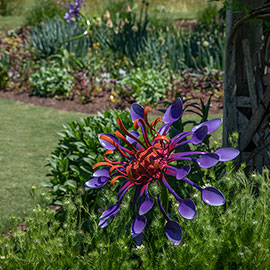
comparison. It began with a few flowers — and, as you might guess, Darla Moore was
in the middle of it.
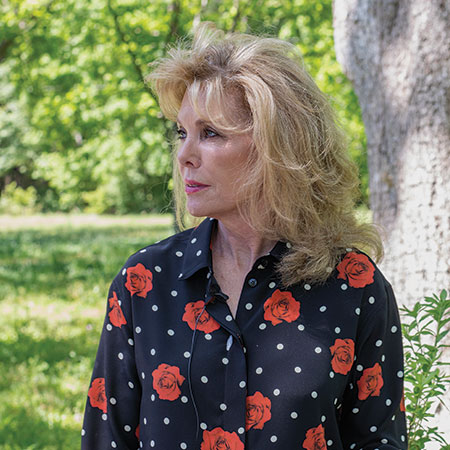
Carolina alumna Darla Moore didn’t start out with the idea of creating a bonafide
botanical garden. But — 65 manicured acres later — the Moore Farms Botanical Garden
is a hidden gem in the state’s Pee Dee region.
“I never said, ‘Let’s start a botanical garden,’ ” says Moore, a 1975 University of
South Carolina graduate and namesake of the university’s business school. “This was
all organic, all iterative.”
She’s referring to a part of the property that’s become a lush paradise of flowering
plants, trees and ornamental shrubs, an oasis sculpted with water features and winding
pathways that seem to have sprung to life from the pages of Southern Living. The clichés
— hidden gem, secret garden, diamond in the rough — barely begin to describe the Moore
Farms Botanical Garden, which is currently open to the public on select days and by
appointment.
Though not actually part of the garden, the Moore farmhouse was the epicenter of the
garden’s development.
“Through the years, I started coming back here more frequently, and when my father
became ill, that made me come back even more often,” she says. “I had this home, my
family’s homeplace, and I started to add to it, plant bushes and landscape.”
Jenks Farmer, a plantsman, helped give direction to Moore’s newfound gardening interest
and the gardens began to grow — a lot. Moore and Farmer would take a little more of
the farm each year and say, “Why don’t we add an orchard here or another flower bed
there?” “We let the land inform what we did with it,” she explains. “It was never,
‘OK, we’re going to take 60 acres and design a world-class botanical garden and go
find all the plants we need to fill it up.’ It was a gradual thing.”
The tipping point came as the staff required to maintain the ever-expanding garden
increased. Moore made the decision to put the garden, the farmland and the forests
surrounding it in a nonprofit organization, funded by the Darla Moore Foundation.
Comments are closed.