

1
Make a note of the date.
 Westend61//Getty Images
Keeping a gardening notebook will help you with planning and selection of tomato varieties in the future. “If you have an abundance of green tomatoes late in the season, make a note that this variety is not ideal for your climate,” says Muri. Next time, choose a type that will ripen sooner (days to maturity should be listed on the plant tag or description).
2
Harvest every tomato that’s starting to turn.
 Mykhailo Hrytsiv / 500px//Getty Images
Pick every fruit that has even the slightest blush of color. Then place these at room temperature on the counter (not on a windowsill and never in the fridge) to allow them to ripen naturally. They will turn from green to ripe in a matter of days to weeks, says Hyman.
Advertisement – Continue Reading Below
3
Wrap them in newspaper.
 Barbara Rich//Getty Images
Pick all of the remaining green, firm tomatoes. Wrap each one lightly in a section of newspaper, and place them in a box in your basement or somewhere out of direct sunlight where it will remain cool. “The tomatoes will slowly ripen over the next several weeks to months,” says Muri. “The main objective is to keep them wrapped in the newspaper so they are in complete darkness, and it also gives them a buffer to the changing humidity from the outside environment.”
4
Check the stored tomatoes regularly.
 Catherine McQueen//Getty Images
Discard any that become squishy or decayed. The tomatoes will last a long time, which might be two weeks or it might be two months. “I know it seems unlikely but I have had tomatoes last to December doing it this way, just sitting in the basement,” says Muri.
Advertisement – Continue Reading Below
5
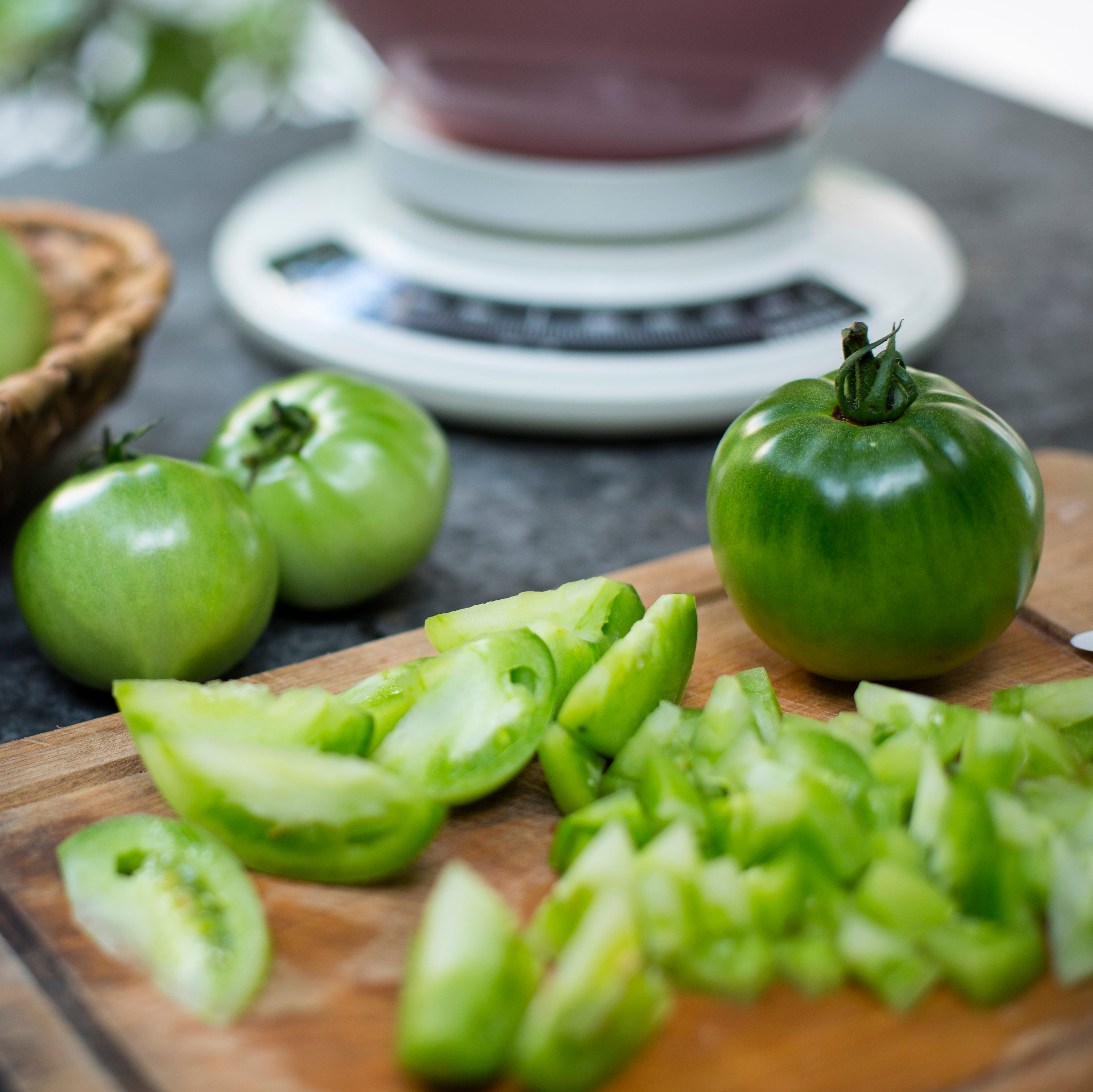
Make relish or salsa.
 Kathrin Ziegler//Getty Images
Green tomatoes make a great relish or salsa that can be used on steak, burgers, potatoes or rice. “One of my favorite things to do with the green tomatoes is to ferment them. Fermentation is an ancient method of preserving food well into the winter time,” says Muri.
6
Or make fried green tomatoes.
 rudisill//Getty Images
For best flavor, Hyman says choose green tomatoes that have seeds that are not soft or easily sliced by the knife, but rather those that have seeds that are hard and slide along the knife’s edge when the tomato is sliced through.
Advertisement – Continue Reading Below
7
Compost them.
 Photo by Katkami//Getty Images
As a last resort, add green tomatoes to your compost pile. “They are full of moisture and nitrogen will decompose extremely fast in your compost pile to add lots of much-needed nitrogen,” says Muri. This is a simple way to turn them into food once again!

Arricca Elin SanSone is a writer, editor, and content creator who specializes in lifestyle and gardening. With a background in health reporting, she applies these same research skills when writing about the science of growing things. She trials new plants in her expansive garden, and her houseplant collection consists of 60+ varieties. Arricca has written thousands of articles for publications such as Country Living, House Beautiful, Good Housekeeping, Prevention, VERANDA, Southern Living, and more. She’s happiest when digging in the dirt, baking, or spending time with the people and dogs she loves.
Watch Next


Advertisement – Continue Reading Below
Readers Also Read
Advertisement – Continue Reading Below
Advertisement – Continue Reading Below
Comments are closed.