
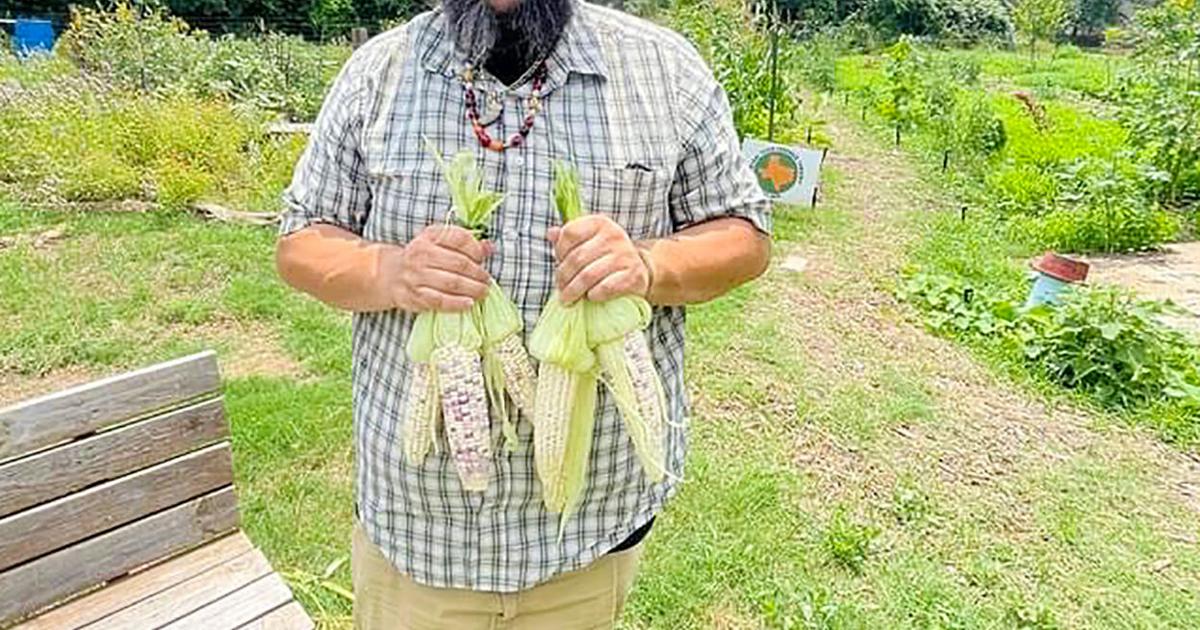
AUSTIN, Texas – The time for planting corn comes early in central Texas due to the warmer climate, and for the past few years Central Texas Cherokee Township board member Doug Martin has been sharing his knowledge for people to have a successful corn crop.
He and the township’s members help maintain various community gardens in Austin to share Cherokee heirloom seeds and to teach people about “the Three Sisters” that includes corn, beans and pumpkins or squash.
“Down here we started a program a few years ago. We’re on the third year … we gathered up all the seeds folks had, and we started planting them in a community garden to get more seeds because more people were interested in gardening,” he said. “More people wanted the seeds, and the demand was really high, so we said, ‘let’s try to pull stuff together and see if we can’t get some bigger place to grow them.’ So, that started Central Texas Cherokee Township’s Three Sisters Program.”
Along with planting seeds in home gardens, Martin said Central Texas Cherokee Township works with institutions like St. Edwards University in Austin who allowed community members to utilize part of their “Food Forest” to plant Cherokee seeds. When crops are harvested, some of the seeds from the crops are saved to share and grow later.
“Basically, we set up a Three Sisters garden in the traditional mound manner, and they water it for us and take care of it for us, and then we’ll come in and we’ll do cultural stuff there. We’ll tell stories and have meetings there or play stickball or chunkey there. So, they get cultural demonstrations, and we get the seeds out of it,” Martin explained.
He added having a water source in Texas is important due to the area’s climate. Now, the CTCT is also getting gardening assistance from the Red Salmon Arts book store, two elementary schools and private school who want to grow corn.
In early February, CTCT members and their partners who are interested in helping grow and harvest crops met to get to know each other and begin planning gardens, Martin said.
“We introduced everybody and networked them and talked about how our program goes, and we gave our gardens the seeds they can use. And then we’re going to go to all their plantings,” he said.
Martin said he believes it’s really important to use the heirloom seeds for the gardens. He said when he began receiving the seeds he also received a quote from Cherokee traditionalist Redbird Smith that said, “no self-respecting Cherokee is without a corn plot.”
“We took that to heart. We said, ‘where’s our self-respect, where’s our connection to our culture, where’s our community?’ he said. “The idea came about that said, ‘if we can grow in a communal place that anyone can visit any time of day, have access to it – then you have a corn plot. If you’re a Cherokee Township member, you have a corn plot whether you have one in your front yard or not. We wanted to give people that connection to culture, and I wanted that connection to culture. It’s really deep connection.”
He explained he once grew corn when he had plot for growing, and he wanted to grow beans and tobacco and cultivate the other seeds offered by the Cherokee Nation Seed Bank. When the community group works together to grow a garden it really brings out the Cherokee concept of gadugi or working together, Martin added.
“And we can teach and learn a lot of the Cherokee community values just by talking about corn,” he said. “If the corn tastes good, people are happy.”
Saving seeds from gardens grown in Austin saves having to request seeds from the CN Seed Bank, Martin said. If CTCT members have a bad year of growing they may be able to request seeds from another member instead of “being a drain” on the seed bank.
To give planted corn a better chance to grow in central Texas, corn must be planted earlier in the spring because of the region’s hot summers.
“Out here you have to plant really early, and a lot of people don’t know that. They’ll think, ‘I’ll plant in June or May, and the corn will die. So, they’ll get the seeds and they have a bad crop and then they request more seeds, so we want to break people of that,” Martin said. “We want to say, let’s figure out what works … and get you on a schedule where you’ll have seeds and you don’t have to request the same seeds over and over. So, you’re making your own seeds.”
When CTTC members received seeds, they didn’t necessarily know how to plant them. Included in the township’s seed bank were different types of corn, beans, squash and tobacco. Martin explained CTCT members had some successes and some failures when they started planting the heirloom seeds, and now they can share their wisdom with others for what works and what doesn’t when growing a garden.
“If you’ve got 20 groups around the country successfully growing stuff, that’s going to take a lot off that seed bank and hopefully make it easier for the first-time gardeners to get seeds from the bank or from community groups. And that brings members to the community groups and gets people to be more Cherokee-culture minded if they have Cherokee seeds in their gardens,” Martin explained. “We’re proud to be growing these gardens and having our self-respect back.”
Comments are closed.