
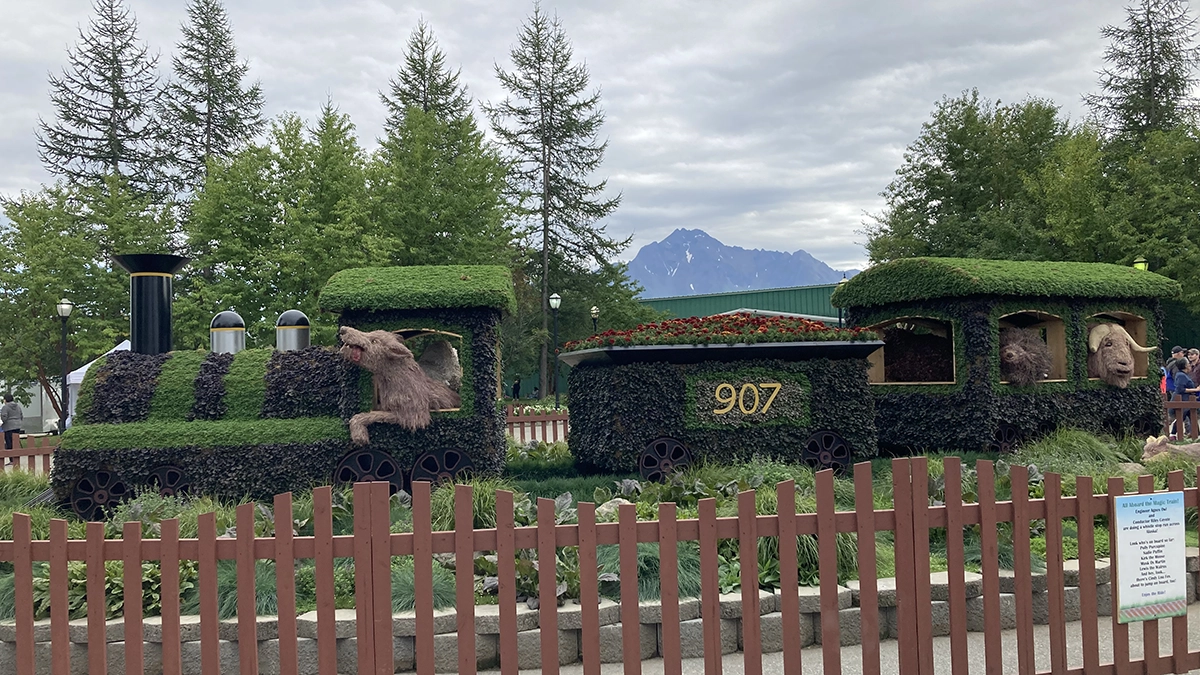
Myrvold started after the 2023 fair, sketching what she wanted the following year’s display to look like. Her drawn design was converted into a computerized draft for the maintenance department to follow. Welders set about building the metal frame that would support the living plant display.
Some people might refer to it as a topiary, but Myrvold says that isn’t accurate; it’s closer to a mosaiculture design. Topiary sculptures are meant to last from season to season; mosaiculture are one-and-done plant sculptures. The design starts as steel frames, which are then carpeted with thousands of bedding plants, sometimes in layers, to give shape, color, and character.
Note, for example, Riley Coyote, with his head hanging out the window of the engine, tongue lolling. Or Sadie Puffin giving a jaunty wave from the rear window of the train’s only car. The train itself is made of thousands of bedding plants such as Veronica repens and ajuga, selected for their ability to creep and root, spreading over the summer to fill the entire form. Riley’s fur is cut ornamental grass, cut and tied into bundles and carefully glued in place. Polly Porcupine’s quills are dead spruce branches. Kirk the Moose’s fur is spruce cones. Lentils, rice, seeds, beans and even tapioca pearls make up the feathers and features of many of the characters.
And they are characters: Myrvold says she tries to imbue the design with as much whimsy and life as possible, both to help her crew fall in love with them—which helps stimulate the creative process needed to really bring them to life—and to capture the hearts of future viewers. And it’s just more fun that way.
Comments are closed.