
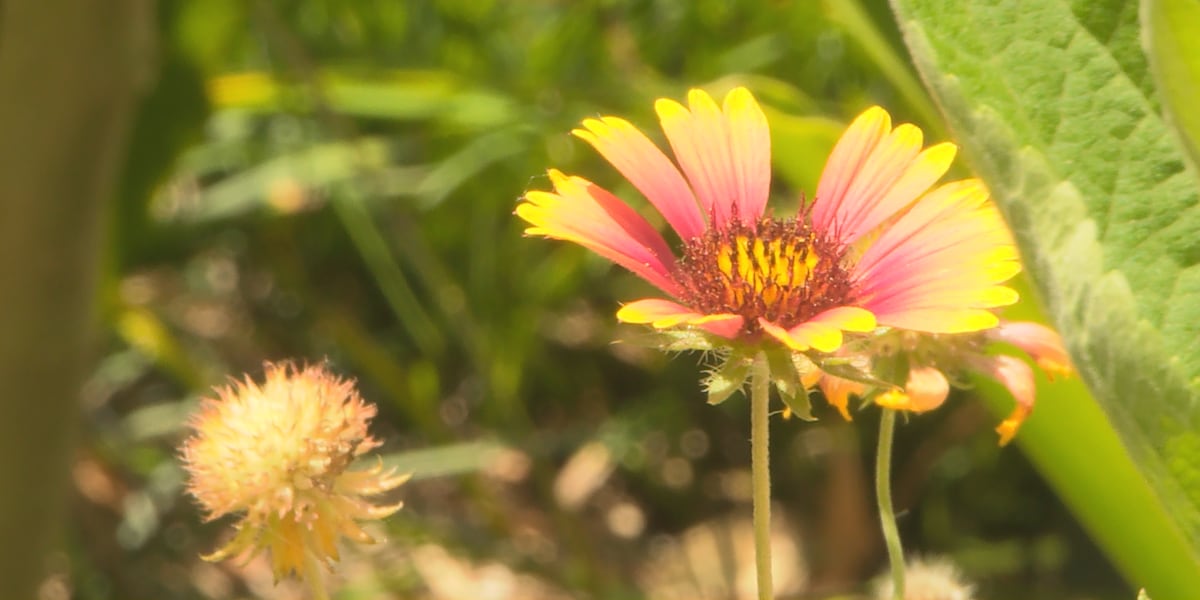
BATON ROUGE, La. (WAFB) – Emily Stich replaced her traditional grass lawn with plants native to Louisiana just a few months ago — and she says the change has been worth it.
Stich serves as president of the Louisiana Native Plant Society, which has certified around 550 native gardens across the state. She describes her yard as a collection of small ecosystems.
“These are like little pocket habitats,” Stich said.
No mowing, no chemicals
Stich said the practical benefits of a native garden start with what homeowners no longer have to do.
“First of all, I don’t have to mow that in the heat of July and August, which is really, really nice,” she said. “I don’t fertilize. I don’t use pesticides, herbicides, insecticides. And the life in this garden is astounding. I see butterflies, hummingbirds, bees, wasps, moths. So I love the wildlife.”
Environmental benefits
Beyond maintenance savings, native plant root systems can stretch several feet into the ground, helping rainwater absorb into the soil, reducing runoff, and aiding in carbon sequestration.
A lawn tradition rooted in European history
Stich said the dominance of grass lawns in America traces back to European cultural values.
“Grass lawns really represent our French and European heritage. And that is based on, believe it or not, one word, waste,” Stich said. “The very wealthy in Europe, France, England wanted to show that they didn’t need this land to grow crops or have farm animals, and so they could waste it on lawn. Therefore, when the colonists came over, they brought those standards with them.”
How to make the switch
The Louisiana Native Plant Society has been working to shift that mindset through education. Its certified professional program has trained landscapers, homeowners, and park managers across the state since 2021.
Stich said the transition does not require heavy labor.
“You can put down cardboard or newspaper and cover that with mulch and allow the grass to die naturally. You don’t even have to till it,” she said. “I was surprised when this was not tilled, but they said, Nope, don’t till; otherwise you disturb the seed bank and you get lots more weeds. So we just planted right into the native soil, and then it was mulched heavily, and I do a little weeding, but not much.”
Stich said native plants form the foundation of entire ecosystems, supporting butterflies, bees, hummingbirds, and hundreds of species that depend on them to survive.
For more information on native plants or to get a garden certified, visit lnps.org.
Click here to report a typo. Please include the headline.
Click here to subscribe to our WAFB 9 News daily digest and breaking news alerts delivered straight to your email inbox.
Watch the latest WAFB news and weather now.
Comments are closed.