
For the Union-Tribune
June is a funny month in Southern California gardens. Along the coast, “June gloom” makes for humid, cool, gray mornings. The sun peeks out by three or four o’clock in the afternoon, lasting until it sinks into the ocean at day’s end.
Plants grow, albeit more slowly than inland, where temps are already climbing and plants get an all-day sunshow. It’s time to prepare for hot weather, if your garden isn’t already there.
Vegetable gardens
Vegetables are June’s main focus.
• Ready to up your tomato growing game? Learn how with my tomato growing guide. Find it at tinyurl.com/TomGuide.
• If you see skeletonized tomato leaves and tiny black or deep green balls, look for tomato hornworms. The caterpillars are green, white and black striped. In their larval form, they devour tomato plants, but as mature sphinx moths, they are important garden pollinators. Consider growing a sacrificial tomato plant and letting the worms go through their life cycle on that plant. That’s a win-win!
• Don’t worry if tomatoes, eggplants, peppers and other vegetables are flowering but not yet producing. Once temperatures reach just the right point, flowers get pollinated and fruits start to develop.
• Avoid tomato and squash blossom end rot by keeping soil damp (not wet) at all times. In some regions, blossom end rot is a calcium deficiency, but in our climate and soils, it results from uneven watering.
 Water supply is also crucial for wildlife in your garden, like this Anna’s hummingbird. (Adobe Stock)
• Good air circulation prevents powdery mildew (white powder on leaves). Selectively remove plant branches (not individual leaves) to improve air flow. Also, rinse leaves with water early in the day to wash away mildew spores. Do it early enough for leaves to dry by late afternoon.
• Remove the lowest tomato leaves and branches to prevent soil fungi from infecting the plant.
• Don’t prune tomato plants. Tomato leaves photosynthesize, making them the plants’ powerhouse. The more leaves, the more energy a plant makes to flower and fruit. Pruning removes leaves, which limits the energy production, which limits flowers and fruits. To harvest lots of tomatoes, leave the leaves.
• Tiny birds called lesser goldfinches peck at sunflower and squash leaves, skeletonizing the leaves. Those birds also eat aphids so welcome them to the garden.
Trellis cucumbers to keep the vines and fruits off the ground. It also makes the fruits easier to find.
• Plant cilantro seeds in the shade of cucumber trellises. Cilantro plants produce more leaves, for longer, in a bit of shade
• Give watermelon, pumpkins and vining squash plants PLENTY of room. One plant’s vines plant can easily cover a space 20 feet long by 20 feet wide!
• “Squash Confidential”: zucchini, summer squash, winter squash, melons, pumpkin and cucumber are all closely related and grow the same.
– If you see lots of flowers but no fruits, be patient. Plants in the squash family often produce male flowers for several weeks before they begin to produce the female flowers that become the fruits.
– Female flowers have a swollen part just below the petals. That swelling is called an “ovary,” and once a flower is pollinated, the ovary starts to develop into a fruit. By the way, the ovary holds the seeds.
– In early summer, it’s typical for these plants to grow tiny squashes, cucumbers, etc. that turn brown at the tip and fall off. These are fruits that begin to develop even though the flower isn’t pollinated.
– If you see both male and female flowers, look for ants, bees, flies and other insects that do the pollination. If you don’t see any (or just see a few), try hand pollinating with a cotton swab or small watercolor brush. Pick up some pollen grains from the center of the male flowers and dab them onto the large, thick, sticky golden pads at the center of the female flowers
• If there’s still space in your garden, start another round of tomatoes, cucumbers, squash, eggplants, basil and so on. Plant now — from seed or seedling — for harvest late summer/early fall.
• Resist overplanting. Crowded plants grow into a jungle that reduces production and makes plants vulnerable to insects and disease.
• Pinch flowers and flower buds off seedlings before planting seedlings.
• Mulch vegetable plants with a thick layer (3 or more inches) of straw — not hay, not bark, not wood.
Fertilize vegetables:
• Prepare your garden beds before planting by mixing in organic granular vegetable fertilizer, following label directions. At planting time, add a bit more fertilizer to each hole and fill with water. Once the water drains out, go ahead and plant.
• Through the season, pull the mulch back; sprinkle fertilizer over the soil, water, then replace the mulch. Follow label directions for how much and how often.
• Alternately, add liquid fertilizer to your irrigation water — this process is called “fertigation” — at half strength every time you water.
• You can also use liquid fertilizer as a quick fix foliar spray (leaf spray) if plants show signs of nutrient deficiency.
Learn more about summer vegetable gardening with an on-demand class at bit.ly/LearnVegetableGardening.
Fruit trees
• Protect fig fruits from the black fig fly. As soon as the tiny figs form, cover the fruits, which are at the end of branches, using drawstring mesh bags. Those bags protect the fruits from rats and green beetles, too.
• Fertilize stone fruit, apple, pear and persimmon trees with organic fruit tree fertilizer, following label directions. Water deeply and once a week or so, as long as the branches are covered in leaves.
• Fertilize citrus and avocado with granular, organic citrus and avocado food. Water citrus deeply, every few weeks. Water avocado deeply once or twice a week.
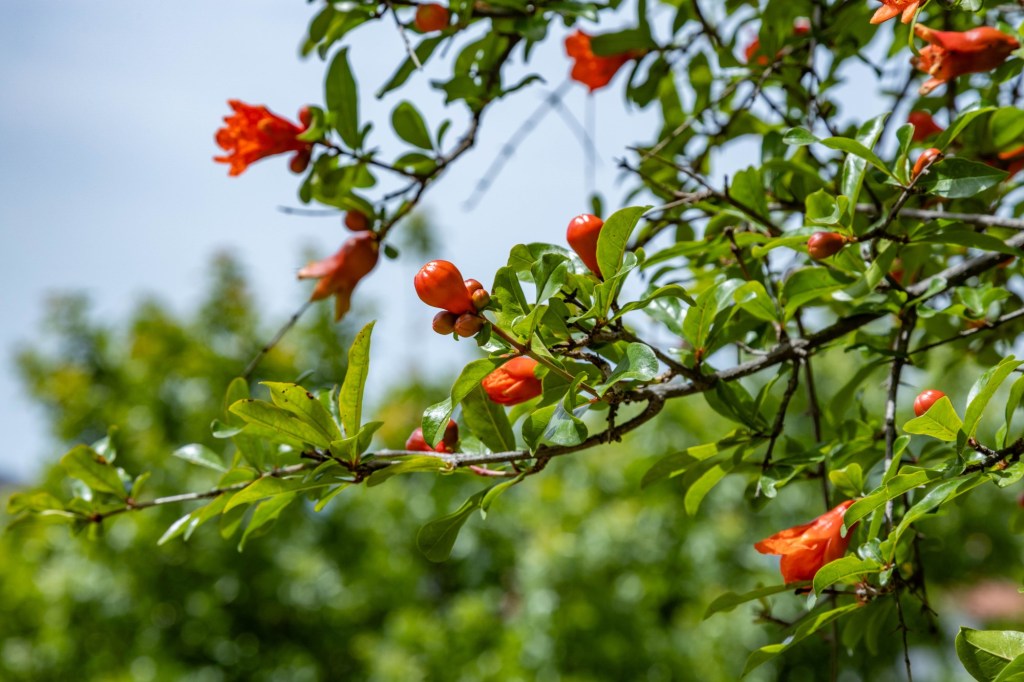
• Pomegranates, figs, tropical guava and pineapple guava don’t need fertilizer but are best watered every two or three weeks, depending on the heat.
• Too many ripe fruits? Cut them in half, remove the seeds or pits, then freeze for winter cooking. Remember to label and date the containers.
• Share your extra harvest with people in need. Volunteer organizations pick and donate fruit to food banks and other feeding programs. Find lists of gleaners for your county online. If you have time, volunteer to help — it’s fun!
• Clean up fallen fruits and practice good garden hygiene to avoid attracting hungry birds, green fig beetles, squirrels, rats, etc. Harvest fruits as they ripen, before they rot.
Ornamental plants
• Drought-resilient shrubs and trees need very little care this time of year. Remove dead flowers and spent leaves. Keep the plants mulched and water deeply, only once every few weeks.
• Potted plants need more attention in summer. Fertilize nonsucculent potted plants with an all-purpose organic fertilizer (liquid indoors, liquid or granular outdoors), following label directions.
• Potting soil dries out much faster than “dirt.” When it’s time to water a potted plant, water slowly to saturate all the potting soil. Wait until the water drains out the bottom, then do it again. Sit smaller pots in a basin of water and let the water wick to the top.
• Repot and refresh potting soil for plants that have been sitting in pots for years. Top off the potting soil with a new sprinkle of worm castings and some organic, granular all-purpose fertilizer. Finish off with a layer of small pebbles for a finished look and to keep away fungus gnats.
• Move sun-shy potted plants like Fuchsia and orchid cactus (Epiphyllum) under the shade of a leafy tree or an east-facing eave.
Manage wildlife
Remember: Wildlife has a place in every garden. Plants are not perfect. They aren’t supposed to be.
Support birds and bees through the warm weather:
• Fill a shallow dish or birdbath with water. Place it in an open area where it is easy to find. Change water regularly to keep it clean.
• Moving water keeps mosquitoes from breeding, so if you have a birdbath, add a solar powered floating pump that sprays water. Clean periodically so the pump doesn’t clog.
• Set small pebbles, glass marbles, etc. in the water, piling them slightly above the water line for birds and bees to stand on as they drink.
Insects and other tiny garden critters can be unsettling but are seldom a problem. Having a few pests in the garden makes sure natural predators stick around. Your goal is to support the cycle to keep garden critters in balance.
• Caterpillars and worms nibble on leaves but seldom kill plants. While a few aren’t an issue, if they are truly decimating your plants, pluck them off and leave them in an open area where hungry birds and lizards can find them. Birds and lizards are nature’s pest control!
• Control snails, slugs and roly-polies (aka pill bugs) with Sluggo Plus, an iron phosphate product that is not toxic to birds, mammals (including us), caterpillars, butterflies, etc.
Manage water
We had good rainfall over winter, but summer typically brings drought. Be prepared.
• Inspect your irrigation system zone by zone. Turn on each zone (each irrigation zone is controlled by a single irrigation valve). Walk the drip lines and sprinklers looking for leaks, broken heads, overspray, etc. Fix them promptly.
• Don’t overwater. Plant roots need oxygen in the soil as much as they need water. More plants die from too much water than too little.
• Collect cold bath and shower water in a bucket. Use the water for potted plants, thirstier tropical fruits, and vegetables.
• Mulch, mulch, mulch; but only if you have a drip irrigation system. Spray irrigation is not compatible with mulch. Too much water is wasted saturating the mulch before it reaches and penetrates the soil where the roots take it up. This is another reason to switch out spray irrigation for inline drip irrigation, not for individual emitter irrigation.
• As the summer temperatures warm, deep-water big trees once a month. Even drought tolerant trees need a periodic long drink to thrive.
Bye-bye, grass
Grass is the thirstiest plant in our gardens and the one least often “used.” Summer’s long, warm days are the best for removing or reducing your lawn. Plan now.
• Check socalwatersmart.com for the latest lawn replacement rebates.
• Solarizing is an easy and very effective way to kill your lawn. Watch this episode of “A Growing Passion” on YouTube to learn how: bit.ly/SolarizeYourLawn.
What to plant in place of lawn?
• A colorful, flowery, drought resilient garden like those in my latest book, “Hot Color, Dry Garden,” found at bit.ly/HotColorDryGarden.
• Plant a meadow of wavy clustered field sedge (Carex praegracilis), which looks like grass but isn’t. It takes sun or shade, mowing or not, little water and feels great on bare feet.
• Kurapia, the trade name for Lippia nodiflora, which grows into a flat green surface with tiny white flowers. Warning: This plant spreads! Surround it entirely with concrete to keep it under control. Neither wood, plastic, nor metal edgings contain Kurapia.
• Dwarf Carpet of Stars (Ruschia nana) is a tough little succulent that grows into a solid mat that handles foot traffic but isn’t a play surface.
What NOT to plant in place of lawn?
Artificial turf (aka synthetic grass). Plastic “grass” heats up to shocking temperatures in summer, needs regular washing, fills landfills as waste, releases microplastics into the environment and destroys the soil along with all the critters living in the soil. Living plants are always a better choice than artificial turf.
Houseplants
Now that nighttime temperatures are above 50 degrees, send your houseplants out for summer vacation. Place them in a sheltered spot in your garden. They need lots of indirect light, like on a bright patio or covered balcony.
• Natural pest control: outdoors, natural predators feast on scale, mealy bugs and aphids. If pests persist, rub them off with your fingers, a soft toothbrush or a blast of water, from a hose or from your kitchen faucet.
• Rinse leaves to remove dust and grime that host spider mites.
• Keep plants well-watered and feed using dilute liquid fertilizer with each watering.
• Remove brown, dead leaves.
• Let the potting soil dry down so fungus gnats fly away.
• Repot plants that have outgrown their containers or have a white crust on the soil surface.
• Don’t pinch pennies when it comes to potting mix. Plants only do as well as the quality of the potting mix they grow in. Get the best quality potting mix you can find ¯ at your local independent nursery.
• Don’t plant houseplants in garden soil.
• Make houseplants cuttings in the warm weather, then let them root over summer.
To do, to see, to participate
• June 6 and 7: San Diego Cactus and Succulent Society Summer Sale, Room 101, Casa del Prado, Balboa Park, sdcss.net/2026-summer-show-and-sale
• June 13 and 14: San Diego Bromeliad Society Plant Sale and Show Casa del Prado, Balboa Park, sandiegobromeliadsociety.org
• June 17: San Diego Floral Association annual meeting, Room 101 Casa Del Prado, Balboa Park, sandiegofloral.org/meeting
Sterman is a garden designer, journalist and the host of “A Growing Passion” on public television. She runs Nan Sterman’s Garden School at waterwisegardener.com.
Comments are closed.