

Key Points
Many common groundcovers, like English ivy, grow invasively and can damage local ecosystems.
Native groundcovers are eco-friendly alternatives that offer more support for pollinators.
Keeping soil covered with groundcovers adds color and helps combat erosion.
Filling in empty soil space with fast-growing groundcovers is a smart way to add extra color to your yard or garden and protect soil from erosion.
To inspire your planting design, here are some of the top native groundcovers experts recommend for sunny or shady spaces, and tips on how to use these plants to your advantage.
Meet the Expert
Dr. Stacy Small-Lorenz is the residential landscape ecology specialist at the University of Maryland Extension.
Heartleaf Foamflower
Credit: Alex Manders / Getty Images
A fine choice for shady spaces, heartleaf foamflower is native to the eastern United States and is sure to delight with its foamy, pinkish-white springtime flowers and relatively fast growth rate.
Advertisement
Advertisement
“These plants send out runners and form colonies over time,” says landscape specialist Stacy Small-Lorenz.
You can expect mature plants to reach around 12 to 18-inches wide once they’re established. They look particularly stunning when paired with other woodland plants, like coral bells and bleeding hearts.
Opt for Native Plants
“I strongly recommend going with native groundcovers over non-native invasives like periwinkle, English ivy, wintercreeper, or Japanese pachysandra,” says Small-Lorenz. “These non-natives are all detrimental to our ecosystems, while native perennial groundcovers provide much more support for butterflies, native bees, and wildlife in general.”
Native Ferns
Credit: Jocelyn Baker / Getty Images
Another popular pick for low light areas, native ferns come in so many sizes, textures, and colors you’re sure to find one that’s just right for your space.
Advertisement
Advertisement
“Native ferns like netted chain fern, sensitive fern, New York fern, and cinnamon fern can be planted in combination with other native groundcovers, as an accent plant, or more densely in a bed,” Small-Lorenz says.
Aside from their beauty, Small-Lorenz highlights one specific reason why she loves working with native ferns: “While no plant is deer-proof, most ferns tend to be deer-resistant.”
Moss Phlox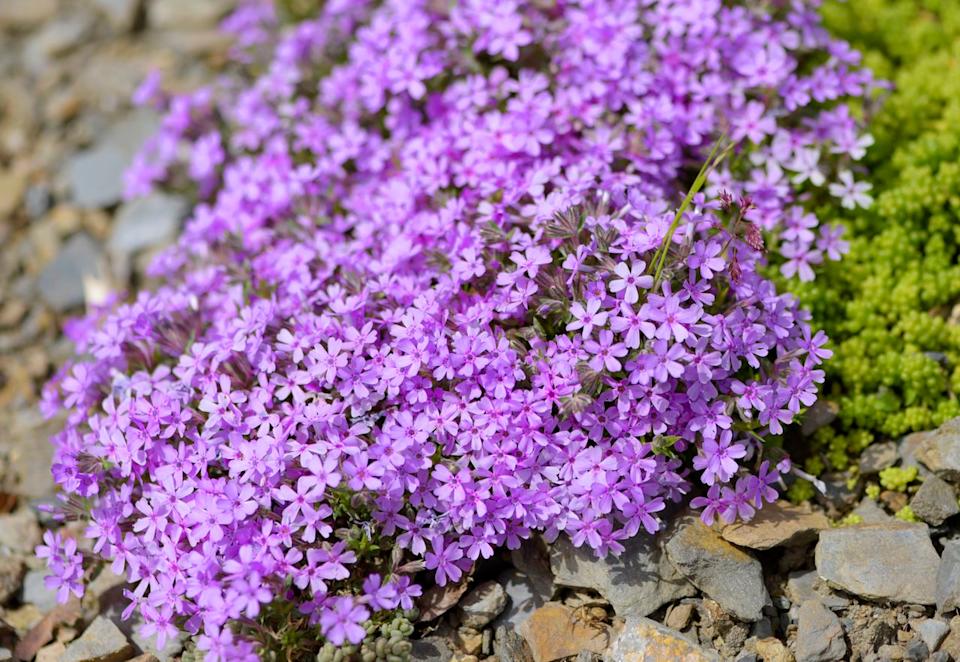
Credit: The Spruce / Evgeniya Vlasova
Most gardeners are familiar with garden phlox plants, which produce clusters of fragrant pink, white, and purple blooms atop tall and slender stems. But moss phlox is a lower growing alternative that stretches from 1 to 2-feet wide and yields equally eye-catching flowers that carpet gardens with color in early spring.
“These plants do well on slopes and they’re deer-resistant,” Small-Lorenz points out. “They also attract native bees and butterflies.”
Common Blue Violets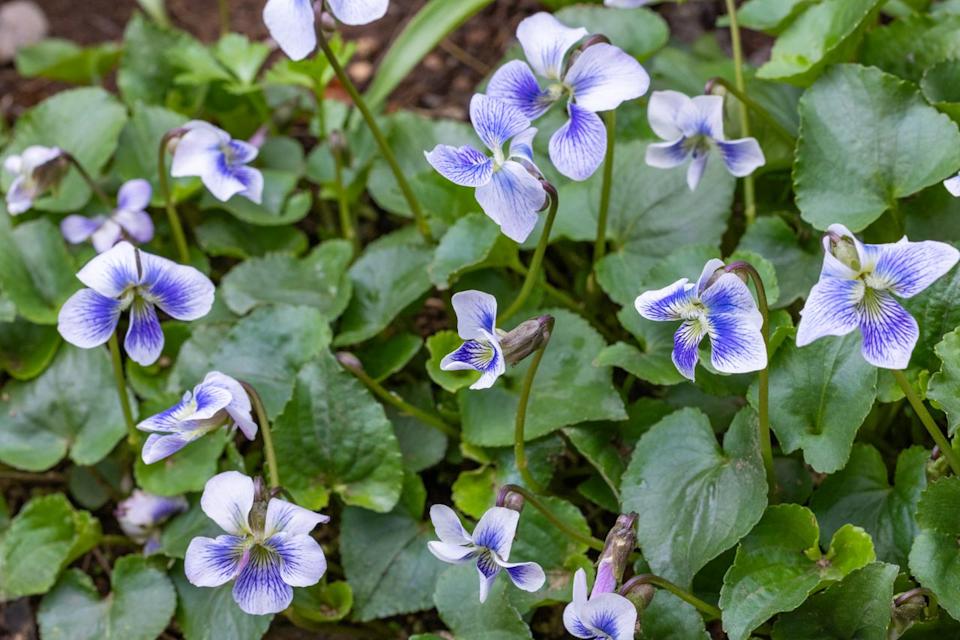
Credit: Billy_Fam / Getty Images
Advertisement
Advertisement
Although common violets are often dismissed as weeds, these pint-sized beauties are actually native plants that provide major benefits to wildlife of all sorts.
“Common blue violets are a very important early spring food source for pollinators, like fritillary butterflies and native mining bees, as well as wildlife, like birds and mammals,” Small-Lorenz says.
Common violets are extremely easy to grow: They tolerate relatively poor soil and their pretty purple or white flowers can add much needed color to any place you plant them in.
Plus, common violet leaves and blooms are edible and make intriguing salad toppers for anyone who’s interested in backyard foraging.
Blue Mistflower
Credit: magicflute002 / Getty Images
Sun-loving mistflowers can double in size in a single year; they’re a great solution if you’re looking for a groundcover that will make a big impact fast.
Advertisement
Advertisement
“Another pollinator favorite, blue mistflower produces fuzzy blue flowers with a gorgeous violet hue, and they’re most assertive in moist, sunny areas,” Small-Lorenz says.
Just keep in mind that these plants spread by seeds and underground rhizomes, so it’s best to leave the blooms intact if you want mistflower to fill in your soil as fast as possible.
Wild Strawberry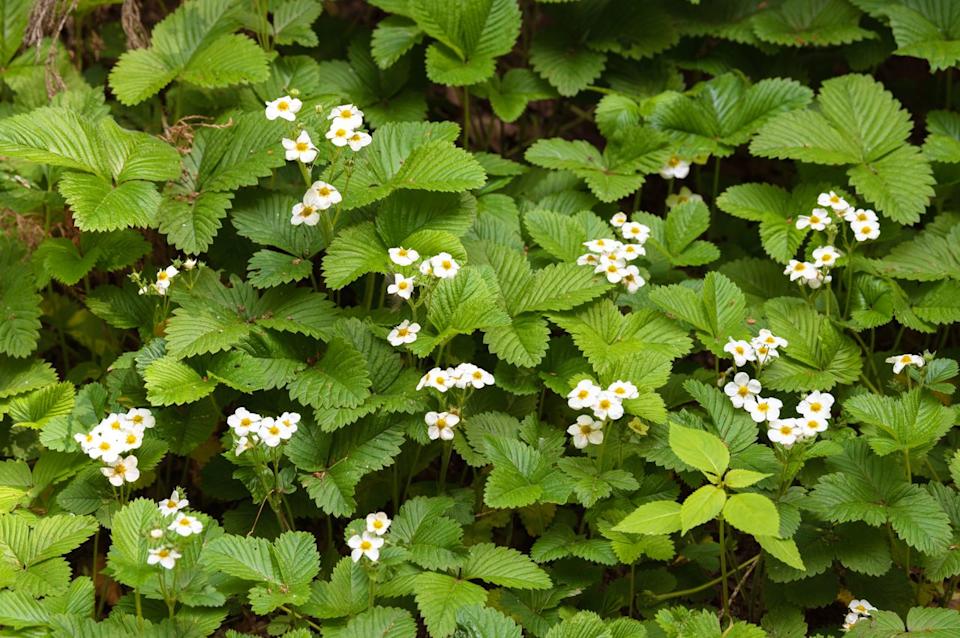
Credit: The Spruce / Evgeniya Vlasova
When it comes to dual-purpose groundcovers that boast both function and beauty, few plants compare to the wild strawberry.
Not only do these North American natives produce dainty white flowers in spring, but they also yield small edible berries later in the season, which are every bit as tasty as store-bought strawberries.
On top of that, wild strawberries spread via runners, which help to stabilize soil and can be separated into indivdual plants to provide you with more groundcovering plants for free.
Golden Ragwort
Credit: Janel Houton / Getty Images
Golden ragwort stands out in any space thanks to its bright golden-yellow flowers, which bloom in spring.
Advertisement
Advertisement
However, what really gives these native plants staying power is their easy-care vibe and ability to form a dense, groundcovering mat of foliage and blooms in just a year or two.
“These plants are a great choice for shady, moist areas,” says Small-Lorenz. “And another bonus: golden ragwort is also pretty deer-resistant—and it’s a big hit with smaller butterflies, skippers, and native bees.”
Woodland Stonecrop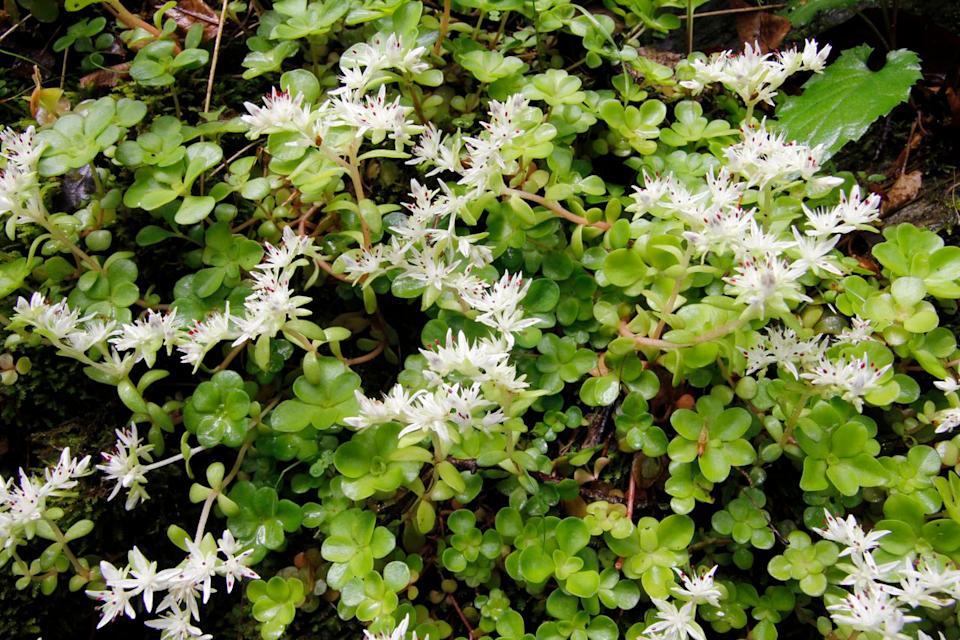
Credit: BambiG / Getty Images
Advertisement
Advertisement
Sedums come in all shapes and sizes, but the woodland stonecrop is ideal if you’re on the hunt for a low maintenance groundcover for dry areas that don’t get much rain.
“Woodland stonecrop tolerates a range of light conditions and can grow well in rocky areas,” Small-Lorenz says. “It also has beautiful flowers when it blooms, and it’s another great pollinator plant.”
Read the original article on The Spruce
Comments are closed.